 SUPPSAVER
Mushroom Supplements: Why 35% of Your Powder Might Be Rice
- 1at Woolworths · packs from $344.29$34.43/100g
- 2at Woolworths · packs from $357.49$35.75/100g
- 3at Supplement Warehouse · packs from $57.95$39.52/100g
35 to 40% starch by dry weight. That's what Nammex's lab pass through roughly 100 commercial mushroom powders returned for mycelium-on-grain products (Nammex, 2017)[1]. That is rice or oat substrate the fungus grew on, dried, then milled in with the finished powder. A real fruiting-body extract averages under 1.6% starch and 28 to 49% beta-glucan. The gap is enormous, the label rarely tells you which one you bought, and most of what sells in Australia under the word "mushroom" is closer to the cheap version than the good one. Our verdict up front: insist on a per-batch COA naming the species, the part of the fungus, the assay method, and the beta-glucan percent. Anything vaguer is rice flour at a markup.
Fruiting Body vs Mycelium-on-Grain
A mushroom has two parts. The fruiting body is the cap and stem that pop out of the substrate; that is the bit with the bioactive chemistry you came for. Mycelium is the root-like network that grows through wood or grain to feed the fruiting body. Commercial mycelium products are almost never pure mycelium. They are grown on sterilised brown rice or oats in a bag, then the whole bag (mycelium plus uneaten grain) is dried and milled.
Nammex's lab work on whole reishi fruiting body returned 28.1% beta-glucan and 0.1% starch. Reishi mycelium-on-grain from the same dataset returned 1.06% beta-glucan and 51.44% starch (Nammex, 2017)[1]. Cordyceps follows the same pattern: 34.36% beta-glucan in fruiting body, 1.5% beta-glucan and 64% starch in mycelium-on-grain.
The chemistry is unambiguous. If a product is mycelium-on-grain and does not separately report alpha-glucan, between a third and two thirds of what you are swallowing is starch.
The Beta-Glucan Number That Actually Means Something
Beta-glucan is the immunomodulatory polysaccharide that does most of the heavy lifting in the mushroom literature. The Megazyme K-YBGL assay is the AOAC-accepted method, and the reason it matters is that it measures total glucan, subtracts alpha-glucan (starch), and returns true beta-glucan. A new K-YBGL kit released October 2025 cut reaction time from 7 hours to 4 hours 25 minutes and corrected a maltitol interference issue (Megazyme by Neogen, 2025)[6].
Cheaper labs use the Phenol-Sulfuric or Anthrone methods, which report total polysaccharide and quietly include grain starch in the number. That is how a mycelium product can claim "30% polysaccharides" while delivering 5% true fungal beta-glucan.
Useful benchmarks for fruiting-body extracts. Under 15% is suspect. 15 to 25% is acceptable. 25 to 35% is genuinely high-quality. Above 35% needs the assay method named on the COA before we trust it.
Lion's Mane: Hericenones vs Erinacines
Lion's mane is the most over-claimed mushroom on the AU market, and the part of the fungus actually matters here in a way that the marketing copy hides. The 2025 Frontiers in Pharmacology systematic review (Wang et al., 2025)[2] is explicit: hericenones (meroterpenoids) are found exclusively in the fruiting body, and erinacines (cyathane diterpenoids) are found in mycelium.
Erinacines A and C uniquely activate the Nrf2 antioxidant pathway and upregulate BDNF in animal models, which is the mechanism the supplement industry keeps citing. The same review then drops this caveat: "the lack of erinacine concentration reporting given the variability of strain, cultivation, extraction and dosing greatly reduces the translatability and reproducibility of studies." In plain English, almost no commercial mycelium product tells you how much erinacine is actually in the powder, so you cannot dose it.
A second AU-specific problem. Cultivation of true Hericium erinaceus is restricted here, so several "Australian-grown lion's mane" products are actually Hericium coralloides (Coral Tooth), a separate species with no clinical evidence for hericenone or erinacine content (Rootlab, 2024)[9]. If a brand cannot put the binomial on the COA, treat it as a different mushroom.
Reishi and Cordyceps
A 2024 analysis of 22 Australian Ganoderma specimens found 99% of total glucans in the fruiting bodies were beta-glucans, ranging 19.5 to 43.5%, and identified 32 lanostane-derived triterpenoids that are fruiting-body specific (PMC11509325, 2024)[3]. ConsumerLab's November/December 2024 reishi panel tested 13 products and found a 47-fold spread in per-serving 1,3-beta-D-glucan, from 5.6 mg to 264.5 mg. Two products were "NOT APPROVED because they contained less than the expected 1,3:1,6-beta-D-glucan" (ConsumerLab, 2024)[5].
Cordyceps has its own substitution problem. Wild Cordyceps sinensis runs about A$20,000 per kilo, so almost every product on the AU shelf labelled "sinensis" is actually CS-4, a mycelium fermentation strain. Cordyceps militaris fruiting body is the legitimate alternative and contains up to 90 times more cordycepin than wild sinensis, with commercial militaris assayed at 81.4 mg cordycepin per 100 g dry weight (MDPI Antioxidants, 2022)[4].
Our verdict on this pair. For reishi, demand a beta-glucan percent on a COA or skip. For cordyceps, the only defensible pick is militaris fruiting body, ideally with a cordycepin number on the label.
Red-Flag and Green-Flag Vocabulary
Brands selling mycelium-on-grain have a recognisable phrasebook. Treat any of the following as a confession: "full spectrum mushroom", "whole mushroom complex", "full life cycle", "primordia", "extracellular matrix", "myceliated brown rice", "complete fungus". Each of these phrases exists to legitimise the inclusion of grain substrate in the final product.
Green flags read very differently. The species binomial (Hericium erinaceus, Ganoderma lucidum, Cordyceps militaris). The phrase "fruiting body only". An extraction ratio of 8:1 to 10:1. A stated beta-glucan percent. "Dual extraction" (hot water plus ethanol, needed to pull both polysaccharides and triterpenes). A downloadable COA.
If you want a kitchen-bench check, the iodine test still works. A drop of iodine on a teaspoon of powder turns dark purple or black when starch is present. A clean fruiting-body extract barely reacts. A mycelium-on-grain powder turns near-black inside seconds.
AU Regulation Has a Gap
Australia has no clean regulatory box for medicinal mushrooms. The TGA's Listed Medicines pathway (AUST L) requires therapeutic claims to be pre-notified and the product entered on the ARTG (TGA, 2023)[8]; almost no AU mushroom brand goes through that, because they would lose the freedom to market vaguely. So most powders sell as "food" instead, which puts them under FSANZ.
FSANZ then classifies Lion's Mane, Reishi, Chaga and Cordyceps as novel foods, which require approval before sale unless they are already on the ARTG. In June 2024 FSANZ pulled Uncle Frog mushroom gummies after hospitalisations, on the basis that the species had no novel-food approval (The Conversation, 2024)[7]. Many powders sold today as food without an AUST L are technically in the same position; enforcement has been patchy.
One thing to retire from your shopping list straight away. HASTA is sport anti-doping screening, not mushroom-identity verification. A sweep of the HASTA register found no fruiting-body mushroom monoproduct certified, only multi-ingredient blends that incidentally contain a mushroom extract. Brands marketing "HASTA tested" mushroom monoproducts are stretching the term. What you actually want is a per-batch COA naming the species, the part of the fungus, the assay method (Megazyme K-YBGL), and the beta-glucan percent.
AU Price Per Gram of Real Active
Comparing mushroom products by cover price is a trap. The number we care about is cost per gram of beta-glucan, because that is what the science is anchored to.
Teelixir Lion's Mane (100% fruiting body, 10:1 dual extract) runs A$0.44 per gram of extract on the 250 g size, with verified beta-glucan above 30%, working out to roughly A$1.47 per gram of beta-glucan. Teelixir Reishi sits at A$0.50 per gram of extract and 31.7% verified beta-glucan, or A$1.58 per gram of active.
Ninth Path's VIC-grown liquid Lion's Mane costs A$43.90 for 100 ml and delivers around 2 grams of beta-glucan per 100 g of liquid, which works out to roughly A$22 per gram of beta-glucan, about 15 times the powder price. Liquid extracts are a beautifully presented format and a poor way to buy actives.
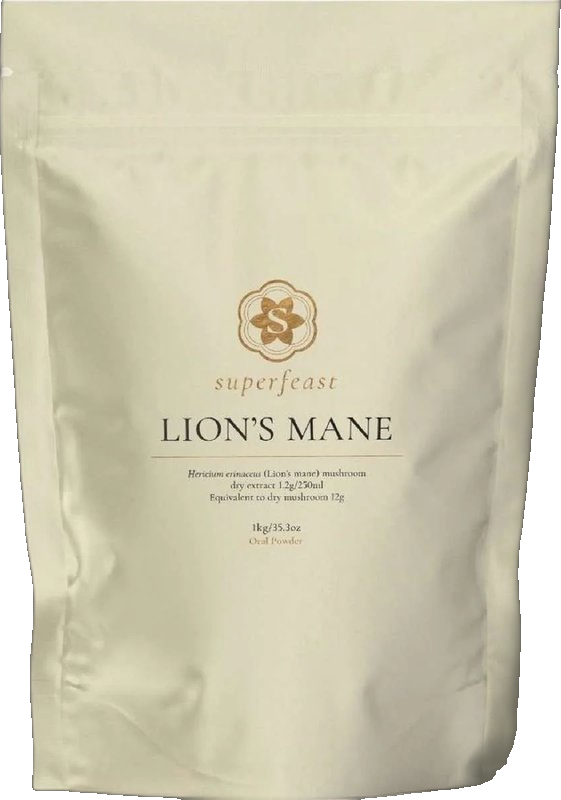
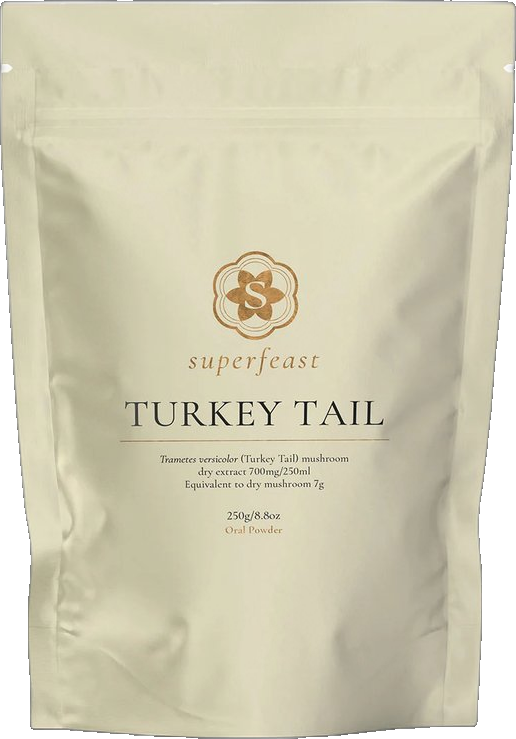
Four Sigmatic sachets, imported from the US, sit near A$12 per gram of mushroom extract once you factor in the ~250 mg of fruiting body per sachet at A$29.95 for 10. SuperFeast sits in roughly the same powder price band as Teelixir but refuses on principle to publish a beta-glucan percent, so we cannot rank it on active cost.
Best A$ per gram of verified fruiting-body beta-glucan on the AU market right now is Teelixir, by a clear margin.
The Verdict
For Lion's Mane: we'd reach for Teelixir or Ninth Path powder, 100% fruiting body, beta-glucan disclosed on the COA. If the label says "myceliated" anything, put it back.
For Reishi: a 10:1 fruiting-body dual extract with at least 25% beta-glucan on a Megazyme K-YBGL assay. ConsumerLab's 2024 spread tells us "reishi" without a number is a coin flip.
For Cordyceps: Cordyceps militaris fruiting body only. Anything labelled "sinensis" without the binomial and a cordycepin number is almost certainly CS-4 mycelium-on-grain at a markup.
- Anchored the chemistry to the Nammex 2017 lab pass through ~100 commercial mushroom powders, plus the 2024 ConsumerLab reishi panel of 13 products.
- Cross-checked species-specific actives against the 2025 Frontiers in Pharmacology review of hericenones and erinacines, and the 2024 Australian Ganoderma triterpenoid analysis.
- Surveyed AU retailer pricing in July 2026 across Teelixir, Ninth Path, Four Sigmatic and SuperFeast, normalised to A$ per gram of verified beta-glucan rather than cover price.
- Audited the AU label phrasebook against TGA Listed Medicines guidance and FSANZ novel-food rules, including the June 2024 Uncle Frog gummy enforcement action.
- Required a per-batch COA naming species, part of the fungus, assay method (Megazyme K-YBGL) and beta-glucan percent before recommending any brand.
Frequently Asked Questions
Why might my mushroom powder be mostly rice?
Because mycelium-on-grain products are grown on sterilised brown rice or oats, then the whole bag is dried and milled together. Nammex lab work across roughly 100 commercial powders found 35 to 40% starch by dry weight in those products.
How different are fruiting body and mycelium products?
Substantially. Nammex measured whole reishi fruiting body at 28.1% beta-glucan and 0.1% starch, against 1.06% beta-glucan and 51.44% starch for mycelium-on-grain of the same species. Cordyceps showed 34.36% versus 1.5% beta-glucan on the same comparison.
What should a certificate of analysis actually show?
Four things: the species, the part of the fungus used, the assay method, and the beta-glucan percentage. Anything vaguer than that leaves you unable to tell a genuine extract from milled grain substrate sold at a markup.
Which beta-glucan test methods can be trusted?
The Megazyme K-YBGL assay is the AOAC-accepted method because it measures total glucan and subtracts alpha-glucan, which is starch. The cheaper Phenol-Sulfuric and Anthrone methods quietly count grain starch as polysaccharide and inflate the result.
References
- Nammex, 2017. Redefining Medicinal Mushrooms (Nammex white paper, beta-glucan and starch analysis of ~100 commercial samples)
- Wang et al., Frontiers in Pharmacology 2025. Unveiling the role of erinacines in the neuroprotective effects of Hericium erinaceus, systematic review
- PMC11509325, 2024. Distributions of Lanostene-Derived Triterpenoids and Glucan Content in the Fruiting Bodies of Australian Ganoderma Species
- MDPI Antioxidants, 2022. Cordyceps militaris, Fruiting Bodies, Mycelium, and Supplements
- ConsumerLab, Nov-Dec 2024. Reishi Mushroom Supplements Review, per-serving beta-glucan tested
- Megazyme by Neogen, October 2025. Improved Megazyme K-YBGL beta-glucan assay kit release notes
- The Conversation, July 2024. Not quite medicine, not quite food, how a product like mushroom gummies can fall through the regulatory cracks
- TGA, April 2023. TGA Guidance for Mushroom Products v1.0
- Rootlab, 2024. The Truth Behind Australian Lion's Mane (Hericium coralloides substitution)