 SUPPSAVER
NMN Is Finally Legal in Australia, What 500mg/Day Actually Does (2026)
- 1at Oxygen Nutrition · packs from $65.40$109.00/100 caps
- 2at Woolworths · packs from $71.35$118.92/100 caps
- 3at Supplement Warehouse · packs from $75.95$126.58/100 caps
On 10 December 2025, the TGA[1] added nicotinamide mononucleotide to the Permissible Ingredients Determination. Until that date, Australians were buying NMN through grey-channel imports or watching the FDA flip-flop on it overseas. SuppSaver's October 2026 data shows NMN at roughly $56 to $85 for a bottle. Our verdict: NMN reliably lifts blood NAD+, the safety profile through 12 weeks looks clean, and almost every headline claim about "reversing ageing" is still pending in humans. If you want NAD+ elevation for the lowest defensible price, NR costs about the same per day, so compare both.
What Changed and When
For most of 2024 and 2025 the TGA's[1] published position was that NMN was an unapproved therapeutic good. The December 2025 update added NMN to Schedule 4 of the Therapeutic Goods (Permissible Ingredients) Determination, which is the master list of what a Listed (AUST L) medicine in Australia is allowed to contain. Listed medicines can carry low-risk wellbeing claims but not specific disease claims.
The ingredient approved is branded CellVive, manufactured by Shanghai-based SyncoZymes and sponsored in Australia by Longevity Life Sciences Pty Ltd[2]. SyncoZymes holds two years of market exclusivity through 10 December 2027. Until that date, every legal AU NMN product has to use CellVive, or be authorised in writing by SyncoZymes to use it.
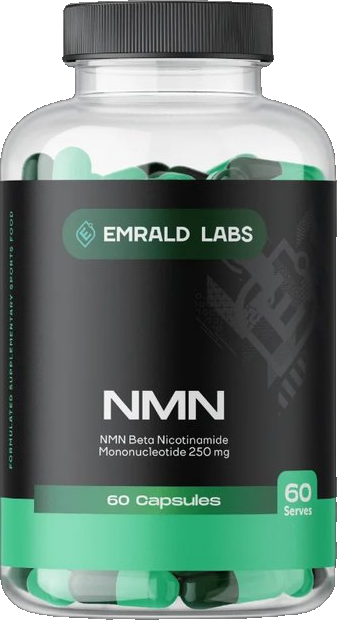
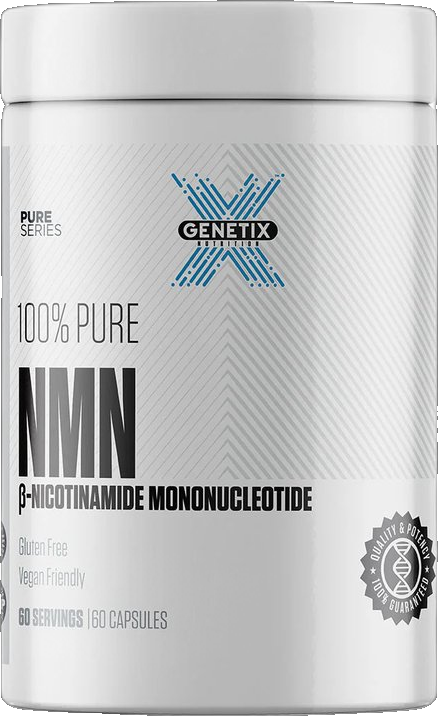
That exclusivity is why supply is tight. The shelf is narrow: SuppSaver's October 2026 data lists NMN from five brands (Emrald Labs, Switch Nutrition, Genetix, White Wolf and Spawn). The first ARTG entry, Elevate CellVive NMN Advance, was listed on 11 December 2025, one day after the determination went live.
The 500mg/Day Cap, Where That Number Came From
The TGA's[1] compositional guideline caps the maximum recommended daily intake at 500mg of NMN, restricted to adults, oral administration only, and not for use in pregnancy or lactation. The recommended duration of use on every label has to be 12 weeks or less.
Why 500mg? Because that's where the human safety data actually lives. The longest published RCTs ran 12 weeks at 250mg and 500mg/day in healthy middle-aged adults, with no hepatotoxicity, no renal flags, and no cardiovascular harm signal. Trials at 1,000mg and 1,200mg/day do exist (the Christen 2026 Nature Metabolism trial[3] and the Berven 2026 iScience trial[4] both ran at gram-plus doses), but those are short, 8 to 14 days, and the TGA was unwilling to extrapolate.
Bryan Johnson's Blueprint protocol[7], for what it's worth as an n=1, sits at 500mg, six days a week, of either NMN or NR. He dropped the seventh day in his 2026 update. That happens to line up with the TGA's ceiling, though we doubt the regulator was reading his protocol.
What NMN Actually Does
NMN is one step away from NAD+, the coenzyme that every mitochondrion in your body uses to run the electron transport chain. NAD+ also feeds the sirtuin enzymes (SIRT1, SIRT3) implicated in DNA repair and metabolic regulation, and the PARP enzymes that respond to oxidative damage.
NAD+ levels in human tissue decline with age. Cross-sectional data suggest a roughly 50% drop between your 20s and your 60s in skeletal muscle and skin. The longevity hypothesis is that restoring NAD+ closer to youthful levels should restore the downstream pathways. The first half of that sentence is well-supported. The second half is where the evidence gets thin.
Oral NMN survives stomach acid better than free NAD+ does, gets absorbed in the gut, and is converted to NAD+ via the salvage pathway. Newer evidence from Christen et al. (Nature Metabolism, January 2026)[3] also shows that gut bacteria convert a meaningful fraction of oral NMN to nicotinic acid before it ever reaches systemic circulation, which complicates the "direct precursor" marketing story.
What the Evidence Supports (and Doesn't)
Blood NAD+ elevation: confirmed. A dose-ranging trial by Yi et al. (GeroScience, 2022)[5] found NMN at 300mg/day raised blood NAD+ by 40–59% over 60 days. Higher doses lift it further. Christen 2026[3] saw NMN at 1,000mg/day roughly double NAD+ in 14 days.
Subjective wellbeing: weak signal. Several trials report improvements in self-rated energy and emotional wellbeing. These are open-label or small placebo arms, so anchor your expectations accordingly.
Aerobic capacity in older adults: maybe. One trial in amateur runners aged 40–65 showed VO2 max gains over placebo. A single positive trial is a hypothesis, not a conclusion.
Healthspan or lifespan in humans: not demonstrated. No human trial has run long enough or with hard endpoints (mortality, age-related disease incidence). All the lifespan extension data is in mice. We're long-term sceptical of headline claims that outrun the trial duration.
So when you read marketing copy saying NMN "slows ageing," translate that to: it raises a biomarker that correlates with younger tissue. Whether that translates to outcomes you care about is, in 2026, still an open question.
NMN vs NR, The 2026 Head-to-Head
Nicotinamide riboside (NR) has been TGA-listed since January 2020 under the Tru Niagen brand and a few authorised partners. It's also a NAD+ precursor, one biochemical step earlier than NMN, and it's been sitting in Australian pharmacies and online for six years without the regulatory drama.
Two 2026 trials compared them directly. Christen et al. (Nature Metabolism)[3] gave 65 healthy adults 1,000mg/day of either NMN or NR for 14 days; both roughly doubled blood NAD+ with no statistically significant difference. Berven et al. (iScience)[4] ran a crossover in six healthy adults at 1,200mg/day for 8 days: NR raised blood NAD+ by 161% versus 67% for NMN, a 2.3x advantage for NR.
Two trials, two different answers. The honest read: at typical supplementation doses both lift NAD+ meaningfully, NR has a cleaner cell-entry mechanism (it uses nucleoside transporters directly), and the bioavailability edge depends on dose and measurement timing.
Verdict: if your only goal is to raise NAD+ at the lowest cost per milligram, NR via Tru Niagen is the older and arguably better-evidenced option in Australia, at a similar daily cost. NMN is interesting if you specifically want the molecule that's one step closer to NAD+ and you're comfortable with a newer ingredient.
The Australian Price Reality
Right now Chemist Warehouse[6] is the dominant channel. Its NMN range was priced from around $39.99 to $59.99 for a 30-capsule bottle when this guide was researched (Chemist Warehouse is not currently tracked by SuppSaver). In SuppSaver's October 2026 data, NMN from Emrald Labs, Switch Nutrition (Cellvive, $75.95–$79.95), Genetix, White Wolf ($85) and Spawn runs about $56 to $85 a bottle.
At a 500mg/day dose from a 30-capsule bottle, you're spending roughly $56–85 a month (check the capsule strength and count, since the per-month figure assumes one bottle covers 30 days at 500mg). Over the full 12-week TGA-recommended course that's roughly $160–240. Compare that to NR, where Tru Niagen is $66.68 for 30 capsules, about $2.22 a day, so NR costs about the same per day rather than meaningfully less.
Supply will loosen when SyncoZymes' exclusivity expires on 10 December 2027. After that, any TGA-approved NMN manufacturer can register a CellVive-equivalent ingredient and competition should pull prices down. We benchmark NMN prices weekly across the AU retailers we cover, so watch this space.
The 12-Week Course Rule
Every legal AU NMN product is required to label a maximum recommended duration of 12 weeks. The TGA[1] hasn't published a prescribed washout, just the upper bound. So what should you do at week 12?
Honest answer: nobody knows. The 12-week ceiling exists because that's where the trial data stops, not because there's a biological reason to think week 13 becomes harmful. Some longevity practitioners suggest cycling, say, 12 weeks on, 4 weeks off, to mirror how the safety data was collected and to avoid potential downregulation of the salvage pathway. There's no published RCT proving that cycling beats continuous use, or vice versa.
If you're an otherwise healthy adult, the conservative play is: take a structured break at the end of the bottle, reassess whether the perceived benefit justified the cost, and only restart if it did. If you're on metformin, immunosuppressants, or any cancer therapy, talk to your GP first, NAD+ pathway modulation interacts with several drug classes and the long-term data isn't there.
The Verdict
If you want the legally approved Australian product: a CellVive-based 250mg or 500mg capsule from Melrose FutureLab or BioHack Wanderlust, taken at 500mg/day for up to 12 weeks. Expect mild nausea in the first week in roughly 1 in 10 people; usually it resolves.
If your goal is "raise NAD+ for the lowest cost": Tru Niagen NR at the labelled dose. Six years of TGA listing, cleaner human evidence base, and a similar cost per day to NMN.
If you're after the headline "longevity" outcomes: spend the money on sleep, resistance training, and a Mediterranean-pattern diet first. NMN at 500mg/day is a reasonable add-on; it isn't a shortcut.
The TGA didn't approve NMN because it cures anything. It approved it because the safety dossier was strong enough at 500mg for 12 weeks. That's a regulatory bar, not a clinical endorsement. Read the label, set realistic expectations, and don't overpay per bottle for a coenzyme-precursor story that's still being written.
Frequently Asked Questions
Is NMN legal to buy in Australia?
Yes. On 10 December 2025 the TGA added nicotinamide mononucleotide to the Therapeutic Goods (Permissible Ingredients) Determination, which is the master list of what a Listed (AUST L) medicine may contain. Before that date it was an unapproved therapeutic good.
What is the maximum legal NMN dose in Australia?
500mg per day. The TGA compositional guideline restricts NMN to adults, oral administration only, not for use in pregnancy or lactation, and every label must state a recommended duration of use of 12 weeks or less.
Why was the cap set at 500mg?
Because that is where the longest clean human safety data stops. Trials using a gram or more exist, but they ran for only 8 to 14 days, which is too short to support an ongoing daily intake recommendation.
Why are there so few NMN products on Australian shelves?
SyncoZymes holds two years of market exclusivity on the approved CellVive ingredient through 10 December 2027. Until then every legal Australian NMN product must use CellVive or hold written authorisation, which keeps the shelf narrow (five brands in SuppSaver's October 2026 data).
Does NMN reverse ageing?
It reliably raises blood NAD+ levels, and the safety profile through 12 weeks looks clean. Almost every headline claim about reversing ageing remains unproven in humans, and Listed medicines cannot legally make disease claims in Australia.

References
- Therapeutic Goods (Permissible Ingredients) Determination, Nicotinamide mononucleotide compositional guideline
- NutraIngredients, Dec 2025. Australia's TGA approves NMN ingredient for supplement use
- Christen et al., Nature Metabolism, 2026. The differential impact of three different NAD+ boosters on circulatory NAD and microbial metabolism in humans
- Berven et al., iScience, 2026. Head-to-head crossover comparing NR and NMN on blood NAD+ at 1,200mg/day
- Yi et al., GeroScience, 2022. Efficacy and safety of β-NMN supplementation in healthy middle-aged adults, RCT
- NutraIngredients, Jan 2026. Chemist Warehouse's strategies in building Australia's nascent NMN category
- Aging Guru Bryan Johnson's Supplement List for 2026