 SUPPSAVER
Apigenin for Sleep, Huberman's Pick, or Marketing Hype? (AU 2026)
- 1at Woolworths · packs from $31.49$52.48/100 caps
- 2at Supplement Warehouse · packs from $33.20$55.33/100 caps
- 3at Woolworths · packs from $35.65$59.42/100 caps
Zero. That's the number of published randomised controlled trials testing isolated apigenin at 50mg in humans for sleep. And yet a May 2026 price check found isolated apigenin SKUs selling for A$45–60 a bottle on Amazon AU, Naturitas, Supps247 and Longevity Plus (none currently tracked by SuppSaver), all riding the Huberman sleep-stack wave. The mechanism is plausible. The marketing has run miles ahead of the data. Our verdict up front: skip the isolated apigenin capsule, drink the chamomile, save the money.
Where the Hype Came From
Andrew Huberman's "sleep cocktail", magnesium L-threonate (~145mg elemental), L-theanine (100–400mg), and apigenin (50mg) taken 30–60 minutes before bed, went mainstream across 2023 and 2024 episodes of his podcast. Apigenin had been a nutraceutical footnote for decades. After Huberman, it became a sleep-aisle SKU.
The downstream effect was fast. Momentous launched a 50mg apigenin capsule sourced from grapefruit and NSF Certified for Sport, then bundled it into a "Nightly Sleep Stack" with threonate and theanine. DoNotAge, Double Wood, Swanson, Vitamatic and Havasu followed with near-identical 50mg formulations. The Macy's listing literally markets the product as "Andrew Huberman Sleep Cocktail Stack". That's not a clinical recommendation. That's a brand strategy.
Search interest tells the same story. The Wikipedia entry on apigenin has been edited dozens of times since 2023 to keep up with consumer queries. Supplement-comparison blogs that didn't mention the compound in 2022 now run dedicated "best apigenin" lists.
What Apigenin Actually Is
Apigenin (4',5,7-trihydroxyflavone) is a flavone, a subclass of plant flavonoids. It shows up across the produce aisle, but concentration matters far more than the species list.
Fresh parsley sits at the top: roughly 215mg per 100g. Dried parsley is denser still, around 45,000 µg per gram. Chamomile flowers carry 3,000–5,000 µg per gram of dried flower, where apigenin makes up about 68% of total flavonoids. Celery hearts deliver around 19mg per kg. Trace amounts hide in oranges, oregano, thyme, artichoke, and even beer and red wine.
The honest read: you'd need to eat half a bunch of parsley to match a single 50mg capsule. But a strong chamomile tea delivers a measurable apigenin dose plus dozens of co-occurring flavonoids that aren't in the isolated capsule.
The Evidence Problem
Here's where the marketing collapses. Every clinical sleep trial you'll see cited for apigenin used chamomile extract, not isolated apigenin. The most-quoted study is Adib-Hajbaghery & Mousavi (2017)[1], 60 elderly nursing-home residents in Karaj randomised to 200mg chamomile extract twice daily or placebo for 28 days. The treatment group showed improved Pittsburgh Sleep Quality Index scores (p<0.05). The 2024 meta-analysis by Kazemi et al.[3] in Complementary Therapies in Medicine pooled 10 chamomile trials covering 772 participants and found modest improvements in subjective sleep quality and nighttime awakenings, but no significant effect on sleep duration or efficiency.
Chamomile is a multi-compound plant extract. It contains apigenin, luteolin, quercetin, bisabolol, matricin, chamazulene, and a long list of others. Attributing the sleep effect specifically to apigenin is an inferential leap, not a finding.
The mechanistic data sits in vitro. Salgueiro et al. and others showed apigenin competitively displaces flunitrazepam binding at the benzodiazepine site of GABA-A receptors (Ki around 4 µM in some preparations, IC50 closer to 250 µM in others). Other studies couldn't reproduce the anxiolytic effect in vivo at all. A 2011 British Journal of Pharmacology review[4] concluded the in vivo behavioural data for apigenin is "complex and involves both flumazenil-sensitive and flumazenil-insensitive components". Translation: the receptor story isn't as clean as the supplement labels imply.
The 50mg Dose, Where It Came From
There is no clinical-trial basis for 50mg of isolated apigenin pre-bed. The number came from Huberman's own dosing on his podcast. Once he said it, the supplement industry standardised around it because matching the influencer dose is the easiest path to shelf space.
Compare that with magnesium glycinate, where 200–400mg elemental sits on a stack of RCTs, or L-theanine at 200mg, which has multiple polysomnography-grade trials behind it. The 50mg apigenin number is, charitably, a reasonable starting guess. Less charitably, it's marketing dressed as a protocol.
The Phytoestrogen Question
Apigenin is a phytoestrogen. In vitro, it binds estrogen receptors at roughly 0.04% the affinity of endogenous estradiol, weak, but measurable. A 2021 paper in European Journal of Pharmacology (Mukherjee et al.)[5] demonstrated partial-agonist activity at both ERα and ERβ in vivo, with biphasic behaviour: weakly estrogenic at low concentrations, anti-estrogenic at higher ones.
At a 50mg oral dose this almost certainly lands below the threshold for clinically meaningful hormonal effects in most healthy adults. But the receptor activity exists. Huberman has himself flagged caution for women on his podcast.
Our read: anyone with a personal or family history of estrogen-receptor-positive breast cancer, anyone on tamoxifen or aromatase inhibitors, anyone on progestin-containing HRT, and pregnant or breastfeeding women should talk to a clinician before taking isolated apigenin. The data isn't alarming. It just isn't there.
The Chamomile Alternative
If you want the apigenin-related sleep effect that has actually been measured in humans, chamomile extract is what was tested. The Adib-Hajbaghery & Mousavi (2017)[1] trial used 400mg total daily. The Zick et al. (2011)[2] pilot in chronic primary insomnia used 270mg twice daily. The Hieu et al. (2019)[8] systematic review in Phytotherapy Research concluded chamomile had a "modest" but consistent effect on subjective sleep quality.
The effect size is small. None of these trials produced a knockout result. But the chamomile evidence base is real, repeated across populations, and an order of magnitude stronger than anything published on isolated apigenin.
AU Buying Reality
A May 2026 price check across Australian online retailers (stores SuppSaver does not currently track) gives a clear cost picture. Isolated apigenin 50mg capsules sit at A$45–60 for 90–120 capsules (Swanson via iHerb AU, DoNotAge via Fairfield Nutrition, Double Wood via Supps247, the Longevity Plus house brand at A$59 for 120). That's roughly A$0.40–0.65 per night.
Chamomile extract caps run closer to A$15–25 for a 60–90 day supply at 400mg/day from Blackmores, Nature's Way, Swisse and Caruso's. Per-night cost lands around A$0.15–0.30. Loose-leaf chamomile tea is cheaper again, a 100g pack of organic flowers runs A$12–18 and gives you months of cups. None of these will produce a chamomile RCT-grade dose from a single tea bag, but they're the cheapest entry point into the same plant family.
The price gap matters because the evidence gap is real. You are paying roughly 3–5x more for a refined compound that has fewer human trials behind it than the whole-plant extract sitting on the same shelf.
The Other Stack Adjuncts
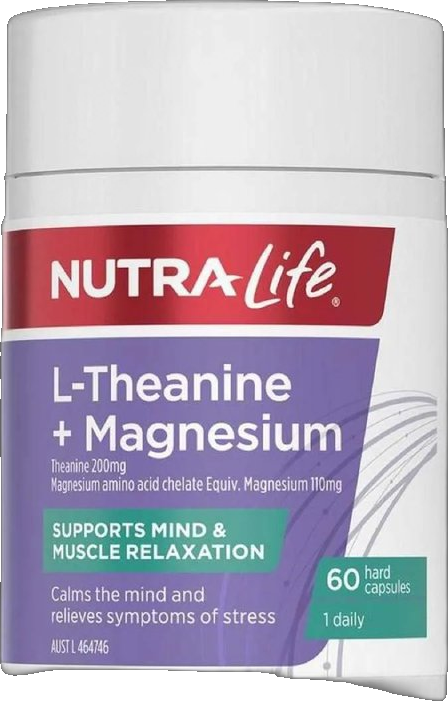
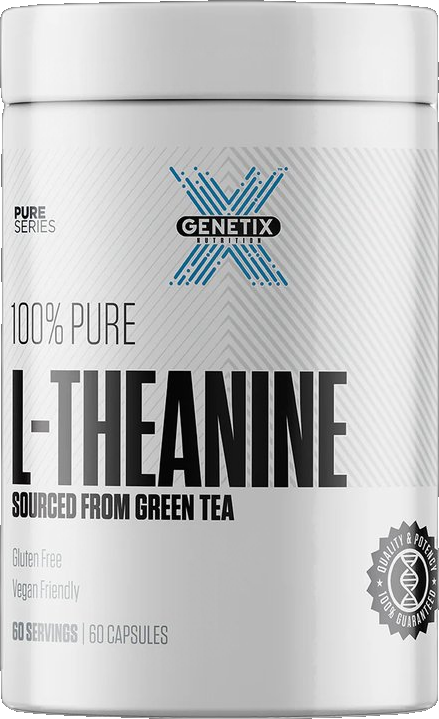
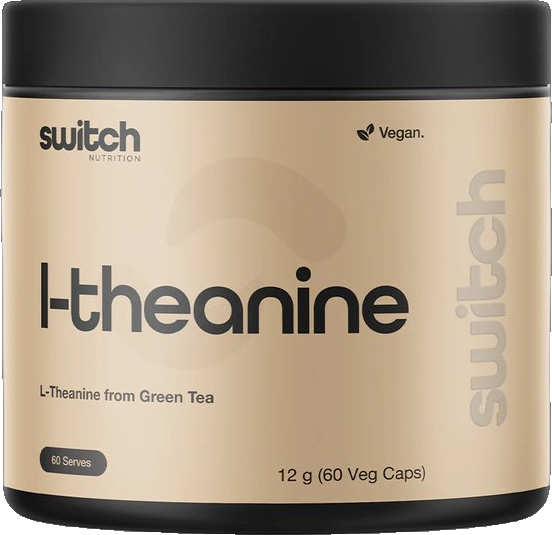
Apigenin doesn't exist in a vacuum on Huberman's stack. Magnesium L-threonate (~145mg elemental) has a thinner clinical base than glycinate but credible animal data on brain-magnesium delivery. L-theanine (200mg) has multiple human EEG and PSG trials behind it. Of the three, apigenin has the weakest direct evidence.
If you're stack-curious and want the closest analogue to evidence-led versions of these mechanisms, see our magnesium guide (linked below). L-theanine is the other natural candidate worth researching alongside; we haven't published a dedicated piece on it yet.
The Verdict
Skip isolated apigenin. The 50mg dose is a podcast number, not a trial number. There are zero published human RCTs at that dose. The mechanism stays interesting, the marketing has overtaken the data.
If you want the apigenin pathway: drink strong chamomile tea or take a 200–400mg chamomile extract capsule. The evidence base is small but real, and the cost is a fraction of the isolated SKUs.
If you're a woman with estrogen-sensitive history, on HRT, on tamoxifen, or pregnant: talk to your GP before any apigenin or chamomile extract. The phytoestrogen receptor activity is weak, but it's not zero.
Where to actually spend the money: magnesium glycinate (200–400mg elemental) and L-theanine (200mg) before bed. Both have real human RCT support and cost less per night than the trendy flavonoid.
- Compared isolated apigenin SKUs against whole-plant chamomile extract evidence base.
- Surveyed AU retailer pricing in May 2026 across iHerb AU, Naturitas, Supps247, Longevity Plus, and Fairfield Nutrition.
- Cross-checked clinical trial registries for human RCTs of isolated apigenin at 50mg pre-bed (none found).
- Reviewed mechanistic GABA-A receptor binding data and the phytoestrogen receptor literature.
- Triangulated against the other Huberman-stack adjuncts (magnesium glycinate, L-theanine) for cost-per-night comparison.
Frequently Asked Questions
Does apigenin actually help you sleep?
There are zero published randomised controlled trials testing isolated apigenin at 50mg in humans for sleep. The GABA-A binding mechanism is plausible, but the marketing has run well ahead of the evidence. Our verdict is to skip the isolated capsule and drink chamomile instead.
Where did the 50mg apigenin dose come from?
From Andrew Huberman's “sleep cocktail” — magnesium L-threonate, L-theanine and 50mg apigenin taken 30 to 60 minutes before bed — popularised across 2023 and 2024 podcast episodes. It was never established by a dose-finding trial, and brands adopted it wholesale.
Is chamomile tea a reasonable alternative?
Yes, and it is our recommendation. Chamomile flowers carry 3,000 to 5,000 micrograms of apigenin per gram of dried flower, where apigenin makes up about 68% of total flavonoids. A strong chamomile tea delivers a measurable dose at a fraction of the capsule price.
What does isolated apigenin cost in Australia?
A May 2026 price check put isolated apigenin SKUs at roughly A$45 to A$60 a bottle across Amazon AU, Naturitas, Supps247 and Longevity Plus (none of them tracked by SuppSaver). That is a substantial spend on a compound with no human sleep trials behind it at that dose.
References
- Adib-Hajbaghery & Mousavi, 2017. The effects of chamomile extract on sleep quality among elderly people: A clinical trial
- Zick et al., 2011. Preliminary examination of the efficacy and safety of a standardized chamomile extract for chronic primary insomnia: a randomized placebo-controlled pilot study
- Kazemi et al., 2024. Effects of chamomile (Matricaria chamomilla L.) on sleep: A systematic review and meta-analysis of clinical trials
- Hanrahan et al., British Journal of Pharmacology, 2011. Flavonoid modulation of GABA-A receptors
- Mukherjee et al., 2021. Apigenin acts as a partial agonist action at estrogen receptors in vivo
- PubMed review, 2024. Apigenin: a natural molecule at the intersection of sleep and aging
- Apigenin, Wikipedia (food sources and concentrations)
- Hieu et al., Phytotherapy Research, 2019. Therapeutic effects and safety of oral Matricaria recutita L. on sleep: A systematic review and meta-analysis