 SUPPSAVER
Ashwagandha: The HPA-Suppression Risk Nobody Talks About
- 1at Woolworths · packs from $6.00$10.00/100 caps
- 2at Woolworths · packs from $22.50$18.75/100 caps
- 3at Oxygen Nutrition · packs from $26.10$43.50/100 caps
0.5 µg/dL. That's the early-morning cortisol a 55-year-old woman returned twice after roughly 950mg/day of ashwagandha for more than a year, per a February 2026 case report in Endocrinology, Diabetes & Metabolism (Anne et al., 2026)[1]. Full secondary adrenal insufficiency. Six months after she stopped, the HPA axis still had not recovered. We think this is the single most important fact about ashwagandha that the AU supplement market is currently ignoring, and our verdict up front: cap at eight weeks of continuous use, never buy a bottle that hides the withanolide milligrams.
What the 2026 Case Actually Showed
The patient presented with Cushingoid features. Moon facies, 10kg of weight gain over 12 months, facial puffiness for six. She also had new subclinical hypothyroidism (TSH 7.19) and a fresh diabetes diagnosis (HbA1c 6.5%). An ACTH stimulation test failed to produce an adequate response, peaking at only 3.68 µg/dL at 60 minutes. She needed hydrocortisone replacement plus thyroxine to stabilise.
The authors contrast her with the only prior published case (Fry et al., 2022)[3]: a 41-year-old taking 858.6mg/day for 10 weeks who recovered in two weeks after cessation. The implication is that cumulative dose drives whether the axis bounces back. Ten weeks at ~860mg recovered fast. Twelve months at ~950mg had not recovered at six.
Two published HPA cases globally is not an epidemic. It is also not zero, and the mechanism is consistent with the broader cortisol-lowering literature, so we treat it as a documented risk that scales with dose multiplied by duration.
Why Cortisol Reduction Is the Mechanism, Not a Side Effect
The steroidal withanolides in ashwagandha (withaferin A and withanolide D in particular) are structurally similar to corticosteroids. They appear to interact with glucocorticoid receptors and modulate the genes encoding adrenal-steroidogenesis enzymes. The body sees an exogenous cortisol-like signal, downregulates endogenous production, and the HPA axis quiets down. That is how it works. The cortisol reduction is not a happy accident.
A 2025 meta-analysis of 15 RCTs in 873 adults[2] pooled a mean cortisol reduction of -2.36 at eight weeks (95% CI -3.26 to -1.46, p<0.0001), with anxiety scores down -3.52 on HAM-A. The effect plateaus after eight weeks. That plateau is the only real evidence base for the cycling protocols you see online, and it is thinner than it sounds.
For a chronically stressed person whose cortisol is genuinely elevated, dampening that signal short-term is the point. For someone with a normal HPA axis taking a clinical dose for a year, the Anne 2026[1] picture is the foreseeable end of the same pharmacology.
Extracts Are Not Interchangeable: KSM-66 vs Shoden vs Sensoril
The word "ashwagandha" on a label tells you almost nothing. Withanolide content drives the effect, and the three patented standardised extracts on the AU market deliver wildly different concentrations.
KSM-66 (Ixoreal): Root-only, water-extracted, minimum 5% withanolides. At 600mg/day it produced a 27.9% cortisol reduction over 60 days versus 7.9% on placebo. This is the most studied extract and the one quoted in most AU clinical-dose products.
Sensoril (Natreon): Leaf plus root, higher withanolide percentage. At 125mg/day it produced roughly a 15% cortisol drop over eight weeks. Note the dose: one-fifth of the KSM-66 milligrams for a similar magnitude of effect.
Shoden (Arjuna): 35% withanolide glycosides. Produces measurable morning cortisol reduction at 60–120mg/day.
The takeaway matters when you compare bottles. 60mg of Shoden is roughly equivalent in cortisol effect to 600mg of KSM-66. A label that says "ashwagandha 1000mg" without naming the extract and stating withanolide milligrams is functionally undeclared.
Where the Dose-Response Risk Lives
Both published HPA-suppression cases sit between 600 and 950mg/day of standardised extract taken for 10 weeks or longer. ODS/NIH and toxicology reviews note that doses above 1,250mg/day are not supported by data[7]. The "more is better" instinct does not apply here. Once cortisol is suppressed to the trial-pooled magnitude at eight weeks, additional milligrams do not produce additional benefit, but they do compound the cumulative exposure that distinguishes the 2-week recovery in Fry 2022[3] from the 6-months-and-counting non-recovery in Anne 2026[1].
Our read: a clinical dose is 30mg withanolides/day (equivalent to ~600mg KSM-66 or ~125mg Sensoril or ~60mg Shoden). Anything higher is buying risk without buying effect.
The TGA Liver Signal You Should Know About
On 22 February 2024 the TGA issued a safety alert on Withania somnifera[5]. By 5 February that year, 12 liver-related adverse-event reports had been filed in Australia. Seven had enough information to suggest possible ashwagandha-induced liver injury. Four had no other plausible cause. Four required hospitalisation. A separate cluster of 16 hospitalisations was driven by severe gastrointestinal complaints.
LiverTox[4] has graded ashwagandha hepatotoxicity at category B ("likely cause") with roughly 23 published cases by 2024. Latency ranges from 2 to 12 weeks. Doses implicated span 154 to 2,100mg/day, which means dose-response on the liver side is murkier than on the HPA side. Most cases were mild-to-moderate and resolved within 1–4 months of stopping. Rare acute liver failure and fatal cases exist.
The TGA flagged label-warning action as on the table if the signal grows. The standing mandatory pregnancy warning ("If you are pregnant, or considering becoming pregnant, do not take without consulting a health professional") remains on every AUST L product.
What's Actually Legal to Sell in Australia
Ashwagandha is grandfathered into the TGA's Permissible Ingredients Determination[6]. Around 374 ashwagandha-containing AUST L medicines sat on the ARTG as of November 2024. The Permissible Indications determination caps daily intake at 12g equivalent dried root, restricts to root-only material, and limits extraction solvents to water, ethanol, or methanol.
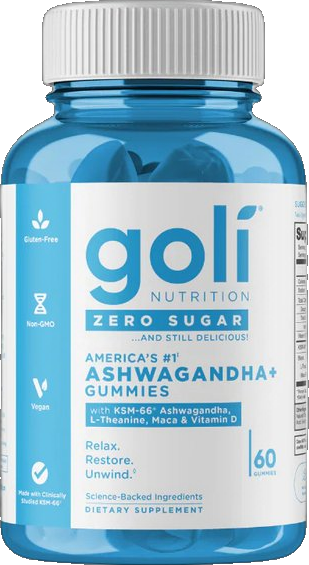
FSANZ classifies ashwagandha as a Novel Food, so it cannot lawfully be sold in foods or beverages. That includes coffees, gummies marketed as confectionery, smoothie blends, and protein bars. Only AUST L therapeutic goods that meet the PI conditions are compliant. Direct-import bottles ordered from iHerb or Amazon US without an AUST L or AUST R number are not.
Permitted on-label claims read like "supports a healthy stress response", "helps body adapt to stress", "supports restful sleep", "relieve symptoms of mild anxiety". Off-limits language includes "treats anxiety", "treats depression", "boosts testosterone", "treats adrenal fatigue", and any reference to specific mental-health diagnoses. If you see those phrases on a product page, the seller is operating outside AUST L scope.
AU Brand Map: What You're Actually Buying
Caruso's Ashwagandha 7500 (~$29.99, 50 tabs): KSM-66, 600mg extract per day, 30mg withanolides. This is the cleanest clinical-dose match on the shelf. Same active loading as the meta-analysed studies.
Swisse Ultiboost High Strength Ashwagandha 7500 (~$34.99, 60 tabs): Also KSM-66 at 600mg extract / 30mg withanolides. Direct competitor to Caruso's; usually a couple of dollars more.
Herbs of Gold Mind Ease (~$36.95, 60 tabs): KSM-66 at 300mg extract / 15mg withanolides plus lavender. Half the active per dose. Sensible if you want a lower exposure or if you're stacking with other adaptogens.
Wagner Ashwagandha 6000 ($13.99 on special, $27.99 EDLP): Generic 25:1 root extract, not KSM-66. Withanolide percentage not declared on label, so you cannot back-calculate active dose. Cheap per capsule but uncomparable to the trial evidence.
Healthy Care High Strength (~$24.99, 60 tabs): Generic 45:1, 600mg extract per day. Same issue. The "45:1" tells you nothing about withanolide content.
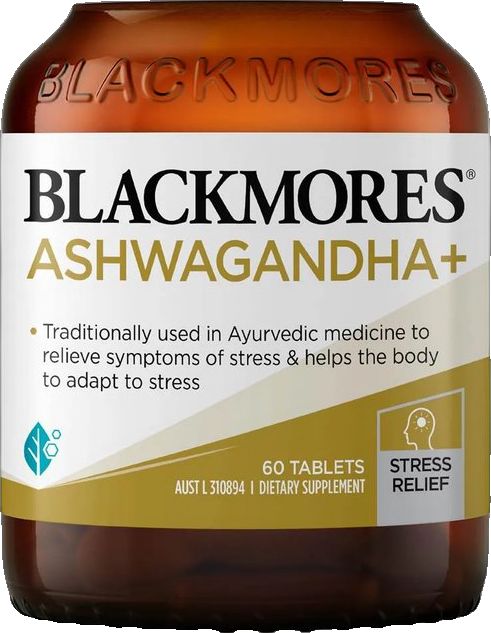
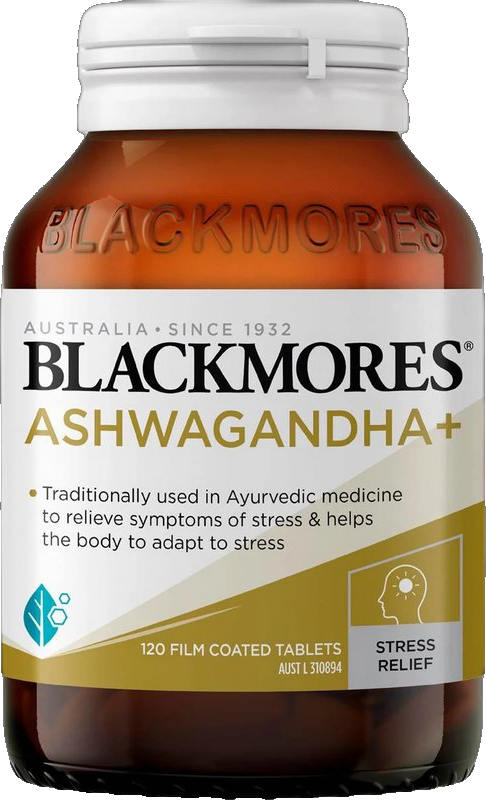
Blackmores Ashwagandha+ (~$24.99, 60 tabs): Generic withania at only 150mg extract / 4.5mg withanolides, paired with B-complex and magnesium. Sub-clinical dose. The B-complex is probably doing most of the work people feel.
Swisse Ultiboost Ashwagandha Calm+ (~$24.99): 30mg extract / 1.5mg withanolides. Below threshold. The label sells the herb; the active dose is closer to a placebo.
Price Per Active
If you only compare cost per capsule, Wagner wins. If you compare cost per milligram of declared withanolides, KSM-66 products at 30mg/day land at roughly A$0.50–1.20 per day of dosing, or about A$1.70–4 per 100mg of withanolides over a 30-day course.
Generic 25:1 and 45:1 lines cannot be priced on the same axis because the active content is undeclared. The cheaper number on the front is doing some work that the supplement panel does not back up.
Our Verdicts
Cap at 8 weeks of continuous use: The pooled cortisol effect plateaus there. Beyond eight weeks you are accruing exposure without accruing benefit, and you are moving toward the duration window where the two published HPA cases sit.
Cycle as caution, not as evidence: 8 weeks on / 2–4 weeks off is a cautious extrapolation from the eight-week plateau and the absence of any controlled safety data past ~12 weeks. We use it. We will not pretend an RCT validated it.
Skip if you take levothyroxine: Sharma 2018 saw ashwagandha raise T3 by 41.5% and T4 by 19.6% in subclinical hypothyroidism. Stacking it on a thyroxine prescription is a path to iatrogenic hyperthyroidism.
Skip if you take benzodiazepines or sedatives: Additive GABAergic depression is documented in preclinical work; Memorial Sloan Kettering's monograph[8] advises avoidance.
Skip if you are pregnant, trying to conceive, or breastfeeding: Historical abortifacient use is documented and no adequate reproductive-toxicity data exists. The TGA pregnancy warning is on every bottle for a reason.
If you go ahead: buy a KSM-66, Sensoril, or Shoden product with the extract name and withanolide milligrams on the label. Cap at ~30mg withanolides/day. Stop and see your GP if you notice unexplained weight gain, moon-face puffiness, persistent fatigue, or symptoms of jaundice.
Frequently Asked Questions
Is it safe to take ashwagandha every day long-term?
The evidence says be cautious. A February 2026 case report documented a woman who took roughly 950mg/day for over a year and developed full secondary adrenal insufficiency — her HPA axis had still not recovered six months after stopping. The pooled cortisol effect from a 2025 meta-analysis of 15 RCTs plateaus at eight weeks, so our verdict is to cap continuous use at eight weeks and cycle off, since extra time on the herb compounds exposure without adding benefit.
What's the difference between KSM-66, Sensoril, and Shoden ashwagandha extracts?
The extract name and withanolide content matter far more than the milligrams on the front of the label. KSM-66 is root-only at minimum 5% withanolides and typically dosed at 600mg/day (30mg withanolides). Sensoril is leaf-plus-root at a higher withanolide percentage, producing a similar cortisol effect at just 125mg/day. Shoden is 35% withanolide glycosides, effective at only 60–120mg/day. 60mg of Shoden is roughly equivalent in cortisol effect to 600mg of KSM-66, so a label reading "ashwagandha 1000mg" without naming the extract or declaring withanolide milligrams is functionally undeclared.
Can ashwagandha damage your liver?
There's a documented signal. The TGA issued a safety alert on Withania somnifera on 22 February 2024 after logging 12 liver-related adverse-event reports in Australia, four of which required hospitalisation. LiverTox grades ashwagandha hepatotoxicity at category B ("likely cause") with roughly 23 published cases by 2024, with doses implicated ranging from 154 to 2,100mg/day. Most cases were mild-to-moderate and resolved within 1–4 months of stopping, but rare acute liver failure and fatal cases exist.
Is ashwagandha legal to buy as a gummy or in coffee in Australia?
No. FSANZ classifies ashwagandha as a Novel Food, so it cannot lawfully be sold in foods or beverages — that rules out coffees, confectionery-style gummies, smoothie blends, and protein bars. It is grandfathered into the TGA Permissible Ingredients Determination for therapeutic goods, so only AUST L-listed products that meet those conditions (root-only material, water/ethanol/methanol extraction, capped daily intake) are compliant. Direct-import bottles without an AUST L or AUST R number are not.
Who should avoid taking ashwagandha?
Skip it if you take levothyroxine — ashwagandha has been shown to raise T3 and T4, risking iatrogenic hyperthyroidism when stacked on a thyroxine prescription. Skip it if you take benzodiazepines or sedatives, since additive GABAergic depression is documented in preclinical work. And skip it if you are pregnant, trying to conceive, or breastfeeding — historical abortifacient use is documented, no adequate reproductive-toxicity data exists, and the TGA pregnancy warning appears on every AUST L bottle.
References
- Anne et al., 2026. From herbal hope to hormonal havoc: secondary adrenal insufficiency after prolonged ashwagandha use
- 2025 meta-analysis. Effect of ashwagandha on cortisol and anxiety: systematic review and meta-analysis of 15 RCTs (n=873)
- Fry et al., 2022. Adrenal hypofunction in a healthy adult after ashwagandha supplementation
- LiverTox, Ashwagandha monograph
- TGA Safety Alert, Medicines containing Withania somnifera (ashwagandha), 22 Feb 2024
- TGA, Therapeutic Goods (Permissible Ingredients) Determination (No. 1) 2026
- ODS NIH, Ashwagandha health professional fact sheet
- Memorial Sloan Kettering, Ashwagandha integrative medicine monograph