 SUPPSAVER
Berberine in Australia: What the TGA Actually Lets You Claim
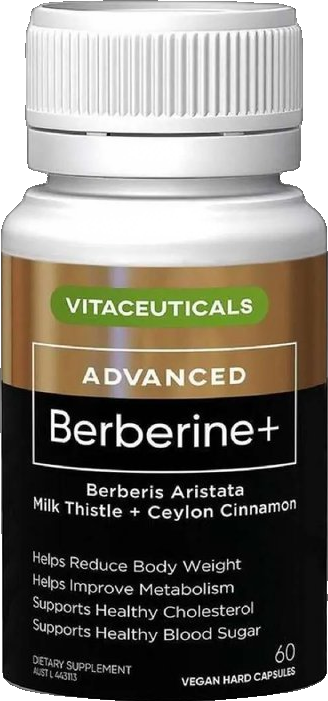
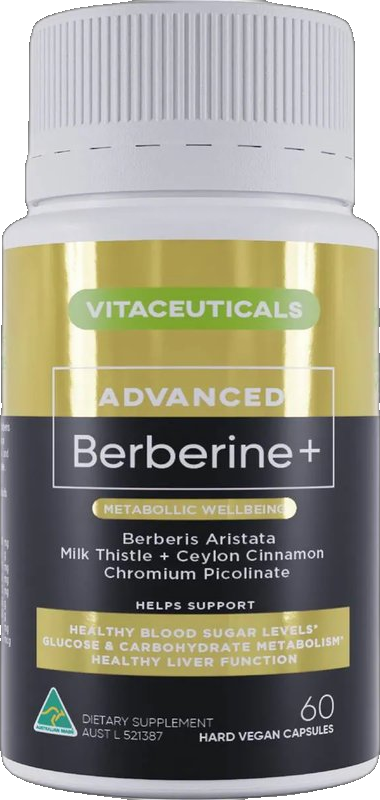
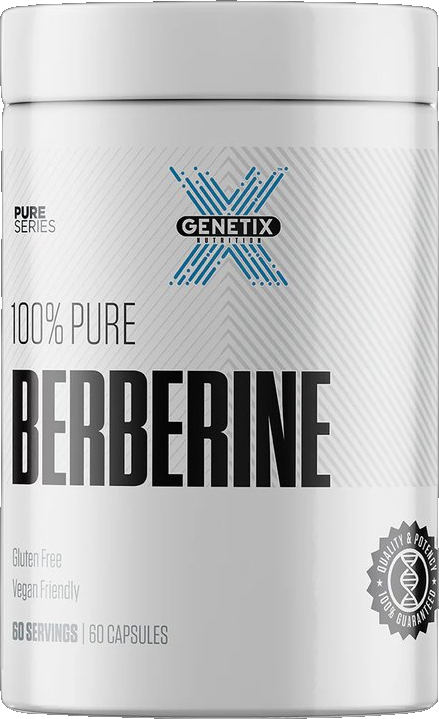
- 1at Woolworths · packs from $18.27$30.45/100 caps
- 2at Woolworths · packs from $29.50$49.17/100 caps
- 3at Supplement Warehouse · packs from $33.20$55.33/100 caps
1.38%, p = 0.42. That was the placebo-adjusted difference for the primary outcome in the February 2026 JAMA Network Open trial of 1g/day berberine in 337 adults with obesity and fatty liver (Wei et al., 2026)[1]. Visceral fat did not move. Liver fat did not move. So much for "Nature's Ozempic". The TikTok story died on contact with a proper trial, and the TGA was already several steps ahead of the marketing. Our verdict up front: berberine is a real but modest glycaemic adjunct, not a weight-loss drug, and any AU label or influencer treating it as a GLP-1 alternative is operating in TGA breach territory.
The Trial That Killed the Ozempic Comparison
Wei and colleagues ran 337 diabetes-free adults with obesity and metabolic-associated fatty liver disease through 11 Chinese hospitals, randomised to 1g/day berberine HCl or placebo for six months (Wei et al., 2026)[1]. The primary outcomes were visceral adipose tissue area and liver fat content on CT. Both were flat versus placebo. Liver fat: treatment difference 0.87%, p = 0.12. Safety was excellent. Berberine just did not do the thing the headlines said it did.
The 2025 International Journal of Obesity meta-analysis (23 RCTs) pooled a weight effect of −0.88kg (95% CI −1.36 to −0.39)[2]. That is a real, statistically robust number, and it is also clinically tiny. GLP-1 agonists produce 10–15% body weight loss in head-to-head trials. Berberine produces roughly a kilogram over months. Treating those as the same product is a category error.
If a brand or influencer is still selling berberine as a weight-loss agent in late 2026, they are either ignoring the Wei trial or hoping you will.
What Berberine Actually Does
The strongest signal in the literature is glycaemic control in type 2 diabetes. The 2024 Frontiers in Pharmacology meta-analysis (50 studies, 4,150 participants) found berberine added to standard hypoglycaemics reduced HbA1c by 0.69%, with significant drops in fasting and 2-hour postprandial glucose (Hou et al., 2024)[3]. A separate 2021 meta-analysis of 46 trials landed on a similar HbA1c effect of 0.73%. For context, metformin monotherapy typically delivers a 1–1.5% HbA1c reduction.
Insulin sensitivity also improves. The 2023 Journal of Nutrition meta-analysis (20 RCTs, n = 1,761) reported a HOMA-IR reduction of 0.85, with a larger effect in women than men (Asbaghi et al., 2023)[4]. Lipid effects are consistent across the literature: meaningful drops in total cholesterol, LDL-C, and triglycerides, with the Wei 2026 trial recording a 7.72mg/dL LDL-C reduction even in the null fat-loss arm[1].
Mechanistically, berberine activates AMPK through a lysosomal, AXIN1-dependent pathway that is distinct from metformin's. That is interesting biology and a thin reed to lean a treatment decision on. The clinical numbers above are the real story.
Why the Format Matters: HCl vs Phytosome
Standard berberine HCl has oral bioavailability under 5%. Most of the dose never reaches systemic circulation. Two reformulations have measurably better numbers: phytosome (phospholipid-bound, branded as Berberine Phytosome or Berbevis) delivers 3–5 times the Cmax and AUC of unformulated HCl at equal dose, and liposomal forms have shown a 70% Cmax bump and 43% AUC increase in pilot RCTs.
The practical implication: a 500mg phytosome dose can hit plasma exposure that requires 1.5–2.5g of HCl. Phytosome users also report less GI distress, which matters because 20–30% of HCl users get constipation, diarrhoea, or cramping at clinical doses.
In Australia, phytosome formats are niche. Major chains (Chemist Warehouse, Priceline) stock HCl-based products from Caruso's, JSHealth, Switch Nutrition, and Bulk Nutrients. Phytosome products (Enzymedica, Igennus) tend to be imported through iHerb and Amazon AU. If you're paying $50 a month for HCl when a $60 phytosome would deliver more active drug per dose, you are buying the wrong format.
What the TGA Lets a Label Say
Every berberine product sold in Australia is an AUST L Listed medicine. Sponsors must select claim wording from the Therapeutic Goods (Permissible Indications) Determination (No. 1) 2025, which came into force on 3 April 2025 (TGA, 2025)[5]. Inventing claim language is not allowed. Permitted indications include "helps maintain healthy blood sugar levels in healthy individuals", "assists sugar and carbohydrate metabolism", and traditional-use phrasing for bile flow and liver support.
Biomarker numbers are explicitly banned. A label cannot lawfully say "lowers HbA1c by 0.69%" or "reduces fasting glucose to X mmol/L", even though those numbers exist in the published literature. Listing the trial result in a meta-analysis is fine. Printing it on a bottle in Australia is not.
"Nature's Ozempic" is a Section 42DLB problem. Ozempic is a prescription-only GLP-1, and referring to a supplement as a substitute or alternative breaches the prohibition on advertising prescription medicines to consumers (TGA s.42DLB guidance)[7]. The TGA has issued more than $300,000 in fines to telehealth operators for related conduct, and AAP FactCheck has already published a debunk of "TGA-approved Ozempic-style liquid" claims.
The cancellation precedent is recent and specific. JSHealth Vitamins Berberine+ (ARTG 460965) was cancelled on 8 April 2025 under sponsor-requested action, then a new SKU (ARTG 520797) was relisted on 25 November 2025 (TGA Listed Medicines register)[6]. Whatever the internal reasoning, the regulator is paying attention to this category.
Prices in Australia, and the Metformin Comparison
A retail price check on AU prices for a 500mg dose runs from roughly $0.33 per cap (Bulk Nutrients HCl, a store SuppSaver does not currently track) to $0.85 per cap for premium complexes. A typical 1–1.5g/day clinical regimen burns 60–90 caps a month, putting monthly spend in the $25–90 range depending on format and brand.
Metformin on the PBS costs $7.70 a month for concessional patients (frozen through 2029) and $31.60 for general patients (PBS, 2025)[8]. That makes berberine 4–12 times more expensive than concessional metformin per month, and 2–3 times more than the general-patient PBS rate. For a glycaemic effect that is smaller than metformin's, with less long-term outcome data, and no cardiovascular endpoint trials.
This is the cost calculus that the marketing copy avoids. If your GP can prescribe metformin and you tolerate it, the supplement is the worse deal on both price and evidence. Berberine becomes defensible when metformin is unavailable, contraindicated, or genuinely not tolerated, or when the user wants an adjunct to existing therapy with their clinician's sign-off.
Drug Interactions That Actually Matter
Berberine inhibits CYP3A4 and P-glycoprotein, the same enzymatic territory as grapefruit juice and a long list of clinically important drugs. The interaction list is not theoretical:
- Statins (atorvastatin, simvastatin): elevated plasma levels, increased risk of myopathy.
- Cyclosporine, tacrolimus, sirolimus: immunosuppressant exposure can rise sharply, with transplant implications.
- Warfarin: INR can shift; monitoring is essential.
- Antidiabetics (metformin, sulfonylureas, insulin): additive glucose lowering, hypoglycaemia risk.
If you take any prescribed medication and you're considering berberine, run it past your GP or pharmacist before starting. The supplement is not benign in combination, even though its monotherapy safety profile is excellent.
The Verdict
If you want it for weight loss: don't. The Wei 2026 trial is the cleanest data we have, and it was null. The 0.88kg pooled meta-analysis effect is not the body recomposition story the marketing sells.
If you want it for modest glycaemic and lipid support: reasonable, with caveats. Best evidence sits in type 2 diabetes adjunct use. If metformin is on the table and tolerated, that is the better-evidenced, cheaper, PBS-subsidised path. Berberine becomes the more defensible buy when metformin isn't an option.
Format choice: we'd reach for phytosome. Three to five times the bioavailability at lower mg per dose, with less GI fallout. HCl works if your budget is tight and your gut cooperates.
Skip the "Nature's Ozempic" framing entirely. It is not Ozempic, it is not a GLP-1, and any brand selling it as such is operating in TGA breach territory.
Always check interactions. CYP3A4 and P-gp inhibition is real. If you take statins, immunosuppressants, warfarin, or antidiabetics, talk to your prescriber before stacking berberine on top.
Frequently Asked Questions
Is berberine really “nature's Ozempic”?
No. The February 2026 JAMA Network Open trial of 1g/day berberine in 337 adults found visceral fat and liver fat both flat against placebo. Pooled weight loss across 23 trials is about 0.88kg, against 10 to 15% body weight for GLP-1 agonists. They are not comparable products.
What does berberine actually do well?
Glycaemic control as a type 2 diabetes adjunct is the strongest signal. A 2024 Frontiers in Pharmacology meta-analysis of 50 studies and 4,150 participants found berberine added to standard hypoglycaemics reduced HbA1c by 0.69%, alongside meaningful lipid and insulin-sensitivity improvements.
How does that compare to metformin?
Metformin monotherapy typically delivers a 1 to 1.5% HbA1c reduction, against roughly 0.69 to 0.73% for berberine across two large meta-analyses. Berberine is a real but more modest glycaemic adjunct, not a replacement for prescribed medication.
What can an Australian label legally claim?
Australian listed medicines may carry low-risk wellbeing claims only. Marketing berberine as a weight-loss drug or a GLP-1 alternative sits in TGA breach territory, and any brand or influencer still doing so in late 2026 is working against the current trial evidence.
References
- Wei et al., JAMA Network Open, 2026. Effects of Berberine on Visceral Adipose Tissue and Liver Fat in Adults With Obesity and MASLD: A Randomized Clinical Trial
- International Journal of Obesity, 2025. Effects of berberine on obesity-related anthropometric indices: systematic review and meta-analysis of 23 RCTs
- Frontiers in Pharmacology, 2024. Effects of berberine on glycaemic control in type 2 diabetes: meta-analysis of 50 studies
- Journal of Nutrition, 2023. Berberine and HOMA-IR: systematic review and meta-analysis of 20 RCTs
- TGA, in force 3 April 2025. Therapeutic Goods (Permissible Indications) Determination (No. 1) 2025
- Therapeutic Goods Administration. Listed medicines and AUST L numbers
- Therapeutic Goods Administration. TGA action on prescription weight-loss medicine advertising (s.42DLB)
- Department of Health and Aged Care. PBS co-payment schedule 2025