 SUPPSAVER
How to Read Supplement Nutrition Labels
- 1at Supplement Mania · packs from $94.99$8.06/100g protein
- 2at Supplement Warehouse · packs from $95.95$8.53/100g protein
- 3at Supplement Mania · packs from $238.99$9.02/100g protein
A 40g scoop of whey concentrate showing 30g of protein looks identical, at a glance, to a 25g scoop showing 20g. Same headline ratio. Different product. The first uses 60% more powder per serve, and the per-serve column is where most of the marketing sleight-of-hand happens. We audit 14 Australian stores every day, and we keep watching shoppers compare per-serve numbers across products with wildly different scoop sizes. Our verdict up front: cover the per-serve column, work in per-100g, and run a 90-second check before every purchase.
The Serving Size Problem
Every Australian supplement panel shows two columns, "Per Serve" and "Per 100g," and FSANZ requires both for packaged supplements[3]. Manufacturers pick the serving size themselves. That's the loophole. A brand can stretch a scoop to 40g, add three grams of cocoa, and post a bigger protein number than a competitor running a tighter 25g serve, even when the cheaper product is more concentrated.
Our verdict: the per-serve column is a marketing artefact. Useful for portioning, useless for comparing products. We've watched scoop sizes drift up across the local market over the last three years, and the drift is almost always in the direction of a more impressive front-of-pack claim.
Use the Per 100g column. It normalises serving size and gives you the actual concentration of the nutrient you're buying.
Protein Concentration: What's Good?
For protein powders, the Per 100g protein figure tells you what proportion of the tub is actually protein. Here are the bands we use when ranking Australian SKUs:
- Whey concentrate: 70–80g per 100g is typical. Below 70g usually means filler, added carbs, or both.
- Whey isolate: 85–92g per 100g is the band that justifies the isolate price tag. Anything below 80g and the "isolate" label is doing more work than the formulation.
- Plant protein: 65–80g per 100g, and it varies more by source than dairy proteins do (pea and soy run higher, rice and hemp lower).
- Casein: 75–85g per 100g, micellar or hydrolysed.
- Mass gainers: 20–40g per 100g, deliberately. You're buying carbs first, protein second.
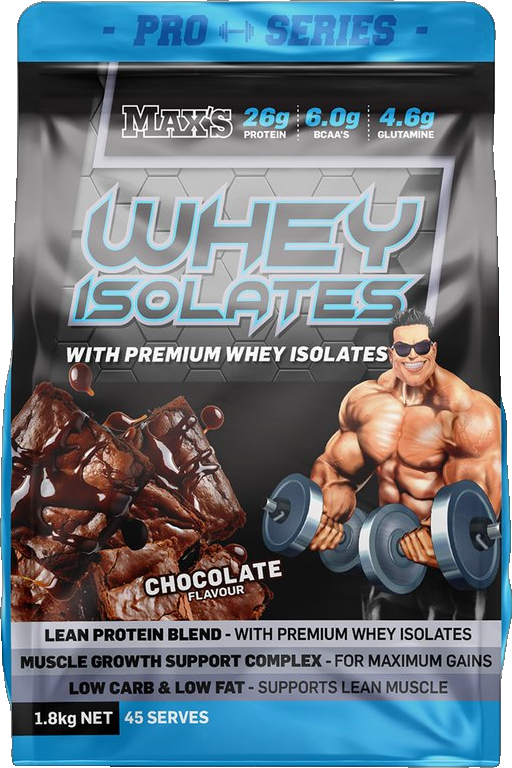
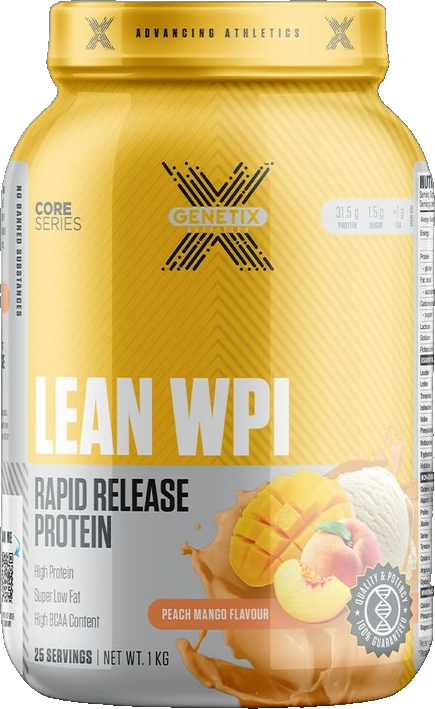
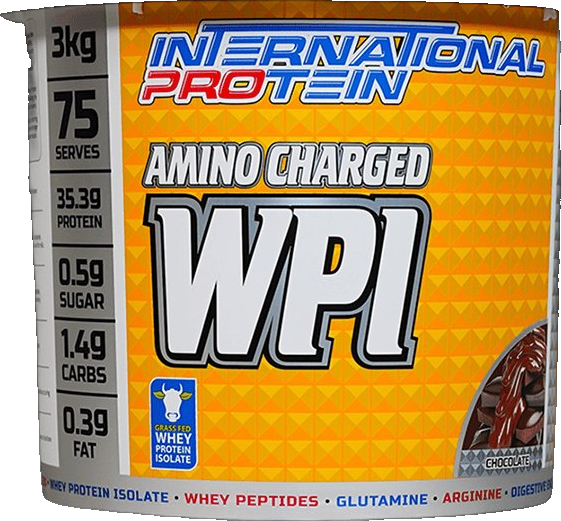
A product calling itself a "lean isolate" at 65g protein per 100g is misrepresenting the formulation. Check the carbohydrate and fat lines on the same panel. If the carbs sit above 10g per 100g on a so-called isolate, you're paying isolate prices for what is, in practice, a concentrate with a label upgrade.
The protein-quality picture matters too. The 2017 ISSN position stand on protein and exercise (Jäger et al., 2017)[1]puts the practical daily target at 1.6–2.2g per kg of body weight for active people, and whey isolate scores highest on leucine content per gram. That's the reason the price premium exists. It's also the reason a low-concentration "isolate" is poor value: you're paying for a quality marker the powder doesn't deliver.
Understanding the Macro Breakdown
Four lines do the heavy lifting on a supplement panel. We'll take them in order of how often they're misread.
Protein (g). The headline. 4 kcal per gram. Use the per-100g figure for cross-product comparisons, and ignore any front-of-pack number that quotes the per-serve protein in a larger font than the serve size itself. That layout is a tell.
Carbohydrates (g), with "of which sugars" beneath. A clean whey isolate runs under 5g carbs per 100g. A concentrate sits anywhere from 6–15g, mostly lactose. If sugars are a large share of the carb line on a product marketed as low-carb, read the ingredient list before you read anything else.
Fat (g). Under 2g per 100g for isolates, 3–7g for concentrates. Fat isn't a problem at these doses, and concentrates taste better partly because of it. We're not anti-fat. We're anti-fat-being-counted-as-protein-by-marketing-copy.
Energy. Australian panels can show kilojoules, kilocalories, or both. Divide kJ by 4.184 to get kcal. A pure protein powder at ~80g protein per 100g lands roughly 380–420 kcal per 100g once you account for the residual carbs, fat, and moisture.
Sodium gets overlooked. Some flavoured products carry 200mg per serve or more, which isn't dangerous at supplement doses but adds up if you're drinking three shakes a day on top of a normal diet. Worth knowing about; not worth panicking about.
Creatine Labels: What to Check
Creatine panels are short and easy to read, which is one reason it's our favourite category to audit. The number that matters is grams of creatine per 100g of product. Pure monohydrate sits close to 100g per 100g because the compound itself is almost entirely creatine by mass. Anything significantly lower means additives, a flavour system, or a blended form. The 2017 ISSN position stand on creatine (Kreider et al., 2017)[2]is unambiguous: monohydrate at roughly 3–5g per day is the gold-standard protocol, and no fancier form has consistently beaten it in head-to-head trials.
Some products bundle monohydrate with dextrose or maltodextrin to assist absorption. That's a legitimate formulation. It's also a sugar tax. If you want pure creatine, our cutoff is 88g of creatine per 100g of product; below that, you're paying creatine prices for a partial carb supplement.
The Real Cost per Gram of Protein
Once you have protein per 100g and price per 100g, the unit-economics calculation is trivial.
Worked example. A whey isolate costs $4.50 per 100g of powder and delivers 80g of protein per 100g. That's $4.50 ÷ 80 = $0.056 per gram of protein, or 5.6 cents per gram. A competitor at $4.20 per 100g but only 68g protein per 100g works out to 6.2 cents per gram, around 10% more expensive despite the lower headline price.
This is the calculation we run automatically on every product in the comparison tables. It's the "Value ($/100g)" column. Lower is better. The number is boring and we love it.
Ingredient Lists: What Order Matters
FSANZ (Australia New Zealand Food Standards Code, Standard 1.2.4)[3]requires ingredients to be listed in descending order by weight. First ingredient is the biggest. Last is the smallest. There's no wiggle room on the ordering rule, which makes the ingredient list the most honest line on the panel.
A reputable whey leads with "whey protein concentrate," "whey protein isolate," or "whey protein blend." If maltodextrin, sucrose, dextrose, or oat flour appears in the top three, the protein concentration is doing less work than the marketing photo suggests. We've seen tubs marketed as "high-performance whey" that list a cheap carb source ahead of the protein. That's not a high-performance whey. That's a flavoured mix with whey in it.
Creatine should be even shorter. Ideally one ingredient: creatine monohydrate. A flowing agent like silicon dioxide is fine. A creatine product with twenty ingredients, half of them branded "complexes," is a marketing exercise dressed as a formulation. We don't rank those favourably.
Ninety-Second Label Check
Before you buy, run the panel through this. It takes about ninety seconds once you've done it a few times.
- Cover the per-serve column with your thumb. Read the per-100g column only.
- For a whey isolate, confirm protein per 100g is 85g or higher; for a concentrate, 70g or higher.
- Read the first three ingredients. Protein source should lead.
- Calculate price per gram of protein. Compare with two other products in the same category.
- For creatine, confirm monohydrate is the lead ingredient and the panel shows close to 100g creatine per 100g of product.
That's it. The labels are organised to be read this way; manufacturers just hope you won't.
Frequently Asked Questions
Should I compare supplements by per-serve or per-100g?
Always compare per-100g, never per-serve. Manufacturers set the serving size themselves, so a brand can stretch a scoop to 40g and post a bigger protein number than a competitor running a tighter 25g serve, even when the cheaper product is more concentrated. The per-100g column normalises serving size and shows the actual concentration of what you're buying.
What protein per 100g should I look for in whey isolate vs concentrate?
Whey concentrate should show 70g or higher protein per 100g; below 70g usually means added filler or carbs. Whey isolate should hit 85g or higher — anything below 80g and the 'isolate' label is doing more marketing work than the formulation. Plant protein should sit around 65–80g per 100g depending on the source.
How do I calculate the true cost per gram of protein?
Divide price per 100g by protein per 100g. For example, a whey isolate at $4.50 per 100g delivering 80g protein per 100g works out to $4.50 ÷ 80 = 5.6 cents per gram of protein. A cheaper-looking product with a lower protein concentration can actually cost more per gram once you run this calculation.
What does ingredient order on a supplement label tell you?
Australian food standards (FSANZ Standard 1.2.4) require ingredients to be listed in descending order by weight, so the first ingredient is the largest component. A reputable whey should lead with whey protein concentrate or isolate — if maltodextrin, sucrose or dextrose appears in the top three, the protein concentration is doing less work than the marketing suggests.
How much creatine should be in a pure creatine product?
Pure creatine monohydrate sits close to 100g of creatine per 100g of product, since the compound itself is almost entirely creatine by mass. A sensible cutoff is 88g of creatine per 100g — below that, additives like dextrose or maltodextrin have been blended in, and you're effectively paying creatine prices for a partial carb supplement.
What's a quick way to check if a supplement label is good value?
Run a 90-second check: cover the per-serve column and read only per-100g; confirm protein is 85g+ for isolate or 70g+ for concentrate; read the first three ingredients to confirm protein leads; calculate price per gram of protein; and for creatine, confirm monohydrate leads and the panel shows close to 100g creatine per 100g.
References
- Jäger et al., 2017. International Society of Sports Nutrition Position Stand: protein and exercise
- Kreider et al., 2017. International Society of Sports Nutrition position stand: safety and efficacy of creatine supplementation
- FSANZ. Australia New Zealand Food Standards Code: Labelling and information requirements