 SUPPSAVER
Creatine for Sleep-Deprived Days, What the 2026 Cognition Trial Showed
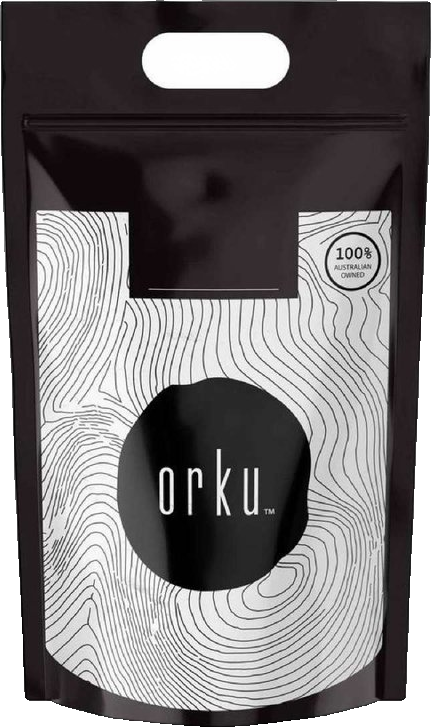
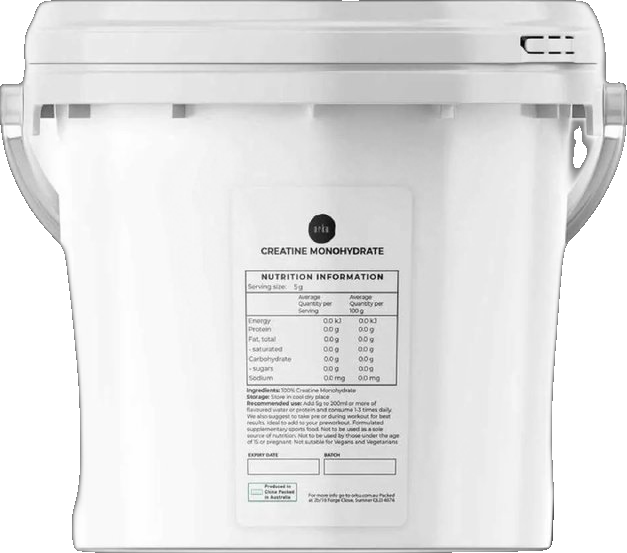
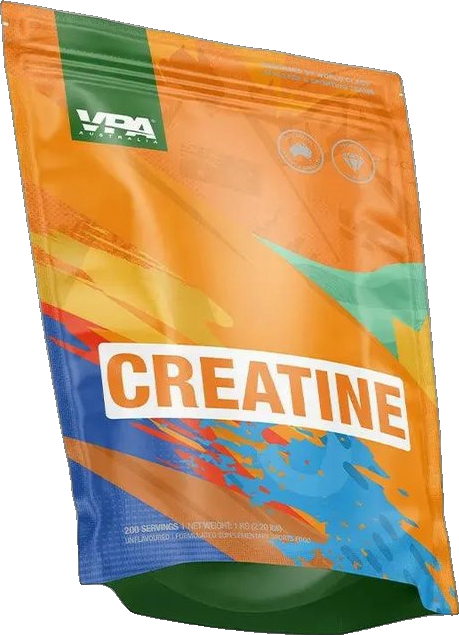
- 1at Woolworths · packs from $259.99$2.60/100g
- 2at Woolworths · packs from $119.99$4.00/100g
- 3at VPA Australia · packs from $20.00$4.80/100g
A single 14–18g hit of creatine monohydrate cut cognitive deterioration by up to 12% across a 21-hour sleep deprivation window. That's the headline from Gordji-Nejad et al., published in Nutrients on 21 April 2026[1]. It's a follow-up to the same group's 2024 Scientific Reports paper[2], which used a higher 0.35g/kg dose and showed bigger gains. The 2026 study asked the obvious next question: does a smaller, more practical single dose still work? Yes, and at AU prices, the intervention costs roughly 50–65 cents per serve.
The Trial
Gordji-Nejad and colleagues[1] ran a randomised, double-blind, placebo-controlled crossover in 29 healthy adults. Each participant got a single oral dose of 0.2g/kg creatine monohydrate or matched placebo, then stayed awake for 21 hours. Cognitive testing happened at evening baseline and again 3, 5.5, and 7.5 hours after dosing, the bulk of it during the small hours when performance normally collapses.
The battery included the Psychomotor Vigilance Test (PVT), the standard reaction-time tool used in sleep research; numerical and logic processing tasks; and language-related processing speed. Creatine reduced sleep deprivation-induced deterioration across all four. The headline gain, about 12% versus placebo on the worst-affected tasks, matters because the deterioration curve under sleep loss is steep and well-replicated. Mitigating it is not a small thing.
The effect was smaller than what the same group saw at 0.35g/kg in 2024[2] (processing-speed gains of 16% on logic, 24% on numeric, 29% on language). But the 0.2g/kg dose is what most adults can stomach in a single serve. So that's the protocol that travels.
What Creatine Does in the Brain
Neurons can't bank energy. They depend on real-time ATP turnover to maintain membrane potentials, recycle neurotransmitters, and fire. The phosphocreatine system is the fastest buffer the cell has: creatine kinase strips a phosphate off phosphocreatine and slaps it onto ADP, regenerating ATP in milliseconds, far faster than glycolysis or oxidative phosphorylation can spin up.
Sleep deprivation chews through this buffer. The 2024 paper[2] used phosphorus magnetic resonance spectroscopy (³¹P-MRS) to watch it happen, phosphocreatine drops, inorganic phosphate rises, intracellular pH shifts. The prefrontal cortex, which handles attention, decision-making, and working memory, takes the biggest hit. Acute creatine dosing partly reversed those metabolic changes and tracked with the cognitive gains.
The reason this is interesting is that long-standing dogma said creatine had to be loaded for weeks before it raised brain levels at all. The blood-brain barrier is genuinely picky, and the creatine transporter (SLC6A8)[5] is not well-expressed in astrocyte endfeet. But under cellular stress, sleep loss being one such stress, exogenous creatine appears to get in faster. Gordji-Nejad's group argues both factors have to be present for a single dose to do anything: cellular demand and high extracellular availability.
The Dose Math
0.2g/kg sounds abstract. Let's do the arithmetic. A 70kg adult is 14g. An 80kg adult is 16g. A 90kg adult is 18g. Most Australians sit somewhere in that band. Standard daily creatine for muscle is 3–5g, so we're talking roughly 3–6x the maintenance dose, taken all at once.
It is achievable from a single serve. A standard scoop is usually 5g, so 14–18g is 3–4 scoops dissolved in a glass of water or juice. Micronised monohydrate dissolves well at that volume if you stir hard. We'd suggest splitting it across two 250–300ml drinks 10 minutes apart rather than one chalky 600ml slurry, but the trial used a single bolus.
Critical point: this is a situational dose, not a maintenance dose. Take 14–18g the day you're pulling an all-nighter; go back to 3–5g/day the next morning. The trial measured a single intervention. There's no evidence base for daily 0.2g/kg dosing, and most people would get bloated and crampy trying.
Who This Actually Helps
The trial conditions, 21 hours awake, cognitive testing through the night, map directly onto a handful of real-world situations. We'd flag these as the legitimate use cases:
- Shift workers, especially night shift: nurses, paramedics, ED doctors, security, mining, anyone whose roster lands them on a 12-hour overnight. Cognitive errors at 4am are the real risk; this is a cheap mitigant.
- Students cramming or on exam-week schedules: the trial literally measured logic, numeric, and language processing, the same cognitive domains exams test.
- Parents of newborns: not a one-night problem, but useful when you're scraping through a week on broken sleep and have to function.
- Long-haul drivers, FIFO workers, on-call doctors: any role where safety-relevant decisions get made on insufficient sleep.
It does not help if your sleep is normal. The effect rides on cellular stress that supplementation buffers against. Take 16g of creatine on a well-rested Tuesday and you'll feel bloated and produce one expensive wee.
Creatine + Caffeine: Complementary, Not Substitutable
Caffeine and creatine address different consequences of sleep loss. Caffeine blocks adenosine receptors, masking the subjective feeling of tiredness and sharpening short-term alertness for 4–6 hours. Creatine props up the underlying energy economy of neurons. They work on different problems.
A 2024 randomised trial in athletes (Mielgo-Ayuso et al., Nutrients)[4] tested co-ingestion of creatine and caffeine on cognitive function and saw additive gains on the Stroop Word–Color Interference test versus caffeine alone, with no adverse interactions. The old "caffeine blocks creatine uptake" claim from the 1990s has not held up at typical doses.
Practical reading: a sleep-deprived shift starts with the 14–18g creatine dose at the front end, then 100–200mg caffeine as needed through the shift. Don't double-dose either trying to make up for sleep you didn't get, diminishing returns hit fast.
Is High Single-Dose Safe?
Short answer: yes for healthy adults, but GI tolerance is the limiting factor. Ostojic and Ahmetović (2008, Research in Sports Medicine)[3] compared 10g taken as a single serve against 2x5g across the day in 59 athletes over 28 days. The single-10g group reported significantly more diarrhoea than the split-dose group. It's a dose-related phenomenon, and at 14–18g you're well above their high-dose arm.
Hedge against this. Take the dose with food, not on an empty stomach. Split it across two drinks 10–15 minutes apart. Use micronised monohydrate, not standard powder, because finer particle size dissolves better and seems to be tolerated better. People with diagnosed kidney impairment should not be doing this without their doctor's input, creatine is safe in healthy kidneys, but loaded doses are not the time to find out yours aren't.
If you've never taken creatine before, run a 3–5g trial dose a week earlier to confirm you don't react badly. Do not have your first creatine experience be the 16g night-shift bolus.
The AU Cost
In our price tracking, micronised creatine monohydrate from Australian-based bulk brands sits at roughly $4 per 100g when bought in 1kg tubs at sale prices. At that rate, 14g costs about 56 cents and 18g costs 72 cents. Call it 50–65 cents per high-dose serve at typical adult bodyweights. Even at premium-branded prices closer to $7 per 100g, you're under $1.30 a dose.
Compare that to roughly anything else marketed for cognitive performance under fatigue. Nootropic stacks, focus blends, branded "shift worker" supplements, they're all multiples more expensive and have far weaker evidence behind them. The lowest-effort intervention here is also the cheapest.
A 500g tub at $20 gets you roughly 30 high-dose serves plus enough leftover for normal 3–5g daily maintenance for several months. Buy one, label it, and keep it for the days you need it.
The Verdict
Buy one 500g tub of micronised creatine monohydrate. The cheapest bulk brand you can find in AU is fine, monohydrate is the form that has the evidence, and there is no quality reason to pay for HCl, magnesium creatine chelate, or any of the proprietary forms.
Reserve the 14–18g dose for actual sleep-deprivation days. Night shifts, exam crunches, newborn weeks, long-haul drives. Not as a daily routine.
Stack with caffeine, not against it. Creatine at the front end, caffeine through the shift.
The 2026 trial isn't a paradigm shift, it confirms and refines the 2024 finding at a more practical dose. But it does take creatine out of the "muscle supplement" box and put it in the same toolkit as a coffee and a power nap for situational cognitive resilience. At 50–65 cents a hit, it's the cheapest evidence-based intervention we benchmark.
Frequently Asked Questions
Does creatine help with sleep deprivation?
Yes, according to a 2026 randomised, double-blind, placebo-controlled crossover trial in 29 healthy adults. A single 0.2g/kg dose of creatine monohydrate reduced sleep deprivation-induced cognitive deterioration by about 12% across a 21-hour period awake, improving reaction time, numerical and logic processing, and language-related processing speed compared to placebo.
How much creatine should you take for an all-nighter?
The trial used 0.2g/kg of bodyweight — about 14g for a 70kg adult, 16g at 80kg, or 18g at 90kg — taken as a single dose, roughly three to four scoops dissolved in water. This is a one-off situational dose for genuine sleep-deprivation days, not a daily maintenance amount, which stays at 3–5g.
Why does creatine help brain function during sleep loss?
Neurons can't store energy and rely on real-time ATP turnover; the phosphocreatine system is their fastest energy buffer. Sleep deprivation depletes this buffer, especially in the prefrontal cortex, which handles attention and decision-making. Acute creatine dosing partly reversed those metabolic changes, tracked with phosphorus magnetic resonance spectroscopy, and the reversal correlated with the cognitive gains.
Who benefits most from a single high dose of creatine?
People forced awake by circumstance: night-shift workers like nurses and paramedics, students cramming for exams, parents of newborns running on broken sleep, and long-haul drivers or FIFO workers making safety-relevant decisions on insufficient sleep. It doesn't help if your sleep is normal — the effect relies on cellular stress that supplementation buffers against.
Can you combine creatine and caffeine for sleep deprivation?
Yes, they're complementary rather than substitutable. Caffeine blocks adenosine receptors and masks tiredness for 4–6 hours, while creatine props up the underlying energy supply of neurons. A 2024 trial found additive cognitive gains when the two were combined versus caffeine alone, with no adverse interaction — the old claim that caffeine blocks creatine uptake hasn't held up.
References
- Gordji-Nejad et al., 2026. Single-Dose Creatine Reduces Sleep Deprivation-Induced Deterioration in Cognitive Performance (Nutrients, 21 Apr 2026)
- Gordji-Nejad et al., 2024. Single dose creatine improves cognitive performance and induces changes in cerebral high energy phosphates during sleep deprivation (Scientific Reports, 2024)
- Ostojic & Ahmetović, 2008. Gastrointestinal Distress After Creatine Supplementation in Athletes: Are Side Effects Dose Dependent? (Research in Sports Medicine)
- Mielgo-Ayuso et al., 2024. The Effect of Creatine Nitrate and Caffeine Individually or Combined on Exercise Performance and Cognitive Function (Nutrients)
- Ohtsuki et al., 2002. The blood-brain barrier creatine transporter is a major pathway for supplying creatine to the brain
- Forbes et al., Journal of Psychiatry and Brain Science. Creatine Supplementation: More Is Likely Better for Brain Bioenergetics, Health and Function