 SUPPSAVER
Fish Oil & Omega-3, How Much EPA + DHA Do You Actually Need? (AU 2026)
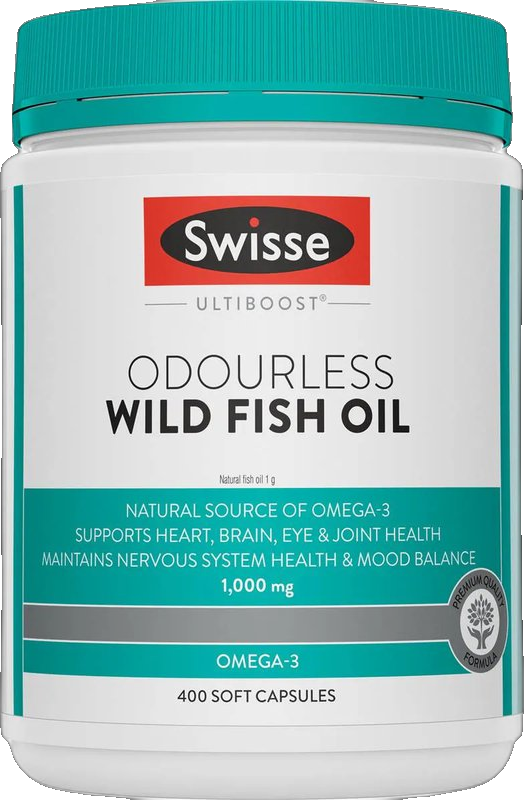
- 1at Woolworths · packs from $34.75$8.69/100 caps
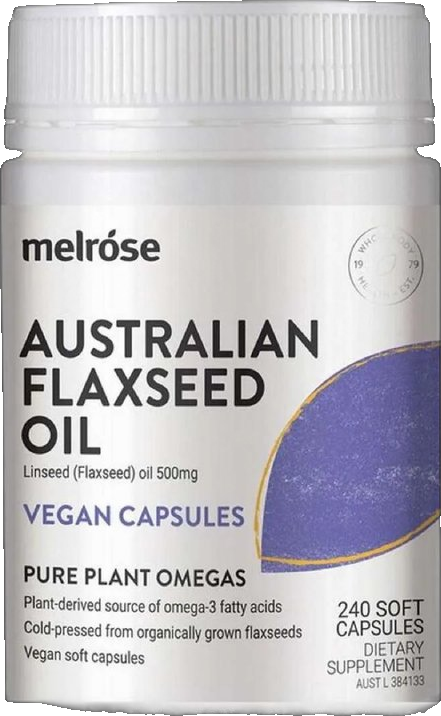
- 2at Woolworths · packs from $20.95$8.73/100 caps
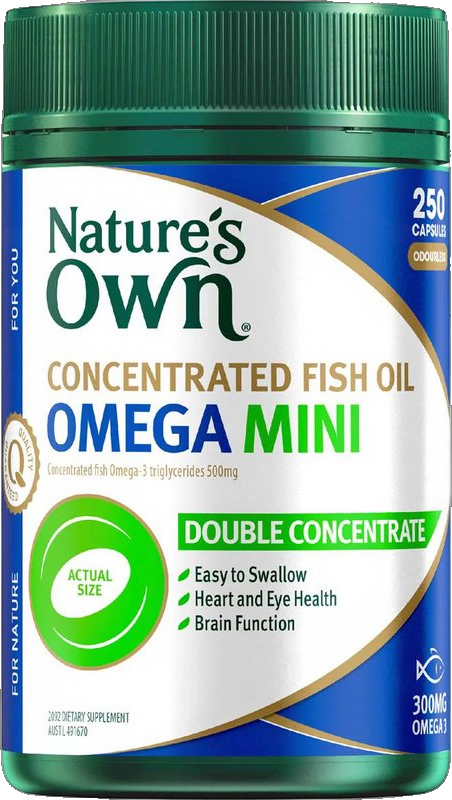
- 3at Woolworths · packs from $24.75$9.90/100 caps
Most people should aim for around 500mg per day of combined EPA + DHA for general health, roughly two standard-strength capsules. Those targeting cardiovascular or athletic benefits should look at 1–2g/day. The catch is that a typical '1000mg fish oil' capsule only delivers about 300mg of that active EPA + DHA.
"1000mg fish oil" sounds impressive on the front of a bottle. It also tells you almost nothing useful. The number you actually care about, the combined milligrams of EPA and DHA, the two omega-3s with the real evidence base, is hiding on the back panel, and on a typical Australian capsule it's only around 300mg. Once you understand the math, the supplement aisle gets a lot easier to navigate.
Why Fish Oil Labels Confuse People
Fish oil is a TGA-listed medicine in Australia. Listed medicines must declare their active ingredients accurately on the label, and the regulator requires fish oil products to contain at least 90% of the EPA and DHA they claim, surveys of the Australian and New Zealand market by Nichols et al. (2016)[4] have shown compliance is generally high.
The catch is that there are two different numbers on every fish oil label. The front-of-pack figure, "Fish Oil 1000mg", is the weight of the whole oil. Fish oil is a mixture of dozens of fatty acids, only two of which (EPA and DHA) carry the long-chain omega-3 evidence base. The amount of EPA and DHA is declared separately on the back panel, usually as EPA, DHA, and sometimes a combined "total omega-3" line.
If you only ever read the front of the bottle, you'll consistently overestimate what you're getting. The brands that count on this, and there are many, are not technically lying. They are just hoping you won't flip the bottle over.
The Math, Worked Through
Take a typical Australian "1000mg fish oil" capsule. Its back panel usually shows something like:
- EPA: 180mg
- DHA: 120mg
- Total EPA + DHA: 300mg
So per 1000mg of fish oil, you're getting roughly 300mg of the active omega-3s, about 30%. Standard "natural" fish oil sits in the 30% range. Cheaper supermarket products often come in lower, closer to 18–22%. "High strength" or "concentrated" fish oils push the ratio up to 60–80% by removing the other fats during processing.
Now apply this to a daily target. If your goal is 1g (1000mg) of combined EPA + DHA per day from a standard capsule, you need:
1000mg target ÷ 300mg per capsule ≈ 3–4 capsules per day.
A bottle marketed as "60 day supply, one capsule daily" suddenly becomes a 15-day supply at a real cardiovascular dose. This is the single most common mistake people make with fish oil, they take what the label suggests and end up at a fifth of any clinically meaningful intake.
How Much EPA + DHA Per Day?
There's no single right answer, the target depends on your goal and which body you're listening to.
General health (NHMRC, Australia): The Australian NHMRC[1] sets a Suggested Dietary Target for total long-chain n-3 fats (EPA + DHA + DPA) of 430mg/day for women and 610mg/day for men. The bulk of Australians don't hit it, 2011–12 National Nutrition Survey data showed average intakes well below the SDT in both sexes.
Cardiovascular health (American Heart Association): The AHA recommends approximately 1g/day of combined EPA + DHA for people with documented coronary heart disease, ideally from oily fish, with supplements considered in consultation with a doctor. A 2022 analysis published in the Journal of the American Heart Association suggested ~3g/day may be the dose that meaningfully lowers blood pressure, though that's high-dose territory and not a casual recommendation.
Athletes (ISSN 2024 Position Stand): The 2024 International Society of Sports Nutrition position stand on long-chain omega-3s (Jäger et al., 2024)[2] suggests 1–3g/day of combined EPA + DHA as a reasonable target for athletes, with the goal of achieving an Omega-3 Index above 8%. Reported benefits include reduced post-exercise muscle soreness, potential strength gains alongside resistance training, and possible neuroprotective effects in contact-sport athletes.
Pregnancy and lactation: ISSFAL recommends a minimum of 200mg DHA per day during pregnancy and breastfeeding for fetal brain and visual development. Many prenatal-specific fish oils are formulated DHA-heavy for this reason.
Triglyceride vs Ethyl Ester Form
After concentration, the chemical form of the omega-3 is the next thing that affects how much actually reaches your bloodstream. Two forms dominate the market:
Natural triglyceride (TG) and re-esterified triglyceride (rTG): The form omega-3s exist in naturally in fish, and the form most commonly found in standard-strength Australian fish oils. Re-esterified triglycerides are concentrated and then converted back to a triglyceride structure.
Ethyl ester (EE): A semi-synthetic form created during concentration. Cheaper to produce at very high EPA/DHA strengths, which is why most pharmaceutical-grade and "ultra-concentrated" omega-3s are EE.
What the research shows: Studies, including the well-cited Dyerberg trial, have generally found triglyceride-form omega-3s produce higher short-term blood levels of EPA and DHA than ethyl esters at the same dose, particularly when taken on an empty stomach or with a low-fat meal. Reported differences range from "modest" to "50–70% better bioavailability" depending on the study and the meal context. Taken with a high-fat meal, ethyl-ester absorption improves substantially and the gap narrows.
Longer-term (multi-week) trials looking at red-blood-cell incorporation tend to show smaller differences than the short-term plasma studies. Practically: if you can afford a triglyceride-form product, it's a defensible upgrade. If you're on ethyl ester, take it with a fat-containing meal and you'll absorb the majority of what you swallow.
Vegan Algae Alternatives
If you don't eat fish, you don't have to settle for ALA (the short-chain plant omega-3 in flax and chia) and hope your body converts it, conversion rates to EPA and especially DHA in humans are notoriously poor.
Algae-derived omega-3 is the direct route. Marine algae are where fish get their EPA and DHA in the first place; cultivated algal oils deliver the same long-chain omega-3s without the fish. A 2022 crossover RCT in omnivores, vegetarians, and vegans[5] found that 250mg/day of algal DHA significantly raised blood DHA levels across all three groups, with the largest relative increase seen in vegans (who started lowest).
Two practical caveats:
- DHA-dominant: Many algal oils are heavy on DHA and light on EPA. If you specifically want EPA for cardiovascular or anti-inflammatory effects, look for an EPA + DHA algal blend rather than a pure DHA product.
- Cost per gram: Algae oil is significantly more expensive per mg of EPA + DHA than fish oil, often 3–5x. The premium is for the source, not better absorption.
What Quality Certifications Mean
Fish oil is biologically prone to oxidation, heat, light, and air turn polyunsaturated fats rancid, and rancid oil is both ineffective and potentially harmful. Three labels do real work distinguishing fresh, clean product from the rest.
TOTOX value: A composite score of oxidation (2 × peroxide value + anisidine value). The international Codex Alimentarius standard caps TOTOX at 26 for human-consumption fish oils. Genuinely fresh oil scores under 10. The number is rarely on consumer labels, you usually have to email the manufacturer or check a Certificate of Analysis.
IFOS (International Fish Oil Standards): An independent third-party certification by Nutrasource. IFOS tests every batch for EPA + DHA content versus label claim, oxidation (PV, AV, TOTOX), heavy metals, PCBs, and dioxins. A 5-star IFOS rating requires PV ≤ 5, AV ≤ 20, TOTOX ≤ 26, plus passing the contaminant panel. Look for a batch-specific certificate, not a generic logo.
HASTA (Human and Supplement Testing Australia): The Australian sports drug-testing certification operated by Racing Analytical Services Limited. HASTA-certified means every batch has been screened for over 200 WADA-prohibited substances at a NATA-accredited lab. Important caveat: HASTA only certifies that the product is free of banned substances, it does not verify EPA + DHA content, freshness, or any other nutritional claim. It's a contamination guarantee, not a quality stamp.
If you're a tested athlete, HASTA is the certification that matters. If you're worried about freshness and purity, IFOS or a published TOTOX value is the better signal.
How to Buy Smart in Australia
Stop comparing prices by bottle. Compare them by cost per gram of EPA + DHA. The math is two steps.
Step 1, work out total EPA + DHA per bottle:
EPA per capsule + DHA per capsule = combined mg per capsule.
Combined mg × capsules per bottle = total EPA + DHA in the bottle.
Step 2, divide the price by that total (in grams):
$/g EPA + DHA = bottle price ÷ (total mg ÷ 1000).
Worked example: A $25 bottle with 200 capsules at 300mg EPA + DHA per capsule contains 60,000mg = 60g of EPA + DHA. That's $25 ÷ 60 = $0.42 per gram. A "premium" $45 bottle with 60 capsules at 500mg EPA + DHA per capsule contains 30g, $1.50 per gram, more than 3x as expensive even though it looks higher quality on the front of the bottle.
Genuinely concentrated, triglyceride-form, IFOS-certified products will sit at a higher $/g than supermarket standard-strength fish oil, and for some people the convenience of fewer capsules, the better form, and the freshness verification is worth it. But until you've done the per-gram math, you cannot tell whether a premium price reflects premium content or just premium marketing.
Safety and Interactions
Omega-3 supplementation is well-tolerated for most healthy adults. EFSA's safety review[3] concluded that combined supplemental EPA + DHA up to 5g/day does not raise safety concerns and is not associated with increased spontaneous bleeding in the general population.
Two things to be aware of:
- Anticoagulant interaction: High-dose omega-3 has a mild antiplatelet effect. If you're on warfarin, apixaban, clopidogrel, or another anticoagulant, talk to your prescriber before going above ~1g/day combined EPA + DHA.
- Atrial fibrillation signal at high doses: Several large recent RCTs (including STRENGTH and REDUCE-IT) have shown a small but real increase in new-onset atrial fibrillation at high pharmaceutical doses (2–4g/day prescription EPA). For general supplementation in the 1g/day range this isn't a practical concern, but it's worth knowing if you're chasing high doses for cardiovascular reasons.
The Verdict
General health: Aim for around 500mg/day combined EPA + DHA. That's roughly 2 standard-strength Australian capsules, or 1 concentrated capsule. Cheap, easy, and likely enough to lift most people from a deficient intake to an adequate one.
Cardiovascular or athletic targeting: 1–2g/day combined EPA + DHA, preferably from a concentrated triglyceride-form product so you're not swallowing 6–8 capsules a day.
Whichever target you pick, do the per-gram math before you buy. The brands that win on the front of the bottle frequently lose on $/g of active ingredient, and the active ingredient is the only thing your body actually responds to.
- Decomposed front-of-pack "fish oil" weight into the back-panel EPA + DHA active dose to compute true per-capsule potency.
- Anchored dose targets against NHMRC SDTs, AHA cardiovascular guidance, ISSN 2024 athlete position stand, and ISSFAL pregnancy guidance.
- Compared triglyceride, re-esterified triglyceride, and ethyl ester bioavailability data, accounting for meal-fat context.
- Cross-checked TOTOX, IFOS, and HASTA certifications against what each one actually verifies (freshness vs banned-substance contamination).
- Surveyed Australian retailer pricing in May 2026 across Coles, Woolworths, Chemist Warehouse, iHerb AU, and Supps247, and converted bottle price to AUD per gram of EPA + DHA.
Frequently Asked Questions
How much EPA and DHA should I take per day?
For general health, aim for about 500mg per day of combined EPA + DHA, roughly two standard-strength Australian capsules. For cardiovascular or athletic goals, evidence-based targets run higher, 1–2g/day, ideally from a concentrated triglyceride-form product so you're not swallowing six to eight capsules daily to hit the dose.
Why does a '1000mg fish oil' capsule only have 300mg of omega-3?
'1000mg fish oil' is the weight of the whole oil, not the active ingredient. Fish oil is a mix of many fatty acids, and only EPA and DHA carry the real evidence base. A standard capsule typically yields about 300mg combined EPA + DHA, roughly 30%; cheaper supermarket oils can sit at only 18–22%.
Is triglyceride-form fish oil better than ethyl ester?
Generally yes, on an empty stomach. Studies have found triglyceride-form omega-3s produce higher short-term blood levels of EPA and DHA than ethyl esters at the same dose, though the gap narrows substantially when ethyl esters are taken with a high-fat meal. If you can afford triglyceride form, it's a defensible upgrade.
How do I compare fish oil prices properly?
Ignore the bottle price and compute cost per gram of EPA + DHA: multiply EPA + DHA per capsule by capsules per bottle to get total milligrams, then divide bottle price by that total in grams. A $25 bottle yielding 60g of EPA + DHA works out cheaper per gram than a $45 'premium' bottle yielding 30g.
Is algae oil a good vegan alternative to fish oil?
Yes. Algal oil delivers EPA and DHA directly, the same compounds fish get from algae in the first place, without relying on poor human conversion from plant ALA. A 2022 crossover trial found 250mg/day of algal DHA raised blood DHA in omnivores, vegetarians and vegans alike. The trade-off is cost, often 3–5x fish oil per milligram.
Is fish oil safe to take with blood thinners?
High-dose omega-3 has a mild antiplatelet effect, so if you're on warfarin, apixaban, clopidogrel or another anticoagulant, talk to your prescriber before going above roughly 1g/day of combined EPA + DHA. EFSA's safety review found supplemental EPA + DHA up to 5g/day doesn't raise safety concerns in the general population otherwise.
References
- NHMRC Nutrient Reference Values, Suggested Dietary Targets for n-3 long-chain PUFA
- Jäger et al., 2024. International Society of Sports Nutrition Position Stand: Long-Chain Omega-3 Polyunsaturated Fatty Acids
- EFSA Panel on Dietetic Products, Nutrition and Allergies, 2012. EFSA Scientific Opinion on the Tolerable Upper Intake Level of EPA, DHA and DPA
- Nichols et al., 2016. Australian and New Zealand Fish Oil Products in 2016 Meet Label Omega-3 Claims and Are Not Oxidized
- Crossover RCT in omnivores, vegetarians, and vegans, 2022. Changes in fatty acid levels after consumption of a novel docosahexaenoic supplement from algae
- European Journal of Preventive Cardiology, 2024. Effects of omega-3 fatty acids on coronary revascularization and cardiovascular events: a meta-analysis