 SUPPSAVER
How to Calculate Your Daily Protein Needs
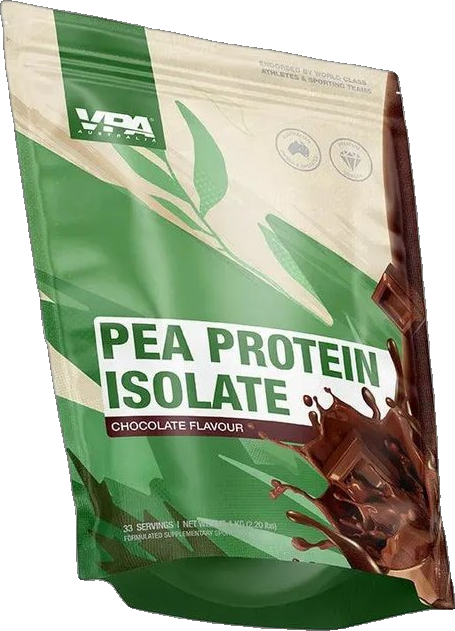
- 1at VPA Australia · packs from $36.00$4.24/100g protein
- 2at Supplement Mart · packs from $40.00$4.84/100g protein
- 3at Mr Supplement · packs from $59.95$5.65/100g protein
128–176g. That's the daily protein target for an 80kg lifter training four days a week, derived from Morton et al.'s 2018 meta-analysis of 49 studies in the British Journal of Sports Medicine[1]. It's roughly double what Australia's RDI suggests, and most of the lifters we talk to aren't even hitting the lower bound. Our verdict up front: take bodyweight in kg, multiply by 1.6 for the floor and 2.2 for the ceiling, eat the food first and only buy whey for the gap.
The Research Consensus
Morton et al. (2018)[1] pooled 1,863 participants across 49 resistance-training trials and landed on a clear practical range: 1.6–2.2g of protein per kilogram of bodyweight per day for trained adults wanting to optimise muscle gain or maintenance. The Jäger et al. (2017) International Society of Sports Nutrition position stand[2] sits in the same band.
Push past 2.2g/kg and the curve flattens. Extra grams aren't harmful, they're just calories that could have come from carbs or fats. Our verdict: above 2.2g/kg is a spending mistake, not a training mistake.
Why the Government RDI Is the Wrong Number
Australia's NHMRC Nutrient Reference Values put the Recommended Dietary Intake at 0.84g/kg/day for adult men and 0.75g/kg/day for adult women[4]. Those numbers exist to prevent deficiency in sedentary adults. They're a floor, not a target.
Train three to five times a week on 0.8g/kg and you'll recover poorly, lose muscle during cuts, and progress at maybe half the rate of someone eating twice as much protein. Our verdict: the RDI is irrelevant once you start lifting. Anyone training regularly should ignore it as a planning target.
Adjusting for Your Goal
Muscle gain (calorie surplus): The lower end, 1.6–1.8g/kg, is enough for almost everyone in a surplus. Energy availability does most of the work; chasing the top of the range adds little.
Fat loss (calorie deficit): Helms et al. (2014)[5], working with lean athletes in deficits, found targets of 2.3–3.1g/kg of lean body mass best preserved muscle. Low energy suppresses muscle protein synthesis, so we need more protein to compensate. This is the one phase where targets genuinely climb.
Maintenance: 1.6–2.0g/kg holds muscle on consistent training. Lower end for moderate volume, upper end for high-volume or high-intensity blocks.
Sedentary individuals: 1.2–1.6g/kg is sensible for people not training. Without a training stimulus, the full 2.2g/kg buys nothing.
Age Adjustments: The Anabolic Resistance Factor
Muscle protein synthesis gets progressively less responsive to the same protein dose as we age. The phenomenon has a name: anabolic resistance. Moore et al. (2015)[6] and follow-up work in adults over 50 consistently show we need bigger doses to hit the same anabolic response we got at 25.
In practice that means targeting the upper end of the range, 2.0–2.4g/kg rather than 1.6–1.8g/kg, and pushing per-meal doses to 35–40g rather than 20–25g to overcome the blunted response. Leucine-rich sources like whey, meat and eggs matter more relative to lower-leucine plant sources at this age. The threshold dose to trigger maximal synthesis simply moves up.
Resistance training is still the strongest counter to anabolic resistance. Protein optimisation works best alongside the training, not instead of it. Our verdict: if you're over 50 and not lifting, no protein target will fix that.
Body Weight vs Lean Body Mass
The standard formula uses total bodyweight, which holds up fine in the normal body-composition range. For people carrying significant excess body fat, total bodyweight overshoots. Take a 120kg person at 35% body fat: lean mass sits near 78kg, and 2.2g/kg of total bodyweight prescribes 264g of protein a day. That's almost certainly more than they need.
A cleaner approach at higher body-fat percentages:
- Estimate lean body mass (LBM) from a known body-fat percentage (DEXA, BIA scale, or a calliper-based estimate)
- Apply 2.3–3.1g/kg of lean body mass when in a deficit
- Or substitute your target healthy bodyweight into the standard formula
- Cross-check against your appetite, recovery and lifts; if those hold up, the number is right
For most people without extreme body-fat levels, total bodyweight targets stay simple and accurate enough.
Worked Examples
Here's how it plays out across realistic scenarios:
- 75kg person, training 4x/week, muscle gain phase. Target: 1.6–2.0g/kg → 120–150g protein/day
- 75kg person, training 4x/week, fat loss phase. Target: 2.3–3.1g/kg lean body mass (assuming ~64kg LBM) → ~147–198g protein/day
- 65kg woman, training 3x/week, maintenance. Target: 1.6–2.0g/kg → 104–130g protein/day
- 90kg person, 55 years old, training 3x/week. Target: 2.0–2.4g/kg (age-adjusted upper end) → 180–216g protein/day
How Much Can You Get from Food?
Before calculating supplement need, total up what's already on your plate. Approximate protein in common Australian staples:
- 200g chicken breast: ~46g protein
- 150g canned tuna (drained): ~33g protein
- 200g Greek yoghurt (plain, full fat): ~16–18g protein
- 3 whole eggs: ~18g protein
- 200g cottage cheese: ~22–24g protein
- 100g cooked lean beef mince: ~26g protein
- 200ml full-cream milk: ~7g protein
A day with eggs at breakfast, chicken at lunch, tuna at dinner, and yoghurt as a snack lands around 110–130g protein without a single scoop of powder. We'd start there, not at the supplement aisle.
Where Supplements Fill the Gap
Once you know food intake versus target, the supplement gap is arithmetic. Most people who eat animal protein regularly need 1–2 scoops a day at most, if anything. Whey concentrate runs roughly A$0.04–0.07 per gram of protein at typical AU shelf prices (based on our live SuppSaver comparison data across 12+ Australian stores); a 30g scoop of whey concentrate delivers about 22–24g.
If food gets you to 110g and your target is 150g, one scoop closes the gap. Targeting 180g in a deficit? Two scoops alongside a protein-rich diet does it, and at around A$0.50 per serving that's roughly A$1/day of supplementation.
Our verdict: don't buy the largest tub on the shelf out of habit. A sceptical look at what you actually eat almost always shrinks the supplement requirement below what the label marketing implies. Run the food maths first, then size the tub.
Frequently Asked Questions
How do I calculate my daily protein needs?
Multiply your bodyweight in kilograms by 1.6 for the floor and 2.2 for the ceiling — that range in grams is your daily protein target. A 70kg person needs roughly 112–154g per day. This 1.6–2.2g/kg range comes from a 2018 meta-analysis of 49 resistance-training trials and matches the ISSN's position stand for trained adults.
Is the government's protein RDI enough for someone who trains?
No. Australia's NHMRC sets the RDI at 0.84g/kg/day for men and 0.75g/kg/day for women, but that figure only prevents deficiency in sedentary adults — it's a floor, not a training target. Someone lifting three to five times weekly on 0.8g/kg will recover poorly and lose muscle during cuts, progressing at roughly half the rate of someone eating twice as much.
Should I calculate protein from total bodyweight or lean body mass?
Total bodyweight works fine within a normal body-composition range. At higher body-fat percentages it overshoots — a 120kg person at 35% body fat has about 78kg of lean mass, so 2.2g/kg of total bodyweight prescribes an unnecessary 264g. In that case, use lean body mass, target a healthy bodyweight instead, or cross-check against appetite and recovery.
How much protein do I need when cutting or in a calorie deficit?
Fat loss is the one phase where protein targets climb rather than fall. Research on lean athletes in deficits found 2.3–3.1g per kilogram of lean body mass best preserved muscle, higher than the 1.6–2.2g/kg range used for maintenance or muscle gain. Low energy availability suppresses muscle protein synthesis, so extra protein compensates during a cut.
Do older adults need more protein than younger lifters?
Yes. Muscle protein synthesis becomes progressively less responsive to the same protein dose with age, a phenomenon called anabolic resistance. Adults over 50 should target the upper end of the range — 2.0–2.4g/kg rather than 1.6–1.8g/kg — and push per-meal doses to 35–40g instead of 20–25g to trigger the same anabolic response younger lifters get more easily.
Can I get enough protein from food without supplements?
Often, yes. A day with eggs at breakfast (18g), chicken at lunch (46g per 200g), tuna at dinner (33g per 150g) and Greek yoghurt as a snack (16–18g) lands around 110–130g of protein without a single scoop of powder. Tally your food intake against your target first, and only supplement the remaining gap.
References
- Morton et al., 2018. A systematic review, meta-analysis and meta-regression of the effect of protein supplementation on resistance training-induced gains in muscle mass and strength in healthy adults
- Jäger et al., 2017. International Society of Sports Nutrition Position Stand: protein and exercise
- Aragon & Schoenfeld, 2013. Nutrient timing revisited: is there a post-exercise anabolic window?
- NHMRC. Nutrient Reference Values for Australia and New Zealand: Protein
- Helms et al., 2014. Evidence-based recommendations for natural bodybuilding contest preparation: nutrition and supplementation
- Moore et al., 2015. Protein ingestion to stimulate myofibrillar protein synthesis requires greater relative protein intakes in healthy older versus younger men