 SUPPSAVER
The Hyrox Supplement Stack: AU Athletes' Race-Day Fueling (2026)
- 1at Supplement Warehouse · packs from $5.65$1.13/100g
- 2at Woolworths · packs from $12.56$1.26/100g
- 3at Woolworths · packs from $12.56$1.26/100g
79.5% of Hyrox race time is spent at 90 to 100% of max heart rate, with mean completion sitting at 86.5 minutes (Brandt et al., 2025)[1]. That single data point reorganises the supplement question. Hyrox is not anaerobic CrossFit with running stapled on. It is an endurance event with eight glycolytic spikes embedded in it, and the stack that wins on race day is built around aerobic fueling, not pre-workout pump. Our verdict up front: 30 to 60g carbs per hour, 500 to 1000mg sodium per litre, 3 to 6mg/kg caffeine 45 minutes pre, and the chronic items (creatine, beta-alanine) loaded weeks ago.
What Hyrox Actually Asks of Your Metabolism
Brandt et al. (2025)[1] in Frontiers in Physiology ran the first peer-reviewed acute-physiology profile and called it directly: Hyrox is endurance-focused HIFT. VO2max correlated with finishing time at rho minus 0.71. The aerobic engine determines the result.
The stations are the lactate spikes. Blood lactate post-station averaged 8.5 mmol/L versus 7.7 mmol/L post-run (p equals 0.006), and the wall balls finale produced peak HR 183, BL 8.5, RPE 18. Sled push has been measured north of 10 mmol/L elsewhere (Davids et al., 2025)[2]. So we are looking at a 75 to 95 minute aerobic effort with eight glycolytic surges layered on top.
For the typical AU age-grouper at BYD HYROX Sydney 2026 (1 to 5 July, Sydney Showground) or the Brisbane APAC Champs that already ran 9 to 13 April, that means two things on race day. Carbs in. Sodium in. Everything else is chronic adaptation that should already be done.
Race-Day Carbs: 30 to 60 g/hr, Not 90
A lot of Hyrox content lifts the 90 g/hr number from marathon and ultra protocols. Stop doing that. ACSM and ISSN guidance pegs 30 to 60 g/hr for events in the 1 to 2.5 hour window. Precision Fuel and Hydration's own Hyrox protocol[4] caps at the same range for 75 to 120 minute races. Above 90 g/hr is justified only past 2.5 hours and only with a multi-transportable carb matrix.
If you are finishing in 75 to 95 minutes, target 30 to 60 g/hr. That is one Maurten Gel 100 every 20 to 25 minutes (25 g carbs each) or a 500 mL bottle of intra-workout carb at 6 to 8% concentration. Maurten's gels are not a Hyrox sponsor (MyProtein is the global nutrition partner and Maurten is actually IRONMAN's), but they remain the AU endurance favourite at $62.40 a box of 12, or about $5.20 per gel.
If you are an elite or doubles team pushing past 60 g/hr, the data shifts. O'Brien et al. (2013)[3] showed a 1:0.8 glucose:fructose ratio delivered 17% more exogenous carb oxidation than 2:1, with less bloat. That ratio matters once you cross 60 g/hr. Under it, regular maltodextrin or glucose is fine.
Sodium and Sweat: Indoor Venues Run Hot
Jonny Tye (PFH COO) measured 2 to 2.5 L/hr sweat loss in Hyrox simulations on elite athletes. Average finisher sits at 1 to 1.5 L/hr. Sodium loss from CrossFit-applicable data runs 400 to 600 mg per litre of sweat, giving 570 to 1220 mg/hr sodium at typical race intensities.
AU indoor venues compound this. The BCEC in Brisbane and Sydney Showground in July are not exactly tropical, but the floor of a packed Hyrox arena in any month runs warm and humid. If you have ever finished a Saturday session at BFT (the exclusive AU/NZ Hyrox gym partner with 169 franchises) drenched, the same applies to race day, multiplied.
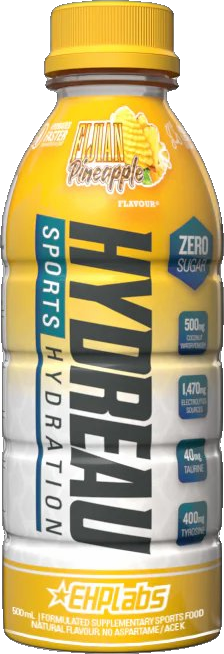
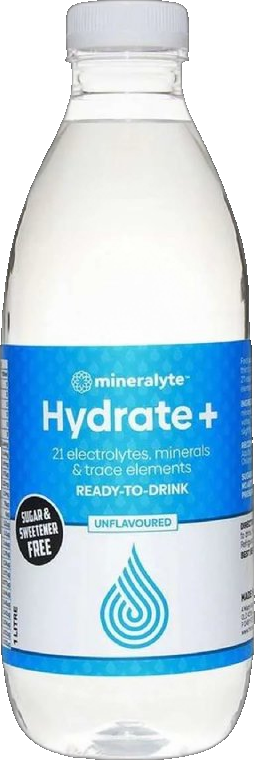
The practical target: 500 to 1000 mg sodium per litre of fluid consumed, with total fluid pegged to about 80% of expected sweat loss. Bulk Nutrients Hydration Salts at $37 a tub gives a clean low-carb electrolyte option, while their Electrolyte Plus at $20 per kilogram (or $18/kg in a 4 kg multibuy, snapshot May 2026) bundles carbs and electrolytes together. Both are HASTA-certified, which is the actually-relevant credential if you are racing the APAC Champs[6] and want banned-substance testing in your supply chain. Bulk's "Shop by sport: Hyrox" landing page is opportunistic positioning; they are not an official partner. The HASTA certification is real and matters more.
Caffeine: 3 to 6 mg/kg, 45 Minutes Pre
The ISSN caffeine position stand[5] puts the ergogenic dose at 3 to 6 mg/kg taken 45 to 60 minutes before competition, producing a 2 to 4% endurance time-trial improvement. A 2024 meta-analysis suggests 6 mg/kg outperforms lower doses in heat, which is relevant for any AU indoor venue in summer rounds.
For an 80 kg athlete, that is 240 to 480 mg. Keep the total day at or under 400 mg, the EFSA guidance for healthy adults, and within gut tolerance. A sports-food pre-workout's labelled one-day amount is being capped at 200 mg (FSANZ P1056), so any extra comes from coffee or caffeine tablets. If your warm-up coffee is 150 mg and your pre-workout is 200 mg, you are already at the ceiling before the race starts. Plan it.
Caffeine pills (200 mg ProLab or similar) are dose-accurate; pre-workouts vary in caffeine load by 20 to 30% batch to batch, so we prefer a clean caffeine source on race day with the rest of the pre-workout components (citrulline, beta-alanine) loaded separately during training blocks.
Chronic Supplements: Loaded Weeks Ago
Creatine monohydrate: 3 to 5 g/day, saturated over 3 to 4 weeks. The benefit is the chronic phosphocreatine pool buffering high-output station work (sled push, burpee broad jumps), not anything that happens because you took 5 g on race morning. Micronised creatine at $24 per 500 g (Bulk Nutrients) is the cheapest per gram of any supplement in this guide and the highest-evidence item in it.
Beta-alanine: 3.2 to 6.4 g/day in split doses, loaded over 4 to 6 weeks. Carnosine elevates intramuscular buffering for the 1 to 4 minute all-out station bouts that produce those 8.5 mmol/L lactate readings (Brandt et al., 2025)[1]. Tingles (paresthesia) are dose-dependent and harmless; split into 800 mg to 1.6 g doses across the day if it bothers you. Race-day beta-alanine does nothing.
L-citrulline: 6 to 8 g (or 8 g citrulline malate), 30 to 60 minutes pre-session. The strong evidence is for reps-to-failure and reduced perceived exertion in resistance work, both of which map onto Hyrox station performance. Endurance benefit exists but is smaller. Take it pre-race; do not expect it to replace carbs.
Pre-Race Carb Load and Protein
Target 8 g/kg bodyweight of carbohydrate in the 24 hours pre-race. For an 80 kg athlete that is 640 g, which is a lot of rice, pasta, potato, sourdough, and bananas. Front-load it; do not try to eat half of it the morning of.
Daily protein for hybrid athletes sits at 1.8 to 2.4 g/kg, distributed across 3 to 5 meals at 20 to 40 g each. Whey isolate, casein, or a blend works equally well; we have no strong evidence that any one form changes Hyrox performance, but consistent intake during the training block protects lean mass through the run volume. If you want the dollar-per-gram picture before you buy, our whey protein category page sorts the AU shelf on cost per 30g serve.
What to Skip
- Sodium bicarbonate (baking soda): The buffering data is genuine, but GI distress risk over 75-plus minutes is high enough that we would not roll the dice on race day unless you have trained the protocol extensively.
- EAA tubs at $90-plus: ATP Science's premium EAA-plus-collagen sits around $91. The marginal benefit over $40 whey plus regular dietary protein is not supported. Skip.
- Race-day creatine loading: Saturation is a multi-week process. Taking 20 g the day before does not work and may produce GI symptoms.
- 90 g/hr carb stacks for sub-2-hour races: If you are not pushing past 2.5 hours, you do not need the 1:0.8 multi-transportable matrix. Stick to 30 to 60 g/hr from a single source.
The Australian Buying Picture
MyProtein holds the global Hyrox nutrition partnership and is available in AU via direct ship, but local stock and pricing depends on flash sales (which run constantly, so quoted RRP rarely applies). No AU supplement brand has an official Hyrox sponsorship as of mid-2026. Bulk Nutrients runs the most coherent Hyrox-adjacent range and the only HASTA-tested options at sensible prices. Maurten dominates the AU endurance gel category by reputation, not by sponsorship.
The 550,000-plus 2025 Hyrox entrant figure (versus the 2025 CrossFit Open's 233,815, a 32% YoY drop) tells you the demand-side direction. Expect supplement-brand co-marketing to land in AU within the next two seasons. Until then, the best buying strategy is to ignore marketing copy and price by gram of elemental nutrient: carbs per dollar, sodium per dollar, caffeine per dollar.
The Verdict
Race day: we'd run 30 to 60 g carbs/hr (Maurten gels every 20 to 25 min, or intra-workout drink), 500 to 1000 mg sodium/L of fluid, 3 to 6 mg/kg caffeine 45 minutes pre. That is the stack.
Chronic (weeks out): creatine 3 to 5 g/day, beta-alanine 3.2 to 6.4 g/day split, protein 1.8 to 2.4 g/kg/day.
Pre-race day: 8 g/kg carbs across the prior 24 hours. Citrulline 6 to 8 g 30 to 60 minutes before the gun if you want it. Skip the rest.
| Phase | What to take |
|---|---|
| Before race | Caffeine 3 to 6 mg/kg, 45 to 60 minutes before start |
| At start | Carbs 30 to 60g per hour |
| Mid-race (stations 4 to 8) | Electrolytes 500 to 1000mg sodium per litre |
| Finish | Recovery protein 30g |
- Anchored the metabolic profile to Brandt et al. (2025) and Davids et al. (2025), the only peer-reviewed acute-physiology data on Hyrox to date.
- Mapped race-day sweat-and-sodium needs against indoor AU venue conditions (Sydney Showground, BCEC Brisbane) and elite-athlete sweat-rate measurements (Tye, PFH).
- Pulled AU retail pricing in May 2026 across Bulk Nutrients, MyProtein AU, ATP Science, and Maurten AU stockists; priced per gram of elemental nutrient (carbs, sodium, caffeine) rather than RRP per tub.
- Cross-checked each supplement against the ISSN position stands and ACSM nutrition guidance to separate race-day acute use from training-block chronic loading.
- Filtered for HASTA / banned-substance certification given the APAC Champs testing context.
Frequently Asked Questions
How many carbs should I take during a Hyrox race?
Target 30 to 60g per hour from a single source for a 75 to 95 minute finish. The 90g/hr multi-transportable protocol is lifted from marathon and ultra guidance and is only justified past about 2.5 hours of racing.
How much sodium do I need?
Aim for 500 to 1,000mg of sodium per litre of fluid. Indoor Hyrox venues run hot and sweat losses climb accordingly, so the sodium side of the plan matters more than it would for an equivalent outdoor effort.
What is the right caffeine dose and timing?
3 to 6mg per kilogram of body weight, taken about 45 minutes before your start. That window puts peak plasma caffeine across the opening runs rather than late in the race when the wall balls arrive.
Is Hyrox an endurance event or a strength event?
Endurance, with glycolytic spikes layered on. Brandt and colleagues (2025) found 79.5% of race time sits at 90 to 100% of max heart rate across a mean 86.5 minute finish, and VO2max correlated with finishing time at rho -0.71.
When should I take creatine and beta-alanine?
Neither is a race-day item. Both are chronic supplements that need loading weeks in advance to be useful, so if they are not already in your routine before race week, adding them on the morning of will do nothing.

References
- Brandt et al., 2025. Acute physiological responses and performance determinants in Hyrox, Frontiers in Physiology
- Davids et al., 2025. A Performance Analysis of HYROX
- O'Brien et al., 2013. Substrate utilisation during exercise with glucose plus fructose ingestion (1:0.8 ratio)
- Precision Fuel & Hydration, Hyrox fuel and hydration protocol
- ISSN position stand, caffeine and exercise performance
- Hyrox APAC Championships Brisbane 2026, event details
- BYD HYROX Sydney 2026, official event listing