 SUPPSAVER
The Cold and Flu Ingredient the TGA Wants Off the Shelf
- 1at Woolworths · packs from $3.66$3.66/100 caps
- 2at Woolworths · packs from $14.75$4.61/100 caps
- 3at Woolworths · packs from $9.75$4.88/100 caps
287 reports of anaphylaxis, including one death. That is what the TGA has logged against medicines containing andrographis up to 31 December 2025, and it is why the regulator has proposed removing the herb from the list of low-risk ingredients permitted in listed medicines[1]. Most Australians who have taken andrographis do not know they have, because it almost always sits inside a combination cold and flu formula next to echinacea. Our verdict: this is not a reason to panic or to bin anything, but it is a genuine reason to read the ingredient panel on whatever you reach for in winter, and the evidence that andrographis was doing much for your cold in the first place is thinner than the marketing suggests.
What Is Actually Happening
The Permissible Ingredients Determination is the list of ingredients considered low-risk enough to be used in listed medicines, the AUST L products that make up most of the complementary medicine aisle. Getting onto that list is what allows a product to be sold without individual TGA assessment of its efficacy. The TGA has proposed taking andrographis off it[1].
The reasoning is that the ingredient may not be appropriately positioned within a low-risk regulatory framework. The TGA's updated safety review concluded that the available evidence does not support stronger label warnings, formulation restrictions or further education as effective ways to reduce the anaphylaxis risk to a level suitable for a listed medicine[3].
Timing matters here and a lot of coverage has it wrong. The consultation with consumer groups, health professionals, sponsors and industry bodies closed on 30 April 2026. As at our July 2026 review, no final determination had been publicly announced. So andrographis products remain legally on sale right now.
What Andrographis Actually Is, and Where It Hides
Andrographis paniculata is a bitter herb with a long history in traditional medicine, marketed in Australia for immune support and relief of cold and flu symptoms. The active constituents are andrographolides, and quality products standardise to a stated milligram amount of them rather than just listing the raw extract weight.
The important practical point is that you rarely buy andrographis on purpose. It is a component of multi-ingredient winter formulas. BioCeuticals ArmaForce, for example, lists andrographis paniculata extract equivalent to 2.5g of dried leaf and standardised to 62.5mg of andrographolides, alongside echinacea purpurea, olive leaf extract, vitamin C and zinc[5]. Roughly 80 listed medicines on the Australian register contain the ingredient.
That is the entire "check your cabinet" case. If you have a winter immune-support product in the house, there is a reasonable chance andrographis is in it, and a good chance you have never registered the name.
The Safety Numbers
| Measure | Figure |
|---|---|
| Anaphylaxis reports to 31 Dec 2025 | 287 |
| Fatal cases | One, reported in 2024 |
| First reports received | 2005, with a sharp rise from 2019 |
| Share involving echinacea combination products | More than 80% |
| Listed medicines containing the ingredient | Approximately 80 |
Anaphylaxis is a severe, rapid allergic reaction that can be life-threatening and needs immediate emergency treatment. The characteristic that makes it hard to manage with andrographis is unpredictability: the TGA has described reactions as rapid and able to occur on first use or after previous uneventful use, including in people with no history of allergies[1]. You cannot build confidence from having taken it before.
The reporting history goes back further than most coverage suggests. The TGA first began receiving reports of anaphylaxis and hypersensitivity to andrographis in 2005, with a sudden rise beginning in 2019[2]. More than 80% of the adverse event reports involved multi-ingredient preparations containing both andrographis and echinacea[2], which is unsurprising given that is how the ingredient is overwhelmingly sold.
The fatal case was reported in 2024. Australian pharmacy press reported it as a Queensland man in his thirties who died from a suspected anaphylactic reaction after taking an andrographis-containing product, about a month before the TGA's review began[4]. We have chosen not to name him.
Keep the denominator in mind. 287 reports against many millions of doses sold over two decades is a low rate, and adverse event reporting captures only a fraction of real events while also including cases where the product was not the cause. This is a rare reaction. The regulatory problem is not that it is common, it is that it is severe, unpredictable, and attached to a product bought casually off a shelf for a self-limiting illness.
Why the Warnings Were Not Enough
Andrographis products already carry mandatory warnings. Australian labels currently state that the product should not be used by anyone with a history of severe allergic reaction, that andrographis may cause anaphylaxis, and that use should stop with immediate medical attention if swelling of the mouth or throat, or difficulty breathing, occurs. A second statement covers taste disturbance including loss of taste, loss of appetite, vomiting and abdominal discomfort[5].
So the obvious regulatory lever had already been pulled. What the TGA found is that pulling it harder did not help. Reporting on the review notes that one product added stronger and prominently displayed label warnings during 2024, and that 2025 report numbers remained consistent with previous years[3].
This is the part worth generalising from. Label warnings work when a risk is dose-dependent or avoidable by an informed reader. They work poorly against a reaction that can hit someone with no allergy history on their first tablet. There is no behaviour for the average buyer to change in response to the warning, which is precisely why the regulator moved from labelling to availability.
Where It Stands Now
To be completely clear about the current state of play, because this is where a reader could over-react: andrographis has not been banned, no product has been recalled, and the products described in this article remain lawfully on sale in Australia. The consultation closed on 30 April 2026 and a decision was outstanding as at July 2026.
If removal proceeds, the practical effect would be that andrographis could no longer be included in AUST L listed medicines, and existing products would need reformulation or withdrawal. That would be a significant change to the Australian winter supplement shelf given roughly 80 listed medicines contain it.
Does Andrographis Actually Work?
This is the question that decides whether any of the risk is worth carrying. The best available synthesis is a 2017 systematic review and meta-analysis in PLOS ONE covering andrographis for acute respiratory tract infections in adults and children[6]. Against placebo it found improvement in cough, with a standardised mean difference of -0.39, and in sore throat at -1.13, along with a statistically significant effect on overall symptoms.
The authors' own caveat is doing a lot of work: the results should be interpreted cautiously given poor study quality and heterogeneity across trials. Major adverse events were not reported in those trials, with minor events mainly gastrointestinal.
One correction to the record while we are here. We have seen this evidence described as a Cochrane review. It is not. No Cochrane review of andrographis for colds exists, and the distinction matters because Cochrane reviews carry a methodological standard that a general systematic review may not.
Our read: a modest symptomatic benefit on low-quality evidence, for an illness that resolves on its own in a week. That is a thin return for a rare but unpredictable anaphylaxis risk, and it is the calculation the TGA appears to have made too.
What to Take Instead
Set expectations before spending anything. Nothing in this category is dramatic, and any product promising to stop a cold is overselling.
- Zinc, the better of the two. A 2024 Cochrane review found zinc may reduce how long symptoms last by approximately two days compared with placebo, while noting confidence in that finding is low. It found little or no reduction in the risk of catching a cold in the first place, and more non-serious side effects such as taste disturbance and stomach upset[7].
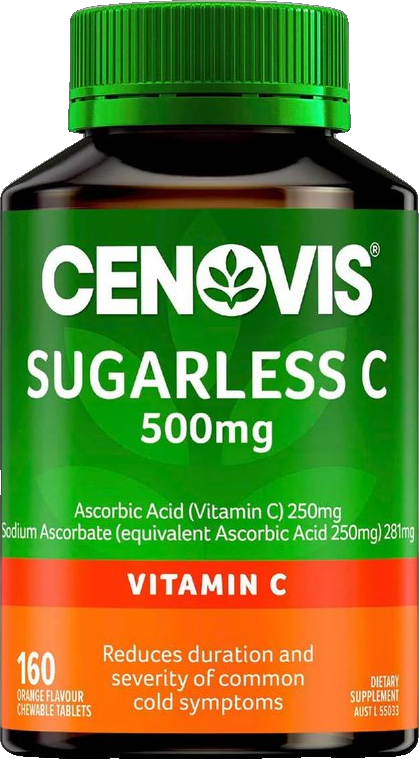
- Vitamin C, but only if taken regularly. The Cochrane review found regular supplementation did not reduce cold incidence in the general population, though it roughly halved risk in people under extreme physical stress. Duration fell by about 8% in adults and 14% in children. Critically, starting vitamin C after symptoms begin showed no consistent effect on duration or severity[8].
- Echinacea on its own avoids the andrographis question entirely, though note that most reported reactions involved products where the two were combined, so a single-ingredient product is the simpler choice if you want to keep taking something familiar.
- The unglamorous answers still win. Sleep, fluids, and staying home. No supplement in this category outperforms them.
If you have any history of severe allergic reactions, avoid andrographis entirely. That is already on the label, and it is the single clearest instruction in this whole story. If you develop swelling of the mouth or throat or difficulty breathing after taking any supplement, treat it as an emergency and call 000.
- Cross-checked the TGA's anaphylaxis figures against three independent fetch-confirmed reports rather than relying on a single secondary summary.
- Verified the current mandatory warning wording and a real ingredient panel against a live Australian retail listing, rather than paraphrasing what a label probably says.
- Checked the consultation status and deliberately dated our statement of it, because the window has already closed and much coverage still describes it as open.
- Went to the efficacy literature directly and corrected the widespread description of it as a Cochrane review, which it is not.
- Dropped several widely repeated figures, including a report sub-count, an exact product count and broader adverse-event totals, because sources disagreed and we could not verify them.
Frequently Asked Questions
Should I throw out my cold and flu tablets containing andrographis?
Nothing has been recalled or banned, so there is no need to bin anything. The ingredient remains legally permitted in listed medicines while the TGA works through what it heard in consultation. What has changed is that you should know it is in there. If you have a history of severe allergic reactions, the existing label warning already tells you not to use it, and that advice is worth taking seriously rather than skimming past.
Has andrographis actually been banned in Australia?
Not at this stage. The TGA proposed removing it from the Permissible Ingredients Determination, which is the list of low-risk ingredients allowed in listed medicines, and consulted stakeholders on that proposal. The consultation closed on 30 April 2026. As at our July 2026 review the TGA had not publicly announced a final decision, so the correct description is that removal has been proposed and is under consideration, not that it has happened.
Which Australian products contain andrographis?
It typically appears in multi-ingredient cold and flu formulas rather than on its own, most often paired with echinacea. BioCeuticals ArmaForce is one widely sold example, listing andrographis extract standardised to 62.5mg of andrographolides alongside echinacea, olive leaf, vitamin C and zinc. Roughly 80 listed medicines on the Australian register contain the ingredient. Check the ingredient panel rather than the front of the box, because andrographis is rarely the headline.
Does andrographis actually work for colds?
Modestly, on weak evidence. A 2017 systematic review and meta-analysis in PLOS ONE found statistically significant improvements in cough and sore throat against placebo, with a standardised mean difference of -0.39 for cough and -1.13 for sore throat. The authors cautioned that the underlying trials were of poor quality and heterogeneous. Note this is not a Cochrane review, and no Cochrane review of andrographis for colds exists.
Why act now when products already carry a warning label?
Because the warnings did not appear to be working. The TGA position, as reported, is that the available evidence does not support stronger label warnings as an effective way to reduce anaphylaxis risk. One product added stronger and more prominent warnings during 2024, and 2025 report numbers stayed consistent with previous years. When a labelling fix has been tried and the numbers do not move, the remaining options are formulation restrictions or removal.
What should I take instead?
Manage expectations first, because nothing works dramatically. Zinc has the better case: a 2024 Cochrane review found it may shorten a cold by roughly two days, though reviewers rated confidence in that finding as low and noted more taste disturbance and stomach upset. Vitamin C taken regularly shortens colds by about 8% in adults and 14% in children, but starting it once you are already sick does not help. Neither carries an anaphylaxis signal.
References
- Therapeutic Goods Administration, 2026. Stakeholders to be consulted on proposal to remove Andrographis paniculata as a low-risk ingredient
- The Conversation, Apr 2026. What is andrographis, the cold and flu ingredient the TGA says can be fatal?
- NutraIngredients, 21 Apr 2026. Andrographis could be removed for use in health supplements in Australia
- Australian Pharmacist. TGA considers action on widely used flu supplement
- Chemist Warehouse, AU retail. BioCeuticals ArmaForce 60 tablets (ingredient panel and warning statements)
- Hu et al., PLOS ONE, 2017. Andrographis paniculata for symptomatic relief of acute respiratory tract infections in adults and children: a systematic review and meta-analysis
- Nault et al., Cochrane, 9 May 2024. Zinc for the prevention and treatment of the common cold
- Hemilä & Chalker, Cochrane, 31 Jan 2013. Vitamin C for preventing and treating the common cold