 SUPPSAVER
Best Value Supplements in Australia 2026: All Categories
- 1at VPA Australia · packs from $36.00$4.24/100g protein
- 2at Supplement Mart · packs from $40.00$4.84/100g protein
- 3at Mr Supplement · packs from $59.95$5.65/100g protein
Good value in 2026 is whey concentrate at $3.00–4.50/100g, creatine monohydrate at $1.50–4.00/100g, and a fully-dosed pre-workout at $0.80–1.50 per serve. Compare everything on price per 100g (or per serve), not sticker price, since bag size and serving size vary widely between brands.
$55 versus $79 for the exact same 2kg bag of whey concentrate, same brand, two different Australian stores, this week. Our tracking has watched that 30 to 45 percent spread sit there every single day of 2026 so far. A "sale" tag at one shop is routinely still pricier than the everyday list price two clicks away. This guide sets the 2026 dollar benchmarks for protein, creatine and pre-workout, shows how per-100g normalisation strips out bag-size theatre, and names the price bands we'll actually call good value.
How to Compare Supplement Prices Properly
Sticker price is close to useless. A 2kg bag at $89 looks dearer than a 500g bag at $35, but per gram of protein the bigger pack is roughly 37 percent cheaper. The only honest comparison is to normalise everything to a shared unit, and our default is $/100g of product.
SuppSaver computes $/100g for every SKU in the database by dividing the live best price by bag weight in grams, then multiplying by 100. Bag-size noise gone. Any two products line up against each other on the same axis no matter the packaging. For protein the secondary metric is $/100g of actual protein, derived from the per-100g protein concentration on the panel, which tells you what the nutrient itself is costing you.
Worked example. A whey concentrate at $4.00/100g of product with 75g protein per 100g lands at $5.33 per 100g of protein. An isolate at $5.00/100g of product with 90g protein per 100g lands at $5.56 per 100g of protein. The isolate looks 25 percent dearer on the shelf and is in fact 4 percent dearer per gram of nutrient, with less lactose and roughly 15 percent fewer kilojoules. That's the kind of resolution the sticker price never gives you.
The value column we expose on category pages, grams per dollar (g/$1), flips this. Higher is better. Sort descending and the cheapest grams in the category float to the top in one click.
Protein: Price Benchmarks 2026
Protein powder pricing in Australia sprawls by type, brand tier and retailer. The bands below come from our daily price snapshots across the 12+ Australian retailers we track. For dose context, the protein meta-analysis from Morton et al. (2018)[1] pegs the daily intake ceiling for additional muscle gains at about 1.6g per kg bodyweight, and the ISSN position stand from Jäger et al. (2017)[2] recommends 1.4 to 2.0g per kg for active adults. Most people are buying 30 to 60g of supplemental protein per day, not 150g. Price the bag to that reality.
Whey Concentrate (per 100g of product):
- $3.00–$4.50/100g: Excellent value. Competitive pricing from reputable brands, often house-label or large-bag stockists.
- $4.50–$6.00/100g: Fair. Mainstream brands at everyday price, regularly discounted during sale weeks.
- $6.00+/100g: Premium. You're paying for branding, flavour development or specialty certifications, not for the protein itself.
Whey Isolate (per 100g of product):
- $4.50–$6.00/100g: Good value for the category and our pick for most lactose-sensitive buyers.
- $6.00–$8.00/100g: Typical mainstream isolate pricing.
- $8.00+/100g: Premium. Stop and check whether brand and processing actually justify the premium. They rarely do.
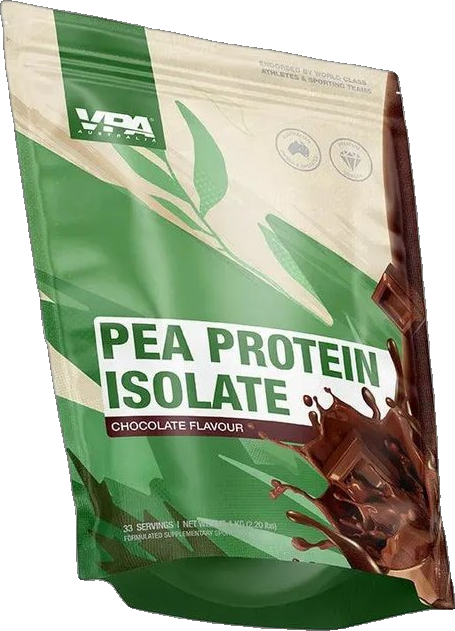
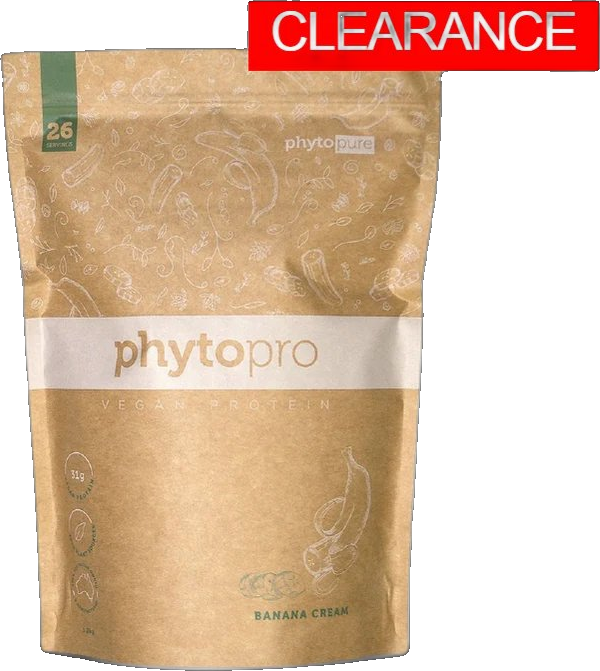
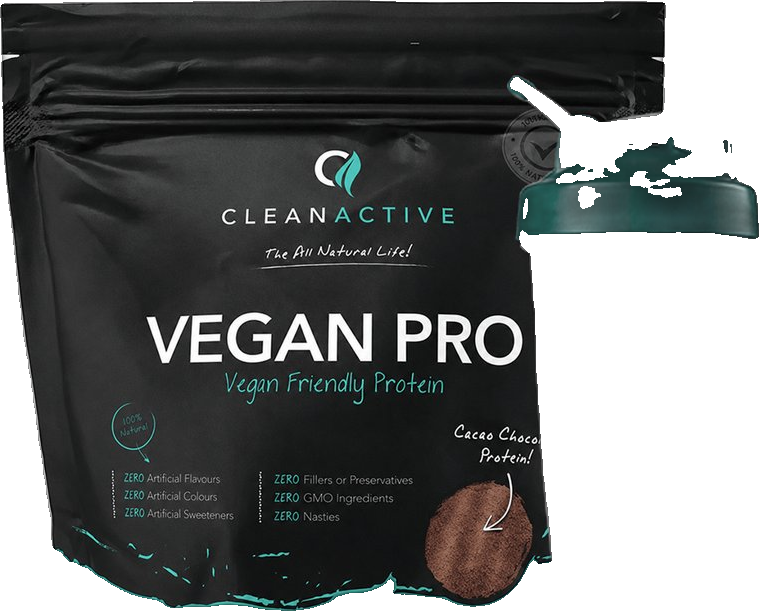
Plant Protein (per 100g of product). Two bands matter here. $4.00–$6.50/100g is fair value, but plant proteins typically deliver 65 to 80g protein per 100g vs 75 to 92g for whey, so cost per gram of nutrient is 10 to 20 percent higher than the sticker suggests. $6.50+/100g is premium and worth a careful protein-concentration check before paying.
Our verdict: if you're not lactose-sensitive, whey concentrate at $3.00 to $4.50 per 100g is the best value protein on the Australian market in 2026. Everything above that is a lifestyle purchase.
Creatine: Price Benchmarks 2026
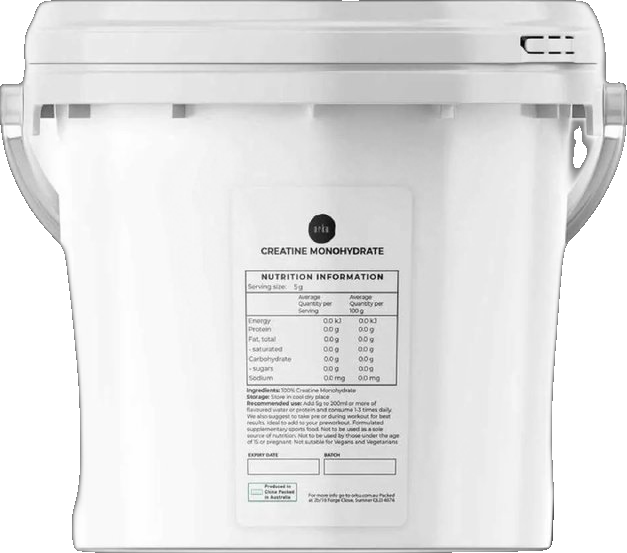
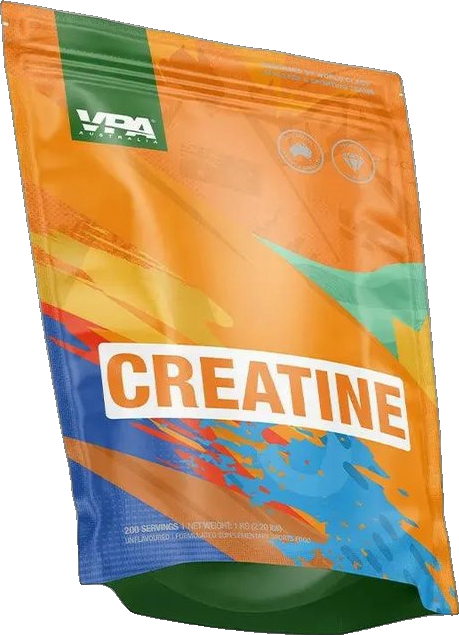
Creatine monohydrate is a commodity. The molecule is the molecule. The ISSN position stand from Kreider et al. (2017)[3] finds no evidence that branded forms (Creapure included) outperform generic monohydrate at matched doses. The Creapure premium pays for German-facility manufacturing QA and batch testing. It does not buy a different physiological effect.
Creatine Monohydrate (per 100g of product):
- $1.50–$4.00/100g: Good value. Unflavoured pure powder, fit for any purpose at the 3 to 5g daily dose (Kreider et al., 2017)[3].
- $4.00–$8.00/100g: Fair. Usually flavoured creatine or Creapure-stamped. The premium buys convenience or manufacturing certification.
- $10.00+/100g: Only justified for HASTA or Informed Sport certified product (drug-tested athletes), or bundled with ingredients you'd separately buy.
At a 5g daily dose, a 500g bag at $20 (which is $4.00/100g) lasts 100 days. That's 20 cents a day. Creatine is the most cost-effective supplement we track in any category. Paying $12.00/100g for the same monohydrate in a sleeker tub is a marketing premium, not a performance one.
Creatine HCl and other patented forms market themselves on smaller doses thanks to better solubility. They do dissolve more easily in water. We can't find clinical evidence of superior outcomes at the recommended doses compared with monohydrate at 3 to 5g/day. "Take less" marketing tends to obscure the fact that you're buying less creatine total at a higher price per gram. Our verdict: skip the HCl tax.
Pre-Workout: Price Benchmarks 2026
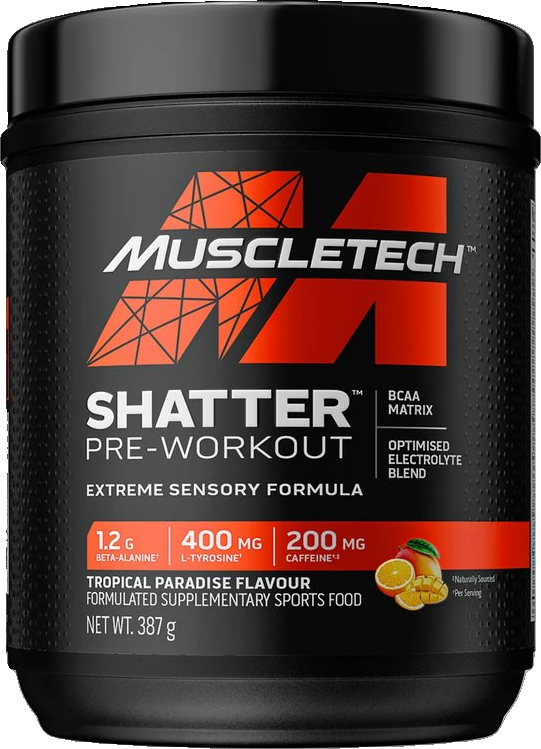
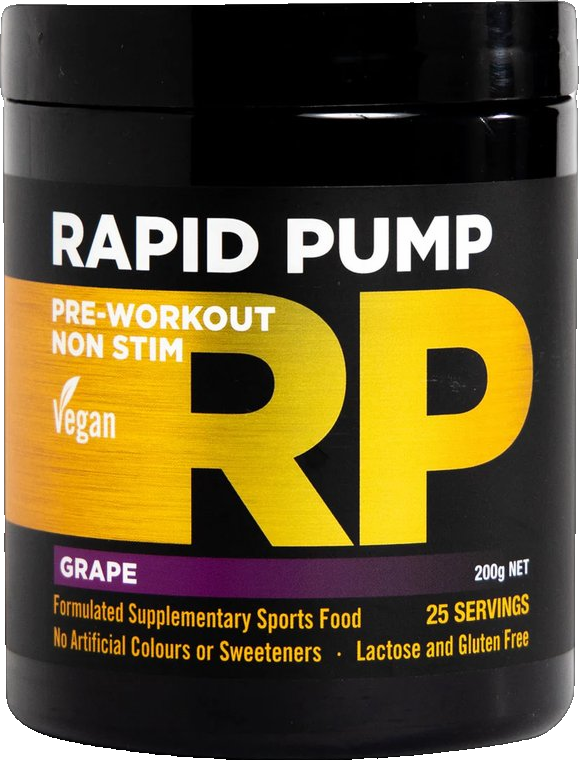
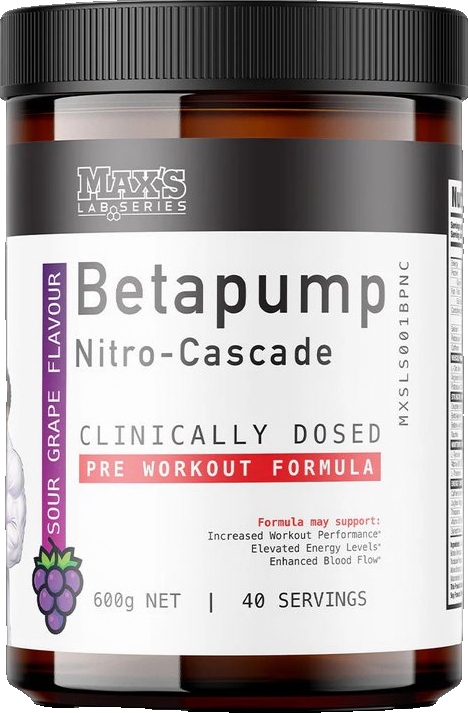
Pre-workout resists a clean $/100g benchmark because the "active" portion swings wildly. Some products land 30g per serve, others 10g. The useful metric here is cost per serve, paired with a label check that the serve actually contains evidence-based doses of citrulline, beta-alanine and caffeine.
Pre-Workout Cost Per Serve:
- $0.80–$1.50/serve: Good value for a fully-dosed formula (6g+ citrulline, 3.2g+ beta-alanine, 150 to 300mg caffeine, which sits inside the 3 to 6mg/kg performance range from Guest et al., 2021)[4].
- $1.50–$2.50/serve: Fair. Higher caffeine, novel ingredients or stronger flavour and mixability work from premium brands.
- Under $0.80/serve: Check the label twice. At this price point the serve is likely small or the key ingredients are underdosed.
- Over $2.50/serve: Justify against specific certified ingredients or batch testing. Most lifters don't need to pay this band.
Caffeine is the lead active in most pre-workouts. The performance benefits sit at 3 to 6mg/kg bodyweight (Guest et al., 2021)[4], which for a 75kg lifter is roughly 225 to 450mg. If a stim is all you need, 200mg of caffeine from a $10 pack of tablets costs about 10 cents a dose. Pre-workouts earn their keep when they layer fully-dosed citrulline and beta-alanine on top of that. Strip those out and you're paying for flavouring, branding and stim stacks you could source for a fraction of the price. Our verdict: pay for the matrix, not the marketing.
How to Use SuppSaver for Best Value
We track prices daily across 14+ Australian retailers and normalise everything to $/100g for direct comparison. Here's how we'd actually drive the platform.
- Sort by Value (g/$1): The default sort on category pages. Higher g/$ means more product per dollar. Fastest path to the cheapest grams in the category.
- Check price history: Each product page carries a 30-day price chart. A product "on sale" at a price it's been at for six months isn't on sale. Genuine sales dip clearly below the trend line.
- Filter by product type: If you specifically want isolate over concentrate, use the type filter so you're comparing apples to apples.
- Compare across bag sizes: The $/100g normalisation removes bag size as a variable. A 2kg bag and a 500g bag of the same product line up on the same metric.
Australian Sales Cycles: When to Buy
The Australian supplement market runs predictable sale cycles. We map them so you can stock up at real discount prices instead of buying at full retail whenever the tub runs dry.
- Black Friday / Cyber Monday (late November): The largest discount event of the year for most major Australian retailers. Discounts of 30 to 50 percent on mainstream products are common. We'd stock 3 to 6 months of shelf-stable creatine and protein here.
- EOFY (June to July): Many retailers run clearance sales to thin stock before financial year end. Solid opportunity for protein and pre-workout if you missed Black Friday.
- Post-Christmas clearance (January): Retailers clear gift-purchase overstock and pivot to new year "fitness resolution" stock. Genuine discounts on outgoing lines.
- Easter (March to April): Smaller but consistent sale event across major retailers. Worth a look if you're low on a staple.
Between major sale events, our daily price tracking flags significant drops within 24 hours of the retailer updating their listings. No need to refresh tabs.
The Australian Retailer Landscape
Australia's supplement retail market is dominated by online-first operators with occasional physical locations. Knowing the field tightens your comparison shopping.
Major online retailers, including Nutrition Warehouse, Mr Supplement, ASN (Australian Sports Nutrition), Elite Supps, VPA and Bulk Nutrients, typically price 20 to 40 percent below mainstream bricks-and-mortar retail. Competition is fierce and promotions overlap. Two minutes of checking saves real dollars. We automate that on every product page by surfacing the current best price across all tracked stores.
House brands (Bulk Nutrients' own-label range, VPA-branded SKUs) routinely deliver the best per-gram value in their category. They're typically run by the same contract manufacturers as the branded equivalents, without the celebrity endorsement and marketing tax.
Bricks-and-mortar (pharmacies, health food shops, gym counters) typically price 30 to 60 percent above online specialists for the same SKU. Convenience and immediacy are the trade. For non-urgent staple purchases online is almost always meaningfully cheaper. Our verdict: buy online by default, walk in only when you need it today.
Total Monthly Supplement Budget: Reality Check
For context, here's what a sensible Australian supplement strategy actually costs at good 2026 prices.
- Essentials only (protein + creatine): 2kg whey concentrate at about $55 + 500g creatine at about $25 = about $80/month. The 2kg lasts 4 to 6 weeks at the doses recommended by Jäger et al. (2017)[2], creatine lasts 3+ months.
- With pre-workout: Add 30 serves of a properly dosed pre at about $45 = about $125/month total.
- With general health supplements: Add fish oil (about $20) and magnesium glycinate (about $15) = about $155 to $165/month total.
Anything above this band should be justified by a specific, identified need. Not marketing persuasion. Mass gainers, fat burners, hormone optimisers and amino acid complexes stacked on top of the above almost never pay back their incremental cost over a well-designed diet.
Buying during sale events (Black Friday especially) can cut annual supplement spend by 25 to 35 percent compared with buying at full retail whenever you happen to run out. A 4-month creatine buy at a November 40-percent-off sale is one of the highest-leverage moves you can make without changing a thing about what you actually take.
- Pulled live $/100g and cost-per-serve snapshots across the 14 Australian retailers in our daily price index.
- Normalised every protein SKU to both $/100g of product and $/100g of actual protein using the on-pack panel.
- Anchored protein and creatine dose targets to Morton et al. (2018), Jäger et al. (2017) and Kreider et al. (2017); anchored caffeine to Guest et al. (2021).
- Treated bricks-and-mortar pricing as a control to size the online-versus-retail spread.
- Re-ran the band boundaries against the post-EOFY 2026 sale window to confirm "good value" thresholds still hold outside promo periods.
Frequently Asked Questions
What is the best value protein powder in Australia right now?
Whey concentrate priced $3.00–4.50 per 100g of product is the best value protein on the Australian market in 2026, according to SuppSaver's daily price tracking across major retailers. Isolate at $4.50–6.00/100g suits lactose-sensitive buyers. Above those bands, you're mostly paying for branding and flavour development, not extra protein.
How much should I pay for creatine monohydrate in Australia?
Good-value creatine monohydrate in Australia runs $1.50–4.00 per 100g for unflavoured pure powder, enough for the standard 3–5g daily dose. At that price a 500g bag lasts about 100 days for roughly 20 cents a day, making creatine the most cost-effective supplement SuppSaver tracks in any category. Skip flavoured or HCl versions charging more for the same molecule.
Is creatine HCl better than creatine monohydrate?
No. The ISSN position stand (Kreider et al., 2017) finds no evidence that branded forms, including Creapure and creatine HCl, outperform generic monohydrate at matched doses. HCl marketing leans on smaller effective doses thanks to better solubility, but there's no clinical evidence of superior outcomes at recommended intakes, so paying more for HCl is essentially a marketing tax.
How much should a fully-dosed pre-workout cost per serve?
A fully-dosed pre-workout should cost $0.80–1.50 per serve, covering at least 6g citrulline, 3.2g beta-alanine and 150–300mg caffeine, doses inside the evidence-based performance range. Below $0.80 the serve size or key actives are usually underdosed; above $2.50 you are generally paying for stronger flavour, novel ingredients or brand rather than extra performance.
When are Australian supplement sales the biggest?
Black Friday and Cyber Monday in late November is the biggest Australian supplement discount event, with 30–50 percent off common at major retailers, making it the best time to stock 3–6 months of shelf-stable creatine and protein. EOFY (June–July), post-Christmas clearance (January) and Easter (March–April) are smaller but reliable secondary sale windows.
How much should a basic supplement stack cost per month in Australia?
A sensible essentials-only stack (2kg whey concentrate plus a 500g creatine tub) runs about $80 a month at good 2026 Australian prices. Adding a properly dosed pre-workout brings it to roughly $125/month, and adding fish oil and magnesium takes a general-health stack to about $155–165/month. Anything above that needs a specific need, not marketing.
References
- Morton et al., 2018. A systematic review, meta-analysis and meta-regression of the effect of protein supplementation on resistance training-induced gains in muscle mass and strength in healthy adults
- Jäger et al., 2017. International Society of Sports Nutrition Position Stand: protein and exercise
- Kreider et al., 2017. International Society of Sports Nutrition position stand: safety and efficacy of creatine supplementation
- Guest et al., 2021. International society of sports nutrition position stand: caffeine and exercise performance