 SUPPSAVER
Creatine and Depression: What Five Trials Actually Found
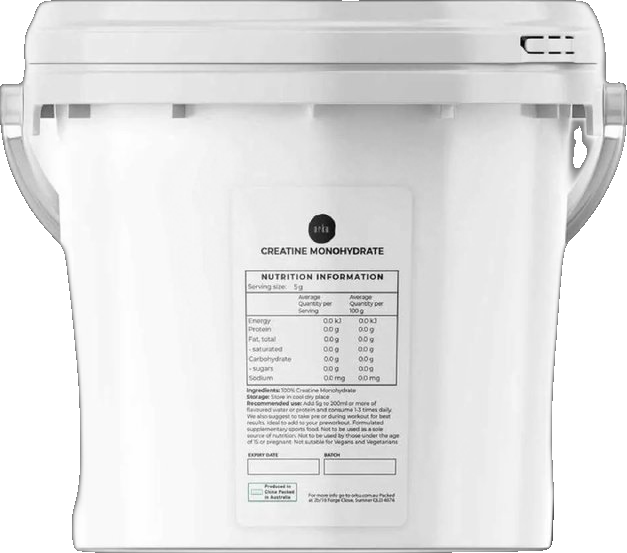
- 1at Woolworths · packs from $259.99$2.60/100g
- 2at Woolworths · packs from $119.99$4.00/100g
- 3at VPA Australia · packs from $20.00$4.80/100g
Five randomised controlled trials. 238 people. Two found a benefit, three found none[1]. That is the entire human evidence base for creatine and depression as of 2026, and the first author of the review summarised it about as honestly as a researcher can: "The signal is interesting, but it is not a verdict"[2]. Our position matches his. This is a real question worth researching and it is not a reason to change anything you are currently doing. If you are being treated for depression, nothing in this article is a reason to alter that treatment, and the two trials that did show a benefit both added creatine to an existing treatment rather than replacing one.
What the Review Actually Covered
The 2026 systematic review in the Canadian Journal of Psychiatry gathered every randomised controlled trial of creatine monohydrate in mental disorders it could find[1]. For depression it came to five trials, reported across six published articles, with 238 participants at baseline: 126 assigned to creatine and 112 to placebo. Mean age was 36 and the majority were women.
Hold that number in mind, because it is the whole story. 238 people is not a large evidence base. A single well-powered antidepressant trial routinely enrols more than that on its own. Five small trials pointing in different directions is what an early-stage research question looks like, not a finding.
| Trial | Population | Creatine dose | Result |
|---|---|---|---|
| Lyoo et al., 2012 | 52 women with major depression, on escitalopram | 3g/day week 1, then 5g/day | Positive |
| Sherpa et al., 2024 | 100 adults with depression, receiving CBT | 5g/day | Positive |
| Nemets & Levine, 2013 | 18 adults, treatment-resistant depression | 5g or 10g/day | No effect |
| Kondo et al., 2016 | 33 adolescent girls with major depression | 2g, 4g or 10g/day | No effect |
| Toniolo et al., 2017 | 35 randomised, bipolar depression | 6g/day | No effect, plus a mood-switch signal |
The Two Positive Trials
The strongest result comes from Lyoo and colleagues in the American Journal of Psychiatry in 2012[3]. 52 women with major depressive disorder, all taking the SSRI escitalopram, were randomised to add either creatine or placebo for eight weeks. The creatine group started at 3g a day for a week then moved to 5g a day. Improvement on the Hamilton Depression Rating Scale was significantly greater with creatine, and remission reached 52% against 25.9% on placebo.
The second positive result came from Sherpa and colleagues in 2024, who randomised 100 adults receiving cognitive behavioural therapy to add 5g a day of creatine or placebo, tracking symptoms on the PHQ-9[7]. The creatine arm improved more.
Now the part that gets dropped in every headline about this research. In both trials creatine was an addition to a treatment that was already running. Escitalopram in one. CBT in the other. Not a single trial in the review tested creatine as a replacement for either. So even on the most generous reading of the positive results, what was tested was creatine plus treatment against treatment alone. There is no evidence whatsoever for creatine instead of treatment, because nobody has studied it.
The Three Trials That Found Nothing
Nemets and Levine ran a four-week dose-finding trial in 18 adults with treatment-resistant depression at 5g or 10g a day and found no significant treatment or dose effect on the Hamilton scale[1].
Kondo and colleagues randomised 33 adolescent girls with major depression across 2g, 4g and 10g daily doses for eight weeks and found no significant difference against placebo on the Children's Depression Rating Scale, although prefrontal phosphocreatine levels were inversely correlated with depression scores[1].
A pattern worth noticing: the two positive trials both paired creatine with an active treatment, while the null trials largely did not, or ran in harder-to-treat populations. That is a hypothesis, not a conclusion, and with five trials there is nowhere near enough data to test it.
The Bipolar Safety Signal
Toniolo and colleagues ran a proof-of-concept trial of creatine as an adjunct in bipolar depression, randomising 35 patients, 17 to creatine at 6g a day and 18 to placebo, over six weeks, with 23 completing[4]. The primary outcome, change on the Montgomery-Asberg scale, was not significant.
The finding that matters is in the adverse events. One patient in the creatine group switched to hypomania at the end of week two, and another in the same group switched to mania at the beginning of week two[4].
Two events in a 17-person arm is a small number that deserves a large amount of caution. It could be chance. It is also biologically coherent, since agents that lift mood in depression can precipitate a switch in bipolar disorder, which is a well-recognised phenomenon with antidepressants. We are not going to tell you it is proven, and we are not going to tell you to ignore it. If you have bipolar disorder or any history of mania or hypomania, do not start creatine for mood reasons without talking to your psychiatrist first.
Why Creatine Might Affect Mood
The mechanistic argument is genuinely reasonable, which is why the question keeps getting asked. The review notes that depression may involve impaired brain energy metabolism and mitochondrial pathology, and that creatine is stored in the brain as phosphocreatine, which can rapidly replenish ATP when metabolic demand is sustained[1]. Two of the trials found associations between creatine-linked brain phosphocreatine or N-acetylaspartate changes and symptom improvement.
A plausible mechanism plus a correlation is not causation. Plenty of compounds have an elegant mechanistic story and no clinical effect. The mechanism explains why the question is worth a properly powered trial. It does not substitute for one.
Dose and Form: There Is No "Mood" Creatine
Across all five trials the compound was ordinary creatine monohydrate, dosed between 2g and 10g a day, most commonly at 5g[1]. No trial used a patented form, a buffered version, a hydrochloride, or anything marketed for mood or cognition.
This matters commercially, because the predictable next step is a premium product positioned around mental wellbeing at several times the price of monohydrate. There is no evidence base for that product. The research was done on the cheapest form of creatine on the shelf, which in Australia typically runs a few cents per daily serve. If a "mood creatine" appears at a premium, it is a marketing position rather than a different molecule.
What Australian Labels Can Legally Claim
Australian advertising rules for therapeutic goods treat serious conditions, meaning those requiring diagnosis or management by a health professional, as restricted or prohibited territory for advertising claims, with restricted representations needing prior approval before use[6]. Depression sits squarely in that category.
It is also worth restating what an AUST L number means, because it is widely misread. It is the sponsor certifying that a product is low risk and made to standard, not the TGA endorsing an efficacy claim for any condition. A creatine tub with an AUST L number has not been assessed as effective for mood by anyone.
The Verdict
Do not change your treatment because of this research. If you are on an antidepressant or in therapy, keep going. The two trials that found a benefit added creatine on top of exactly that, and no trial has ever tested creatine as a replacement. Stopping effective treatment on the strength of five small studies would be a serious mistake.
If you already take creatine for training, this changes nothing about that. Creatine monohydrate remains one of the best-evidenced and cheapest supplements in sport, and the mood research neither adds to nor subtracts from that case. You do not need to stop, and you should not start expecting a mood effect.
If you have bipolar disorder, treat this as a caution rather than an opportunity. The only bipolar trial found no benefit and recorded two mood switches in the creatine arm.
Talk to your GP before adding any supplement to a mental-health treatment plan. That is not a disclaimer we are adding for form. With an evidence base this thin and a documented interaction risk in one population, a five-minute conversation is genuinely the right call. If you are struggling right now, contact your GP, or call Lifeline on 13 11 14 for 24-hour support in Australia.
As the review's co-author Nicholas Fabiano put it, "We cannot yet reliably say that creatine helps with depressive symptoms or if the findings are generalizable to everyone"[2]. We would rather report that accurately than sell you a headline[5].
- Read the 2026 systematic review in full rather than the press coverage of it, and pulled the trial-level detail from its evidence tables.
- Went to the primary papers for the two claims that carry the most weight, the escitalopram augmentation result and the bipolar mood-switch events, rather than relying on the review's summary of them.
- Used the primary trial's participant numbers for the bipolar study where they differed from the review's summary table, and noted the discrepancy rather than quietly picking one.
- Checked whether any positive trial tested creatine as a standalone treatment. None did, which is why the add-on framing appears throughout.
- Left out one confidence interval and one piece of legislative wording we could not verify against a primary source.
Frequently Asked Questions
Does creatine treat depression?
No, and nothing in the current evidence supports saying otherwise. A 2026 systematic review pooled five randomised controlled trials covering 238 people in total. Two found a benefit, three did not. That is a small, mixed evidence base, and the reviewers themselves describe the signal as interesting but not a verdict. Creatine is not a treatment for depression and should not be described as one.
Should I take creatine instead of my antidepressant or therapy?
No. Do not stop or replace a prescribed antidepressant, CBT or any other treatment with creatine. This is the single most important point in the research. In both trials that found a benefit, creatine was tested as an add-on to an existing treatment, alongside escitalopram in one and alongside cognitive behavioural therapy in the other. Not one trial tested creatine as a standalone replacement, so there is no evidence base for substitution at all. Talk to your GP or psychiatrist before adding any supplement to a mental-health treatment plan.
What dose did the trials use?
Between 2g and 10g a day of plain creatine monohydrate, with 5g a day the most common. The escitalopram trial used 3g a day for the first week then 5g a day for seven more. The CBT trial used 5g a day. No trial used a proprietary blend, a special form, or anything marketed for mood, and nothing in the data suggests a non-monohydrate form would perform better.
Is there a safety concern with creatine and mood?
There is one specific signal worth knowing. In the bipolar depression trial, two participants in the creatine group switched into hypomania or mania early in the study, both around week two. That trial was small and the finding needs replication, but a mood switch is a serious event. If you have bipolar disorder or any history of mania, this is a conversation to have with your psychiatrist before taking creatine, not something to trial on your own. Outside that context creatine was generally well tolerated, with mild gastrointestinal discomfort, headache and nausea the usual complaints.
Why might creatine affect mood at all?
The leading hypothesis is brain energy metabolism. Depression has been associated with impaired mitochondrial function, and creatine is stored in the brain as phosphocreatine, which helps regenerate ATP when metabolic demand is high. Some of the trials found that changes in brain phosphocreatine correlated with changes in symptom scores. That is a plausible mechanism and a correlation, not proof that topping up brain creatine lifts mood.
Can an Australian supplement legally claim to help depression?
No. Conditions serious enough to need diagnosis or management by a health professional attract restricted or prohibited representation rules under Australian therapeutic goods advertising law, and a listed supplement cannot lawfully claim to treat or prevent depression. An AUST L number is the sponsor self-certifying a low-risk product, not the TGA approving an efficacy claim. If you see a creatine product marketed for depression in Australia, the marketing is the problem, not a sign that the product is special.
References
- Fares, Zhou, Fabiano, Wong, Stubbs, Shorr, Puder, Candow, Ostojic & Solmi, Canadian Journal of Psychiatry. The effect of creatine monohydrate on mental disorders: a systematic review of randomized controlled trials
- EurekAlert / Brain Medicine, 30 Jun 2026. Creatine shows promise for depression, but the evidence is not yet settled
- Lyoo et al., American Journal of Psychiatry, 2012. Oral creatine monohydrate augmentation for enhanced response to an SSRI in women with major depressive disorder
- Toniolo, Silva, Fernandes, Amaral, Dias & Lafer, Journal of Neural Transmission. Creatine monohydrate as adjunctive treatment for bipolar depression: a proof-of-concept randomised trial
- Medical Xpress, Jul 2026. Could creatine help depression? What five clinical trials show so far
- Prosper Law, AU. Advertising rules for health and wellness products (restricted representations)
- Sherpa et al., European Neuropsychopharmacology, 2024. Oral creatine monohydrate in add-on to cognitive behavioural therapy in depression