 SUPPSAVER
The Peptide Boom: What the TGA Actually Allows in Australia
Six cases of acute liver injury. That is what the Victorian Department of Health confirmed in June 2026, all since January that year, all in people who had injected an unapproved peptide sold online under the name Retatrutide[1]. Two months earlier the TGA had named five peptides being sold in Australia that it has never evaluated for safety, quality or effectiveness: BPC-157, TB-500, CJC-1295, GHK-Cu and retatrutide[2]. Our verdict up front: the gap between what peptide marketing claims and what human evidence supports is the widest we have seen in any category we cover, and the contamination risk is not theoretical. This is a guide to the regulation and the evidence, not a guide to using them.
The Boom, By the Numbers
The scale here is easy to underestimate because almost none of it happens in a pharmacy. Australian clinicians writing in MJA InSight+ pointed to US customs data showing peptide imports from China nearly doubling from US$164 million in early 2024 to US$328 million in early 2025[5]. The same piece noted the TGA had found several counterfeit products that did not contain the advertised substance at all.
On the promotion side, the TGA requested removal of more than 13,700 online advertisements for unapproved substances across 2024-25[9]. That is the volume of marketing a regulator is manually chasing, which tells you something about how much is not being chased.
The demand is real and the supply is unregulated. Those two facts together are the whole story of this category.
What the TGA Actually Allows
In April 2026 the TGA issued a safety advisory naming five peptides sold in Australia that it has never assessed for safety, quality or effectiveness[2]. The reported adverse effects were not minor: severe allergic reactions requiring hospitalisation, severe inflammation, intense full-body itching, heart palpitations, pain, insomnia, blurred vision and musculoskeletal injuries[3].
| Peptide | Marketed for | Australian status |
|---|---|---|
| BPC-157 | Tendon, ligament and gut healing | Not TGA evaluated. Prescription-only under the Poisons Standard. WADA-banned at all times |
| TB-500 | Soft-tissue repair and recovery | Not TGA evaluated |
| CJC-1295 | Growth hormone release, body composition | Not TGA evaluated |
| GHK-Cu | Skin and anti-ageing | Not TGA evaluated |
| Retatrutide | Weight loss | Not TGA evaluated. Experimental, not approved anywhere as a medicine |
BPC-157 is the one people ask about most, so it is worth being precise. Healthy Male, an Australian government-funded men's health organisation, describes it as prescription-only in Australia while noting the healing claims have not been supported by studies in humans[7]. There is a genuine oddity in its status: it is controlled as a prescription medicine while not actually being available to prescribe as an approved product. So there is no lawful consumer route to it at all.
The Compounding Crackdown
The regulatory turning point came with the GLP-1 drugs rather than the bodybuilding peptides. From 1 October 2024 the TGA stopped pharmacies compounding semaglutide and tirzepatide, removing them from the exemption that normally lets a pharmacist prepare a medicine for an individual patient. Health Minister Mark Butler said the action would protect Australians from harm and save lives[8].
Understanding why that exemption existed explains the entire peptide clinic model. Compounding is a legitimate and necessary practice. A pharmacist making up a paediatric dose or an allergen-free formulation for one named patient is not putting a new product on the market, so it does not need TGA product approval. The exemption is designed for one patient at a time.
What happened with GLP-1s is that compounding scaled. Individually prescribed became individually prescribed thousands of times over, producing what were effectively unapproved copies of branded medicines, without the approval process that verifies the dose in the vial matches the label. Closing that door for GLP-1s is what pushed the same commercial energy toward peptides the regulator had not yet named.
The Evidence Problem: Rodents, Not Randomised Trials
This is where the marketing and the science separate most sharply. BPC-157 has an extensive research literature, and it is almost entirely in rats. A narrative review published in Current Reviews in Musculoskeletal Medicine in December 2025 searched the human literature and found three pilot studies in total, covering knee pain, interstitial cystitis, and intravenous safety and pharmacokinetics[6]. Its conclusion was that until well-designed clinical trials are conducted, BPC-157 should be considered investigational.
Even those three are weaker than the count suggests. One human knee-pain study with 16 participants had authors affiliated with a clinic selling the product[7], which is exactly the conflict of interest you would want excluded from an evidence base, not sitting at the centre of it.
Put that next to what it is sold against. Creatine monohydrate has hundreds of human randomised controlled trials and an international position stand. BPC-157 has three human pilot studies and a great deal of rodent data. Both are marketed to the same person for overlapping reasons, at wildly different prices and risk levels.
For TB-500, CJC-1295 and GHK-Cu we are not going to pretend to a precise evidence summary. What we can say with confidence is what the regulator says: none of them has been evaluated by the TGA for safety, quality or effectiveness[2].
When It Goes Wrong
The Victorian alert is the most concrete Australian harm signal available, and it is worth reading carefully. Since January 2026, six people developed acute liver injury after injecting an unapproved product labelled Retatrutide, also sold as Reta, R-10 and R-20[1].
Presentations included tiredness and malaise, jaundice, abdominal pain, dark urine and abnormal bruising, with laboratory findings of transaminitis, possible raised bilirubin and coagulopathy. The department described retatrutide as an experimental drug not approved for sale as a safe medical product in Australia, and noted the clinical presentation suggested additional contaminants may be contributing[1].
That last clause is the heart of the matter. The harm may not have come from the advertised molecule at all. When there is no approval process, nothing verifies what is actually in the vial, whether the dose is right, or whether it is sterile, a point made bluntly in the University of Sydney legal analysis of this market[4]. You are not choosing between a peptide and no peptide. You are choosing between a known quantity and an unknown one.
The Peptide Clinic Loophole
Christopher Rudge of the University of Sydney set out how the model works in The Conversation in July 2026[4]. The short version: prescriptions written for individual patients sidestep the product-approval checks that would otherwise apply, and doing that at volume converts a narrow clinical exemption into a distribution channel. The TGA has put suppliers and promoters on notice after finding that warnings alone were not changing behaviour.
There is precedent for enforcement landing hard. An earlier operator trading as Peptide Clinics was fined A$10 million in 2019 over advertising violations and subsequently collapsed[4].
Australian clinicians have been increasingly direct about who is being sold to. Commentary in Medical Republic quoted practitioners describing black-market product with no reliable quality control and the illegal marketing of illegal products to vulnerable young people[9].
What to Use Instead
Most people looking at BPC-157 or TB-500 want one of two things: to heal a nagging tendon or joint faster, or to recover better between hard sessions. Both goals have legitimate answers that you can buy in a shop.
- Total daily protein. Tissue repair is built from amino acids, and most people chasing exotic recovery compounds have not first fixed their protein intake. This is unglamorous and it works.
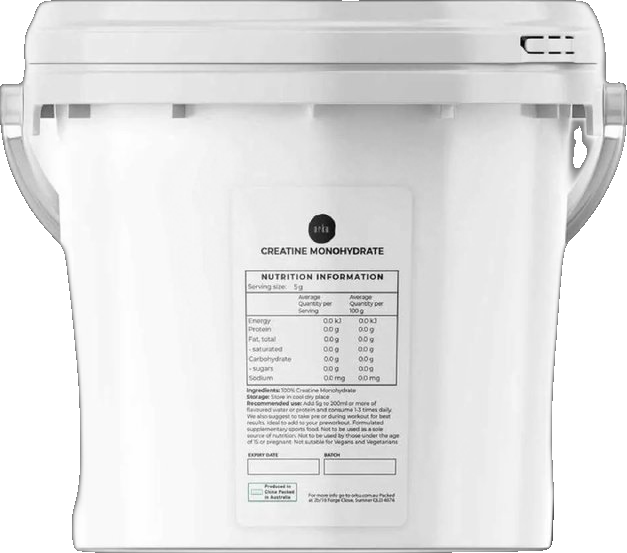
- Creatine monohydrate. The deepest human evidence base in sports supplementation, at a few cents per day, with no WADA issue and no prescription question. If you want one compound with the best evidence-to-price ratio available, this is it.
- Collagen, with realistic expectations. Worth noting that collagen peptides are also peptides. The difference is that they are lawfully sold as food, they are what is actually in the tub, and the human trials exist even if the effects are modest.
- Sleep and load management. Neither is a product we can sell you, and both outperform anything in this article.
If you are dealing with a genuine injury, see a physiotherapist or a doctor. An unapproved injectable bought online is not a shortcut past a diagnosis, and the Victorian cases are a reminder that it can add a second, worse problem on top of the first.
- Used the Victorian Department of Health alert as the primary Australian harm record, rather than relying on media summaries of it.
- Cross-checked the TGA's April 2026 advisory and the list of five named peptides against two independent reports of it.
- Went to the December 2025 narrative review for the human evidence position on BPC-157 instead of counting rodent studies as evidence of human effect.
- Read the University of Sydney legal analysis for the compounding-exemption mechanism, so the clinic model is described accurately rather than as simple illegality.
- Dropped several widely repeated figures, including an import-referral count and a specific scheduling date, because we could not verify them against a primary source.
Frequently Asked Questions
Is BPC-157 legal in Australia?
It is not an approved therapeutic good. The TGA has never evaluated BPC-157 for safety, quality or effectiveness, and it sits as a prescription-only substance under the Poisons Standard, which means it is not something you can lawfully buy over the counter or import for personal use as a supplement. It is also banned in sport at all times by WADA under the non-approved substances category. Anything sold to you online as a research chemical or a supplement is outside that framework entirely.
Does BPC-157 actually work in humans?
The honest answer is that almost nobody knows, because the research is overwhelmingly in rodents. A narrative review published in December 2025 identified only three human pilot studies worldwide, covering knee pain, interstitial cystitis, and intravenous safety and pharmacokinetics. Its authors concluded BPC-157 should be considered investigational until well-designed clinical trials are conducted. That is a very long way from the tendon-healing claims made in marketing.
What happened with the peptide labelled retatrutide?
In June 2026 the Victorian Department of Health confirmed six cases of acute liver injury since January that year in people who had injected an unapproved peptide sold as "Retatrutide", also marketed as Reta, R-10 and R-20. Patients presented with fatigue, jaundice, abdominal pain, dark urine and abnormal bruising, with blood tests showing liver enzyme derangement. The department noted the clinical picture suggested additional contaminants may have been contributing, which is the core problem with unregulated vials.
Why did the TGA ban compounded semaglutide and tirzepatide?
From 1 October 2024 the TGA removed GLP-1 receptor agonists from the exemption that lets pharmacies compound medicines for individual patients. The concern was that large-scale compounding of replica weight-loss products bypassed the safety, quality and dosing checks that apply to approved medicines. Health Minister Mark Butler framed the action as protecting Australians from harm. The practical effect was to close a channel that had been supplying copies of branded weight-loss drugs at scale.
Are peptide clinics breaking the law?
Legal analysis suggests many operate in a grey zone rather than plainly outside it. The mechanism is that a medicine compounded for an individual patient on prescription does not go through TGA product approval, so a clinic that writes enough individual prescriptions can supply an unapproved substance at scale while pointing to the compounding exemption. The TGA has put suppliers and promoters on notice. An earlier operator, Peptide Clinics, was fined A$10 million in 2019 over advertising breaches and later collapsed.
What should I use instead if I want to recover from training faster?
Start with the things that have human randomised trials behind them rather than rodent data. Creatine monohydrate has one of the deepest evidence bases in sports nutrition and costs a few cents a day. Adequate total protein intake does more for tissue repair than any injectable being marketed for it. Sleep and training load management outperform both. None of these carry a contamination risk, a prescription requirement, or a WADA ban.
References
- Victorian Department of Health, 19 Jun 2026. Toxicity linked to unapproved peptide "Retatrutide" (health alert)
- RACGP newsGP, 14 Apr 2026. TGA issues warning against unapproved peptides
- YourLifeChoices, 15 Apr 2026. TGA issues safety alert amid explosion of illegal peptide use
- Christopher Rudge, The Conversation, 21 Jul 2026. How wellness clinics bend the rules to supply unapproved peptides and anti-ageing injections
- Monjur, Piya, Hay, Jayadev & Kormas, MJA InSight+, 20 Apr 2026. Grey-market peptides: an emerging public health challenge
- McGuire et al., Current Reviews in Musculoskeletal Medicine, Dec 2025. Regeneration or risk? A narrative review of BPC-157 for musculoskeletal healing
- Healthy Male (Australian Government funded). BPC-157: what it is, the evidence, and the risks
- Medical Republic, 2024. Butler slaps ban on compounded semaglutide and tirzepatide
- Euan Kielly, Medical Republic, 25 Mar 2026. MAHA peptides wave erodes Australian healthcare