 SUPPSAVER
How to Stack Supplements: A Beginner's Guide
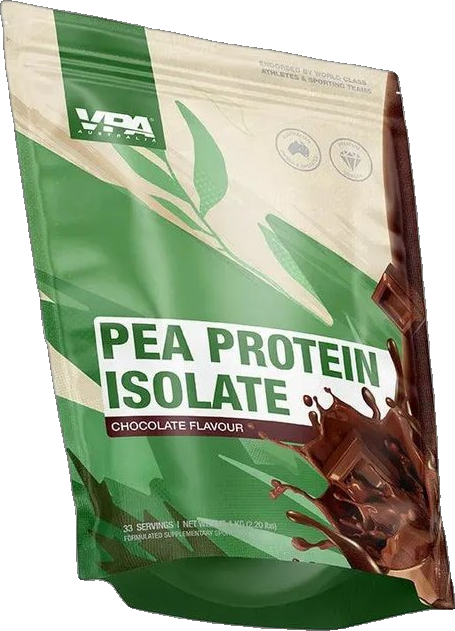
- 1at VPA Australia · packs from $36.00$4.24/100g protein
- 2at Supplement Mart · packs from $40.00$4.84/100g protein
- 3at Mr Supplement · packs from $59.95$5.65/100g protein
Two supplements deliver roughly 95% of the benefit a beginner will ever get from the category: whey protein and creatine monohydrate. The rest of the supplement wall is optional at best and overpriced filler at worst. Training, food, and sleep do the heavy lifting. We've watched too many beginners drop $120 a month on a six-product stack before they've organised a single training week, so we want to be blunt about the order of operations.
The Foundation Comes First
Three questions decide whether you're ready to spend a dollar on supplements. Are you training at least three times a week on a structured program? Are you hitting 1.6–2.2g of protein per kilogram of bodyweight daily, the range Morton et al. (2018)[4] found maximises resistance-training gains? Are you sleeping 7–9 hours? If any answer is no, no powder will fix it.
Our verdict: a $120 stack bolted onto a poor routine returns close to nothing. Fix the routine and the same $120 becomes optional. That isn't a disclaimer. It's a budget rule we'd defend in front of any honest coach.
Stage 1: The Minimal Effective Stack (0–1 Year Training)
Two supplements. Combined Australian cost: roughly $50–80 per month depending on brand. That's the entire first-year stack we'd recommend, and it's the one most beginners skip past on their way to the fat-burner aisle.
Whey protein earns its place as food in a tub. Its job is to close the gap when chicken, eggs, tuna, and dairy aren't enough to hit 1.6g/kg. Jäger et al. (2017)[2] confirmed protein supplementation reliably adds to lean mass when total intake is the limiting factor and adds nothing when it isn't. If you're already eating enough, you don't need it. If you're not, whey concentrate or isolate is the cheapest fix on the market: $3.50–5.50 per 100g in Australia.
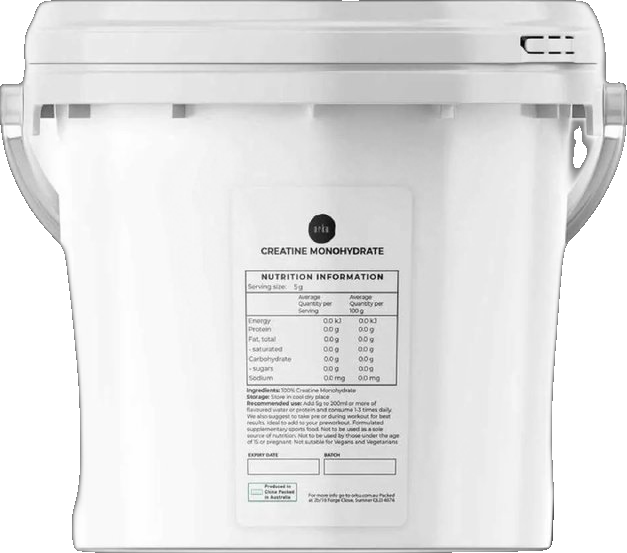
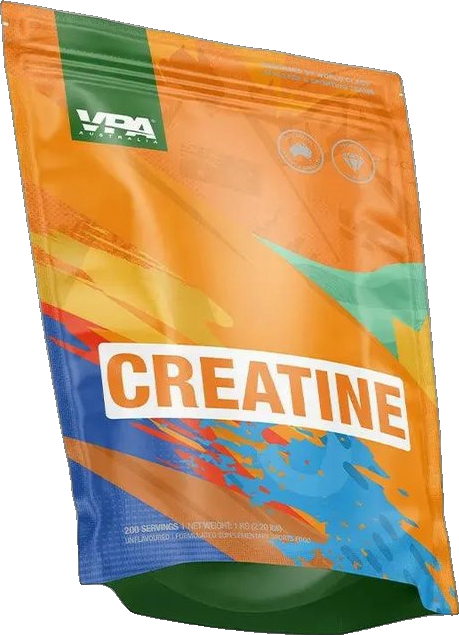
Creatine monohydrate has thirty years of human-trial backing behind it, more than any other ergogenic aid in sports science. Kreider et al. (2017)[1] put the typical strength gain at 4–8% over 4–8 weeks of consistent 3–5g daily dosing. Cost in Australia: $1.50–4.00 per 100g for pure micronised powder, which is roughly $15–25 per month at standard dose. Skip the loading phase. It's optional and the steady-state result is identical.
Stage 2: Adding to the Stack (1–3 Years Training)
After a year of consistent training on protein and creatine, two additions earn their cost. Both are optional. Neither is a multiplier.
Pre-workout earns a line item only when training motivation or output is the genuine bottleneck. The active ingredient doing the work is caffeine at 150–300mg, the range Guest et al. (2021)[3] identifies as ergogenic in trained adults. A properly dosed product also carries citrulline at 6g+ for blood flow and beta-alanine at 3.2g+ for buffering. Expect $0.80–1.50 per serve for that spec; anything cheaper is usually fairy-dusted. Our take: a $0.10 caffeine tablet plus 6g citrulline malate from a bulk bag does the same job for a quarter of the price if you don't care about flavour.
Fish oil (omega-3) belongs in the general health column, not the performance column. Most Australians eat too little oily fish to hit 2–3g of combined EPA+DHA per day. At $15–25 per month it's cheap insurance for cardiovascular and joint health, with mild anti-inflammatory effects. Read the EPA+DHA per softgel on the back of the bottle, not the headline "1000mg fish oil" on the front. The fillers are inert.
Stage 3: Fine-Tuning (3+ Years Training)
Advanced trainees with training, nutrition, and recovery genuinely organised may find value in targeted additions. The operative word is targeted. Every new bottle should answer a specific identified gap, not a marketing claim.
Magnesium glycinate at 300–400mg/day supports sleep and muscle relaxation. Most Australians sit below the NHMRC RDI given processed-food diets. Glycinate is gentler than oxide or citrate and produces less of the GI distress that puts beginners off. Vitamin D at 1000–2000 IU/day is worth a look if you work indoors; deficiency impairs muscle function and immune health. Zinc at 15–25mg/day supports testosterone production and immunity, though anyone eating adequate red meat and nuts is unlikely to be deficient in the first place.
Tart cherry concentrate, ashwagandha, and the wider adaptogen-and-recovery shelf have emerging but limited evidence. We treat them as optional add-ons, not staples.
What NOT to Stack as a Beginner
The supplement industry is expert at selling to beginners who don't yet know what works. Here's the short list of categories we'd walk past, and why.
- Fat burners: mostly caffeine and green tea extract. The thermogenic effect is real and trivial. A 300-calorie dietary deficit achieves more than any pill in the category.
- Testosterone boosters: zinc, D3, fenugreek, and ashwagandha have no meaningful effect on testosterone in non-deficient adults. The category exists because the word sells.
- Mass gainers: expensive carbohydrates. A 2kg tub at 50g protein and 250g carbs per serve is replicated for a fraction of the price with oats, banana, milk, and a scoop of whey. If you're not gaining weight, eat more food.
- BCAAs: redundant when protein intake is adequate. Your whey already contains leucine, isoleucine, and valine at effective ratios. BCAA powders charge a premium for a partial amino-acid profile.
- Proprietary blends: "Proprietary blend 4.7g" tells you nothing about individual doses. If a company won't disclose them, assume they're fairy-dusting impressive-sounding ingredients at sub-effective amounts.
Avoiding Supplement Industry Traps
Supplement marketing is sophisticated and targets the emotional desire for faster results. The common plays: paid celebrity and athlete endorsements (they are not why the endorser looks the way they do), before-and-after photos engineered with lighting, pump, tan, posing, and edited timelines, and the constant rebrand of an old formula as an "advanced" one.
The ingredients in supplements are largely commodities. 3g of creatine monohydrate from a $20 unflavoured bag is identical at the cellular level to 3g from a $60 branded tub. You're paying for marketing, flavour, and packaging. Not outcomes.
Safety and Medical Considerations
Protein, creatine, caffeine, fish oil, magnesium, and vitamin D are all well-tolerated by healthy adults at the doses above. Creatine in particular has been studied for over three decades with no demonstrated harm in healthy individuals at 3–5g/day (Kreider et al., 2017)[1].
Pre-existing kidney, liver, or cardiovascular conditions, or any prescription medication, mean you check with a GP before starting. Some compounds interact with medications or are contraindicated in specific health contexts. This guide is educational and isn't a substitute for medical advice.
The Australian Cost Reality
A sensible beginner stack of protein and creatine costs $50–80 per month from reputable Australian brands at standard prices. Tracking sales on Optimum Nutrition, EHPLabs, or ATP Science with a price comparison tool can cut that by 20–40%.
A full Stage 2 stack (protein, creatine, pre-workout, fish oil) lands at $90–130 per month. Whether that's good value depends entirely on whether you've optimised training and food first. Skipping sessions and eating poorly while spending $130 on powders? That budget belongs in a meal plan or a coach, not in our category.
How We Reviewed This
- Anchored every supplement recommendation against the relevant ISSN position stand or peer-reviewed meta-analysis, not brand marketing copy.
- Surveyed AU retailer pricing across our 14-store scraper set in May 2026 to anchor per-month and per-100g cost ranges.
- Filtered each tier by training experience (0–1, 1–3, 3+ years) so beginners are not asked to evaluate Stage 3 spends on day one.
- Cross-checked the "what not to stack" list against the underlying evidence rather than category popularity, flagging fat burners, T-boosters, mass gainers, BCAAs, and proprietary blends as low-yield spends.
- Triangulated cost-per-night and cost-per-month across whey, creatine, pre-workout, and fish oil so the comparison is apples-to-apples.
Frequently Asked Questions
What's the minimum effective supplement stack for a beginner?
Two supplements: whey protein and creatine monohydrate. Together they cover roughly 95% of the benefit a beginner gets from supplements, at $50–80 per month in Australia. Whey closes gaps in daily protein intake; creatine monohydrate at 3–5g daily adds a well-documented 4–8% strength gain over 4–8 weeks.
Should beginners train and eat well before buying supplements?
Yes. Three questions decide readiness: are you training at least three times weekly on a structured program, hitting 1.6–2.2g of protein per kilogram of bodyweight daily, and sleeping 7–9 hours? If any answer is no, a $120 stack bolted onto a poor routine returns close to nothing — fix the routine first.
Are BCAAs worth buying as a beginner?
No. BCAAs are redundant once protein intake is adequate — whey protein already contains leucine, isoleucine, and valine at effective ratios. BCAA powders charge a premium for a partial amino-acid profile you're already getting from your protein shake or whole-food protein sources, so they add no benefit for a typical beginner stack.
Should beginners take fat burners or testosterone boosters?
No. Fat burners are mostly caffeine and green tea extract, with a trivial thermogenic effect — a 300-calorie dietary deficit achieves more than any pill. Testosterone boosters like zinc, D3, fenugreek, and ashwagandha have no meaningful effect on testosterone in non-deficient adults. Both categories exist because the marketing sells, not because they work.
How much does a beginner supplement stack cost in Australia?
A sensible whey-plus-creatine stack costs $50–80 per month from reputable Australian brands at standard prices. Tracking sales on brands like Optimum Nutrition, EHPLabs, or ATP Science with a price comparison tool can cut that by 20–40%. Adding pre-workout and fish oil in Stage 2 lifts the total to $90–130 per month.
When should a beginner add pre-workout to their stack?
Only after a year of consistent training on protein and creatine, and only if training motivation or output is the genuine bottleneck. The active ingredient doing the work is caffeine at 150–300mg; a properly dosed product also needs citrulline at 6g+ and beta-alanine at 3.2g+, or you're just paying for flavour.
References
- Kreider et al., 2017. International Society of Sports Nutrition position stand: safety and efficacy of creatine supplementation
- Jäger et al., 2017. International Society of Sports Nutrition Position Stand: protein and exercise
- Guest et al., 2021. International society of sports nutrition position stand: caffeine and exercise performance
- Morton et al., 2018. A systematic review, meta-analysis and meta-regression of the effect of protein supplementation on resistance training-induced gains in muscle mass and strength in healthy adults