 SUPPSAVER
Why Protein Prices Are Rising: What Our Tracking Data Shows
- 1at Elite Supps · packs from $63.95$2.66/100g protein
- 2at Supplement Mart · packs from $32.00$3.88/100g protein
- 3at VPA Australia · packs from $36.00$4.24/100g protein
The typical protein powder sold in Australia costs about $9 per 100g. As of 11 October 2026 the median is $9.04 per 100g across 351 protein products from 14 retailers in our price index (it was $8.55 on 22 July, though the product mix differs, so we don't read that as a trend), and it is the number we would anchor any buying decision to. Behind it, the wholesale whey protein concentrate that fills most of those tubs has pushed past €20,000 a tonne on 2026 delivery contracts, up from roughly €17,000[1], after rising more than 50% in the opening months of the year[2]. Our verdict up front: this is a genuine global input shortage rather than retailer opportunism, it is unlikely to unwind before late 2026, and the gap between a lazy purchase and a careful one is still bigger than the entire wholesale increase.
What Protein Actually Costs in Australia Right Now
We track protein prices across Australian stores daily and recompute a category index from what is actually in stock. Here is the picture as of 22 July 2026, and it is worth understanding the shape of it before reading a single headline about shortages.
| Benchmark | $ / 100g | What it tells you |
|---|---|---|
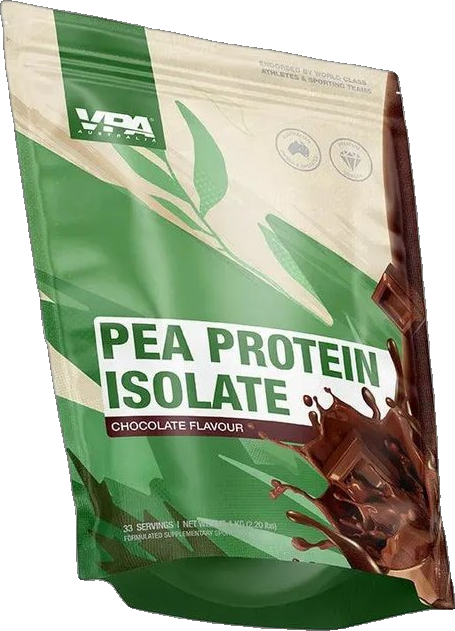
| Cheapest tracked | $3.60 | VPA Pea Protein Isolate, the floor of the market on 22 July |
| Median | $8.55 | The typical tub, and the number to beat |
| Average | $11.00 | Pulled well above median by premium and small-format products |
| Most expensive | $69.38 | Specialty and small-pack formats |
The average sits 29% above the median, and that gap is the real story of the Australian market. A handful of expensive, small-format and heavily marketed products drag the mean upward. If you are paying near $11 per 100g you are not paying a shortage premium, you are paying a positioning premium.
One honest caveat about our own data, because we would rather state it than imply something we cannot show. Our price index is a live cross-sectional benchmark, recalculated from current listings, not an archived time series. So we are not going to claim our own tracking proves a rising trend line. The evidence for the increase comes from the commodity market, which is documented in detail below, and our numbers tell you where the shelf sits today.
The Wholesale Price Behind Your Tub
Whey protein concentrate at 80% protein, the grade the industry calls WPC80, is the backbone ingredient in most Australian whey powders. In March 2026 it was quoted around €16,900 a tonne in Europe and €18,204 in the United States[3]. By the time contracts for the second, third and fourth quarters of 2026 were being written, transactions were reported above €20,000 a tonne against a prior level near €17,000[1].
Zoom out and the move is larger still. US whey protein concentrate costs have risen 108% over a two-year window, with isolate up around 139%, while inventories have roughly halved since 2023[4]. Wholesale whey prices jumped more than 50% from January 2026 alone to reach record highs[2]. USDA-reported stocks of human-grade whey protein concentrate were down about 25% year on year in December 2025 and January 2026, and were not rebuilding[3].
The broader dairy complex is firm too. The Global Dairy Trade index rose 1.5% to US$3,615 a tonne in late January 2026, its second consecutive increase[5]. That index tracks milk powders, butter and milk fat rather than whey specifically, so we treat it as a read on general dairy input pressure, not as a whey price in disguise.
Why Supply Cannot Just Scale Up
This is the part most coverage skips, and it is the reason the shortage has persisted rather than corrected. Whey is not farmed. It is what is left over when milk is turned into cheese. The world produces exactly as much whey as its cheesemaking requires, and not one tonne more, no matter how many people want a protein shake.
The second constraint is drying capacity. Liquid whey has to be processed and spray-dried into powder, and that plant is expensive, slow to build and already running full. Industry reporting identifies limited drying capacity as the structural bottleneck rather than any shortage of milk[1]. European manufacturers have described themselves as sold out, and US suppliers as sold forward for nearly the whole year[1].
Put those together and you get a market where price is the only release valve. Demand cannot be met with more supply in the short run, so it gets rationed by cost instead.
The Demand Side: Protein Culture and the GLP-1 Effect
Supply explains half of this. The other half is that protein stopped being a gym product. Roughly 70% of Americans now report actively trying to consume more protein, against 59% four years earlier[4]. That shift shows up in retail as protein-fortified everything, and it pulls the same WPC80 that supplement brands need.
The GLP-1 wave is the genuinely new pressure. People taking medications like semaglutide eat considerably less overall, but are advised to prioritise protein to limit muscle loss during rapid weight loss. That raises protein intake per person even as total food intake falls. Fonterra has named GLP-1-driven protein demand its biggest food and beverage opportunity for 2026, alongside forecasts for the GLP-1 pill market to grow from US$3.2 billion in 2025 to US$34.3 billion by 2031[7].
We have written separately about protecting muscle while on a GLP-1, and the irony is not lost on us: the advice that is medically sound for that group is also one of the forces pushing the price of the thing we are recommending.
The Australian Dollar Question
Whey protein concentrate is priced in US dollars and euros, and Australia imports a great deal of it. That makes the exchange rate a real lever on the shelf price, and it is where we would push back on the standard commentary.
A weakening Australian dollar would compound imported whey inflation. That is not what the currency has been doing. The AUD reached 0.6717 against the US dollar in late December 2025, a one-year high, on expectations of a hawkish RBA and anticipated US rate cuts[8]. A stronger dollar buys more whey per Australian dollar, which softens the blow rather than adding to it.
So if someone tells you the weak dollar is why your protein got expensive, check the rate. The currency has been working in Australian buyers' favour into 2026. The increase you are seeing is the commodity, not the exchange rate. For local context, Australian CPI rose 4.0% in the year to May 2026 with food and non-alcoholic beverages at 3.3%[6], both well below the scale of the whey move, which tells you this is not simply general inflation either.
When Prices Might Ease
The honest answer is that nobody selling whey expects a quick correction. With European suppliers sold out and US suppliers sold forward for most of the year[1], the earliest plausible relief arrives with new processing and drying capacity, which reporting places at late 2026 at the earliest[4].
There is also a lag effect working against consumers in the short term. Brands buy forward, so today's shelf price often reflects contracts signed months ago. That cuts both ways: some of the wholesale increase has not reached Australian shelves yet, and when wholesale eventually falls, retail will be slow to follow.
Our practical read: assume current pricing is the new normal for the next 12 months and buy accordingly, rather than waiting for a correction that the supply side does not support.
How to Still Find Value
Here is the genuinely useful conclusion. The wholesale market moved by tens of percent. The difference between the median Australian protein powder and the cheapest one we tracked on 22 July 2026 is 137%. Buying well is still a far bigger lever than anything happening in the dairy market.
- Compare on price per 100g of protein, not price per tub. A 2kg bag at a higher sticker price routinely beats a 900g tub. This is the single change that saves the most money.
- Look at plant protein. The floor of our index on 22 July 2026 was a pea protein isolate at $3.60 per 100g. Plant proteins are not made from whey, so they sit outside the cheese-byproduct bottleneck entirely.
- Buy concentrate rather than isolate unless you need isolate. Isolate has risen harder than concentrate, at roughly 139% against 108% over two years, and most people training normally do not need the difference.
- Widen the store list. We track 14 Australian retailers and the same product frequently varies by a wide margin between them.
- Ignore the average. At $11.00 per 100g (22 July 2026) it is inflated by premium formats. The median (then $8.55, $9.04 by 11 October) is the number that should feel like a ceiling, not a target.
- Pulled Australian protein benchmarks from our own price index (223 protein products and 13 retailers on 22 July 2026, 351 products and 14 stores on 11 October 2026), and deliberately limited our own data to point-in-time snapshots because the index stores no history.
- Traced WPC80 wholesale pricing through 2026 across three independent dairy-trade sources, cross-checking the euro and US dollar quotes against each other rather than relying on a single print.
- Checked the supply-side explanation (cheese byproduct volumes, drying capacity, USDA stock levels) separately from the demand-side explanation (protein-fortification trend, GLP-1 driven intake).
- Verified the AUD/USD direction rather than assuming a weak-dollar narrative, and found the currency at a one-year high, which reverses the usual framing.
- Set aside two sources that would not resolve on direct fetch rather than cite them from search summaries.
Frequently Asked Questions
Why is protein powder getting more expensive in Australia?
The raw material is the problem, not the retailer. Whey protein concentrate is a byproduct of cheesemaking, and its wholesale price has surged past €20,000 a tonne for 2026 delivery contracts, up from around €17,000. Wholesale whey prices rose more than 50% in the first months of 2026 to record highs. Australian brands buy into that same global market, so the increase flows through to the tub on the shelf with a lag of several months.
Is this an Australian problem or a global one?
Global. This is a commodity input shortage in the international dairy market, not an Australian retail markup story. European manufacturers have reported being sold out and US suppliers sold forward for nearly the entire year. Australia buys whey protein concentrate on the same world market, so we import the price. Australian food inflation is a separate and much milder pressure, running at 3.3% for the year to May 2026 against overall CPI of 4.0%.
Why can’t dairy companies just make more whey?
Because whey is a byproduct, not a product. It comes out of cheesemaking, so the volume of whey available is set by how much cheese the world makes, not by how much protein powder people want. The second constraint is drying capacity, the plant that turns liquid whey into powder. Adding that capacity takes years and capital, and industry reporting does not expect meaningful new capacity before late 2026 at the earliest.
What do GLP-1 drugs have to do with protein prices?
They created a large new category of protein buyers. People on GLP-1 medications eat far less overall but are advised to prioritise protein to limit muscle loss during weight loss, so protein demand per person rises even as total food intake falls. Fonterra has named GLP-1-driven protein demand its single biggest food and beverage opportunity for 2026. That lands on top of an already rising baseline, with 70% of Americans now actively trying to eat more protein, up from 59% four years earlier.
Is the weak Australian dollar making protein more expensive?
Not right now, and this is where a lot of commentary gets it backwards. Whey is priced in US dollars and euros, so a falling Australian dollar would compound the problem. But the AUD hit a one-year high above 0.6717 against the US dollar in late December 2025. A stronger Australian dollar is a partial offset to imported whey inflation, not an additional cause. Check the current rate before assuming otherwise.
What should I actually do about it?
Buy on price per 100g of protein rather than price per tub, and widen the net. Our price index on 11 October 2026 shows the median protein powder in Australia at $9.04 per 100g while the cheapest tracked product sits at $2.60 per 100g, so the spread between a typical buy and a smart one is larger than the entire wholesale increase. Plant proteins, larger bag sizes and less fashionable brands are where the value currently concentrates.
References
- Vesper, 2026. WPC80 prices exceed €20,000/mt as global supply falls short of demand
- The Supply Chainer, 18 May 2026. Whey protein prices surge over 50% as shortage hits hard
- DairyReporter, 25 Mar 2026. WPC market splits as protein demand reshapes supply
- Nutraceutical Business Review, 2026. Whey protein supply crunch deepens as surging demand outpaces capacity
- Trading Economics, Jan 2026. Global Dairy Trade Price Index rises for a second consecutive auction
- Australian Bureau of Statistics, Jun 2026. Consumer Price Index rose 4.0% in the year to May 2026
- Bakery & Snacks, 26 Feb 2026. How GLP-1 is driving demand for protein in food
- FXStreet, 24 Dec 2025. AUD/USD posts fresh yearly high above 0.6700